THE ADVENTURE COLLECTIVE® · Independent discovery and booking for outdoor travel

Experience the Giza Plateau with a private guide: walk among the Great Pyramid, Khafre and Menkaure, see the Great Sphinx, and visit Saqqara’s Step Pyramid. Expect moderate walking on uneven limestone, strong sun, and unmatched history.
Experience the Giza Plateau with a private guide: walk among the Great Pyramid, Khafre and Menkaure, see the Great Sphinx, and visit Saqqara’s Step Pyramid. Expect moderate walking on uneven limestone, strong sun, and unmatched history.
The morning sun cuts across the limestone faces of the Great Pyramid as your guide leads you from the parking area toward a horizon defined by ancient geometry. Dust tastes dry in the air; camel bells tinkle; the Sphinx stares with a weathered patience that has outlived empires. This is the Giza Plateau — a working landscape of stones, vendors, and human stories layered on top of four and a half millennia of history.
Verified experiences and guided adventures in the surrounding area.
Operated by Egypt Tours Guiders · Giza, Giza Governorate
The morning sun cuts across the limestone faces of the Great Pyramid as your guide leads you from the parking area toward a horizon defined by ancient geometry. Dust tastes dry in the air; camel bells tinkle; the Sphinx stares with a weathered patience that has outlived empires. This is the Giza Plateau — a working landscape of stones, vendors, and human stories layered on top of four and a half millennia of history.
Walk the perimeter of Khufu, Khafre and Menkaure and you’ll see the evolution of funerary design: Khufu’s massive core blocks, Khafre’s smoother casing hints, Menkaure’s tighter masonry. Saqqara’s Step Pyramid at Djoser — an hour or so south — shows the experiment that led from mastaba to true pyramid. Geology matters here: the bedrock and quarrying techniques shaped each monument’s footprint and the plateau’s drainage. Culturally, the site remains a focal point of national identity, and local guides speak with practiced clarity about pharaohs, mortuary temples and the Sphinx’s missing nose.
Practicalities shape the visit. Expect 2–5 hours of guided time with short walks on packed sand and limestone, steep steps and uneven surfaces inside some complexes. Bring sun protection, carry a refillable bottle, and plan morning or late-afternoon visits to avoid peak heat and crowds. If you want interior access to pyramids or photographic permits, check tickets and timing in advance.
This tour pairs big-picture context with on-the-ground logistics: history, geology and practical tips combine so you can move confidently through an ancient landscape that still challenges and rewards curiosity.
easy.
2–5 hours.
Suitable for most fitness levels; requires comfortable walking on uneven ground and short climbs.
Many standard private tours do not include the optional interior-entry tickets to the Great Pyramid or the Solar Boat Museum; confirm with the operator and budget extra for site-specific tickets.
Yes — camel rides are commonly offered around the plateau but are usually optional and paid locally; negotiate price and confirm animal welfare standards beforehand.
Main viewing areas and the valley temple have improved access and the operator notes wheelchair-accessible transportation, but interior pyramid access is not wheelchair-friendly; check specific accessibility needs with the provider.
Early morning around opening or late afternoon are the least crowded and provide more comfortable temperatures and better light for photos.
The Giza Plateau was developed during Egypt’s Old Kingdom (c. 26th century BCE) as a royal necropolis; Saqqara’s Step Pyramid predates the true pyramids and marks a major architectural transition.
High visitor numbers and urban encroachment stress the monuments; support licensed guides, avoid climbing structures, and follow local rules to minimize wear and impact.
Egypt Tours Guiders operates guided outdoor trips and adventures with an emphasis on safety, stewardship, and memorable experiences.
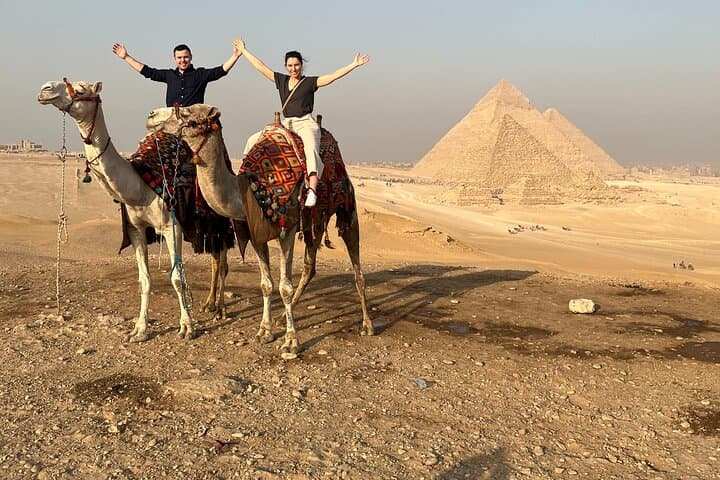
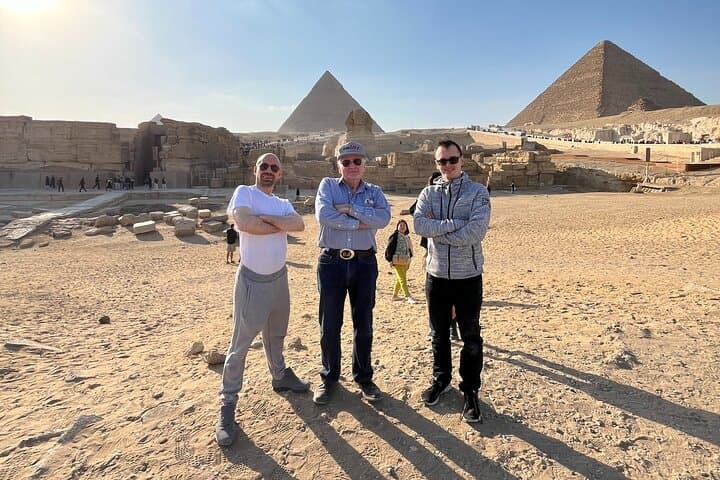


The morning sun cuts across the limestone faces of the Great Pyramid as your guide leads you from the parking area toward a horizon defined by ancient geometry. Dust tastes dry in the air; camel bells tinkle; the Sphinx stares with a weathered patience that has outlived empires. This is the Giza Plateau — a working landscape of stones, vendors, and human stories layered on top of four and a half millennia of history.
The morning sun cuts across the limestone faces of the Great Pyramid as your guide leads you from the parking area toward a horizon defined by ancient geometry. Dust tastes dry in the air; camel bells tinkle; the Sphinx stares with a weathered patience that has outlived empires. This is the Giza Plateau — a working landscape of stones, vendors, and human stories layered on top of four and a half millennia of history.
Walk the perimeter of Khufu, Khafre and Menkaure and you’ll see the evolution of funerary design: Khufu’s massive core blocks, Khafre’s smoother casing hints, Menkaure’s tighter masonry. Saqqara’s Step Pyramid at Djoser — an hour or so south — shows the experiment that led from mastaba to true pyramid. Geology matters here: the bedrock and quarrying techniques shaped each monument’s footprint and the plateau’s drainage. Culturally, the site remains a focal point of national identity, and local guides speak with practiced clarity about pharaohs, mortuary temples and the Sphinx’s missing nose.
Practicalities shape the visit. Expect 2–5 hours of guided time with short walks on packed sand and limestone, steep steps and uneven surfaces inside some complexes. Bring sun protection, carry a refillable bottle, and plan morning or late-afternoon visits to avoid peak heat and crowds. If you want interior access to pyramids or photographic permits, check tickets and timing in advance.
This tour pairs big-picture context with on-the-ground logistics: history, geology and practical tips combine so you can move confidently through an ancient landscape that still challenges and rewards curiosity.