THE ADVENTURE COLLECTIVE® · Independent discovery and booking for outdoor travel

Experience a full-day private transfer from Hurghada to Cairo to explore the Great Pyramid of Khufu, the Sphinx and the Egyptian Museum. This practical guide previews what to expect on a long, history-rich day at two of Egypt’s most visited sites.
Experience a full-day private transfer from Hurghada to Cairo to explore the Great Pyramid of Khufu, the Sphinx and the Egyptian Museum. This practical guide previews what to expect on a long, history-rich day at two of Egypt’s most visited sites.
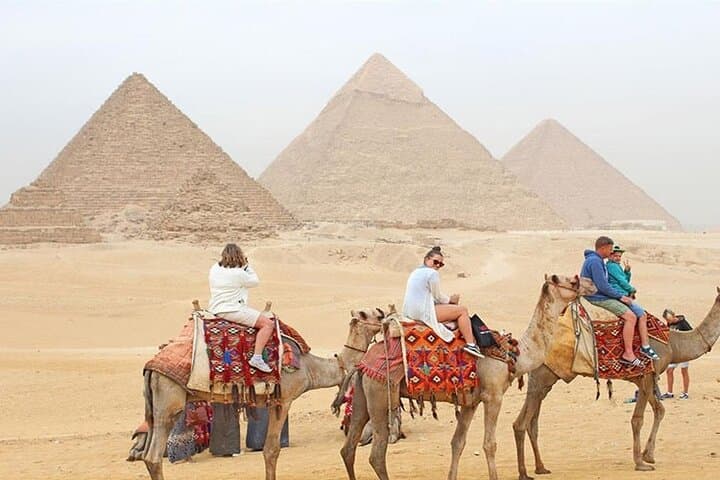
You arrive at dawn on a cracked highway that runs like a ribbon from the Red Sea toward the Nile; by midmorning the desert opens and the Pyramids loom—stone machines that throw long, precise shadows across sand and dust.
Verified experiences and guided adventures in the surrounding area.
Operated by Goto Egypt Tours · Giza, Cairo Governorate
You arrive at dawn on a cracked highway that runs like a ribbon from the Red Sea toward the Nile; by midmorning the desert opens and the Pyramids loom—stone machines that throw long, precise shadows across sand and dust.
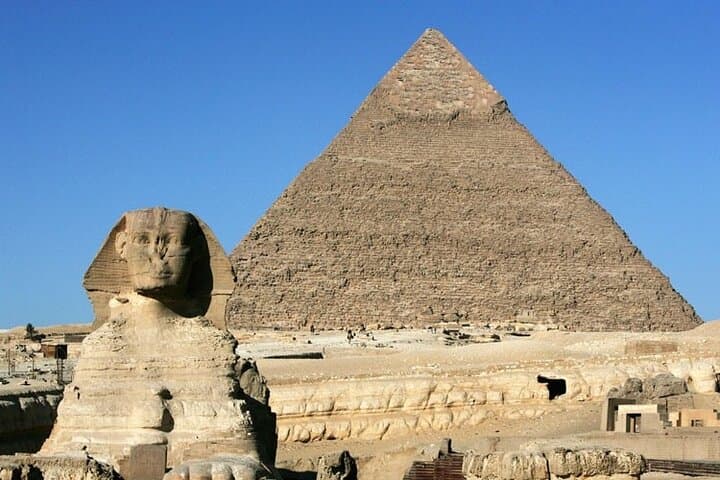
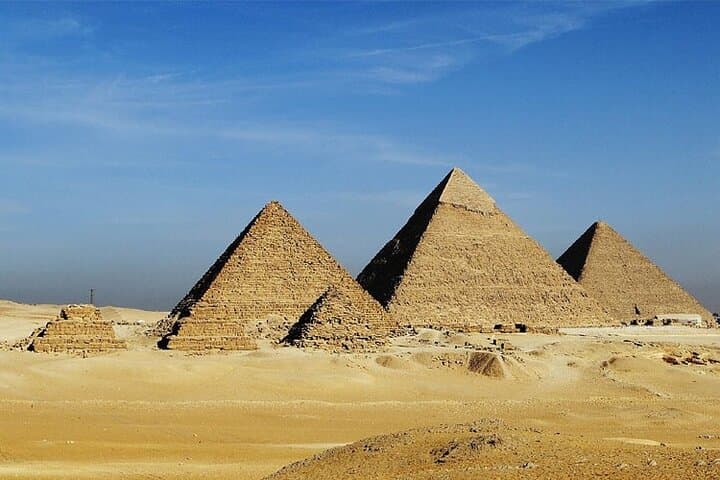
This private full-day outing pairs two eras of Egypt’s story: the 4,500-year-old monumental geometry of Giza and the concentrated catalog of the Egyptian Museum in central Cairo. The Great Pyramid of Khufu, once 149.4 meters tall, still compels with its sheer mass—2.3 million stones that angle inward toward a single point. The nearby Sphinx, half-lion, half-king, keeps its mute watch over the plateau, a carved riddle that anchored pharaonic processions.
In Cairo, the museum collects lives in metal, wood and gold: Tutankhamun’s funerary objects, New Kingdom statuary and everyday artifacts that sketch ordinary existence beside courtly spectacle. Geologically, the Giza plateau is a limestone bench cut by wind and human hands; the Nile’s floodplain, a short distance away, made agriculture and centralized power possible here.
Practical guidance: this is a long day—expect at least eight hours including road transfer. Bring sun protection, sturdy walking shoes for uneven stone and loose sand, and a small daypack for water and passport. Photography is generally allowed but check for exhibit restrictions in the museum. Private guides handle logistics and entry lines but not museum admission unless specified.
Blend caution with curiosity: hydrates the body, respect the sites, and allow quiet time at the pyramid rim—these are places that invite measured attention more than haste.
easy.
8 hours.
Suitable for most fitness levels; requires comfortable walking ability for short uneven stretches
Expect about 4–5 hours one way by private air-conditioned vehicle depending on traffic and route.
Admissions are typically not included unless explicitly stated; confirm with your booking provider before departure.
Climbing the outer faces is illegal and prohibited; you can walk around the plateau and approach designated viewing areas.
Main areas have ramps and some accessibility, but certain exhibit rooms can be crowded; check in advance for specific assistance needs.
Giza’s pyramids were built during Egypt’s Old Kingdom as oversized royal tombs; the Egyptian Museum, founded in the 19th century, centralised antiquities that had been dispersed across private collections.
Tourism pressure and urban encroachment challenge site preservation—stick to marked paths, avoid touching ancient stone and support licensed guides and authorized vendors.
Goto Egypt Tours operates guided outdoor trips and adventures with an emphasis on safety, stewardship, and memorable experiences.

You arrive at dawn on a cracked highway that runs like a ribbon from the Red Sea toward the Nile; by midmorning the desert opens and the Pyramids loom—stone machines that throw long, precise shadows across sand and dust.
You arrive at dawn on a cracked highway that runs like a ribbon from the Red Sea toward the Nile; by midmorning the desert opens and the Pyramids loom—stone machines that throw long, precise shadows across sand and dust.
This private full-day outing pairs two eras of Egypt’s story: the 4,500-year-old monumental geometry of Giza and the concentrated catalog of the Egyptian Museum in central Cairo. The Great Pyramid of Khufu, once 149.4 meters tall, still compels with its sheer mass—2.3 million stones that angle inward toward a single point. The nearby Sphinx, half-lion, half-king, keeps its mute watch over the plateau, a carved riddle that anchored pharaonic processions.
In Cairo, the museum collects lives in metal, wood and gold: Tutankhamun’s funerary objects, New Kingdom statuary and everyday artifacts that sketch ordinary existence beside courtly spectacle. Geologically, the Giza plateau is a limestone bench cut by wind and human hands; the Nile’s floodplain, a short distance away, made agriculture and centralized power possible here.
Practical guidance: this is a long day—expect at least eight hours including road transfer. Bring sun protection, sturdy walking shoes for uneven stone and loose sand, and a small daypack for water and passport. Photography is generally allowed but check for exhibit restrictions in the museum. Private guides handle logistics and entry lines but not museum admission unless specified.
Blend caution with curiosity: hydrates the body, respect the sites, and allow quiet time at the pyramid rim—these are places that invite measured attention more than haste.