THE ADVENTURE COLLECTIVE® · Independent discovery and booking for outdoor travel

Stand close to 4,500 years of history on a full-day guided visit to the Giza Plateau and the Grand Egyptian Museum. Expect up-close pyramid views, the Sphinx, and modern galleries that reunite Tutankhamun’s treasures.
Stand close to 4,500 years of history on a full-day guided visit to the Giza Plateau and the Grand Egyptian Museum. Expect up-close pyramid views, the Sphinx, and modern galleries that reunite Tutankhamun’s treasures.
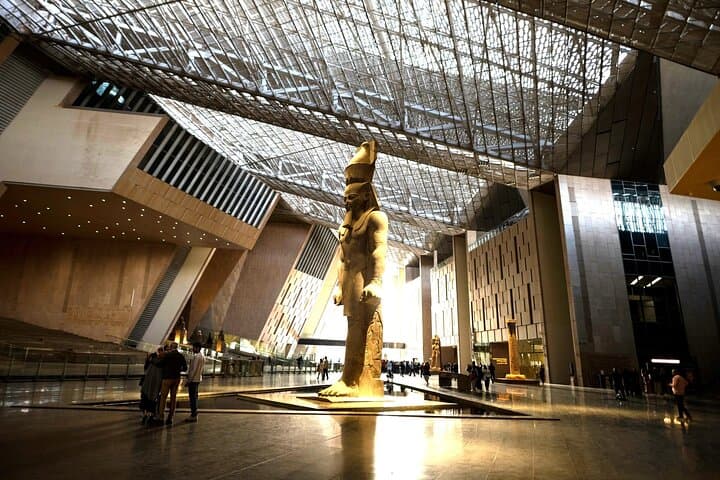
Sand and stone meet the sun as you step onto the Giza Plateau: wind-scoured blocks rise like the bones of an ancient city, and the Sphinx watches with a weathered, human eye. The tour unfolds at a steady pace—first the three great pyramids (Khufu, Khafre, Menkaure) towering above the horizon, then a short transfer to the Grand Egyptian Museum, where modern galleries collect millennia into glass and light.
Verified experiences and guided adventures in the surrounding area.
Operated by Cairo travelers · Giza, Cairo Governorate
Sand and stone meet the sun as you step onto the Giza Plateau: wind-scoured blocks rise like the bones of an ancient city, and the Sphinx watches with a weathered, human eye. The tour unfolds at a steady pace—first the three great pyramids (Khufu, Khafre, Menkaure) towering above the horizon, then a short transfer to the Grand Egyptian Museum, where modern galleries collect millennia into glass and light.
Geography here is simple and stark: the plateau is limestone, carved and quarried through centuries, bordering the Nile valley. The pyramids date to Egypt's Old Kingdom, roughly 4,500 years ago, and their construction shaped local labor systems and early statecraft. Culturally, the site remains active—vendors, conservators, and local guides all play a role in how visitors experience these monuments.
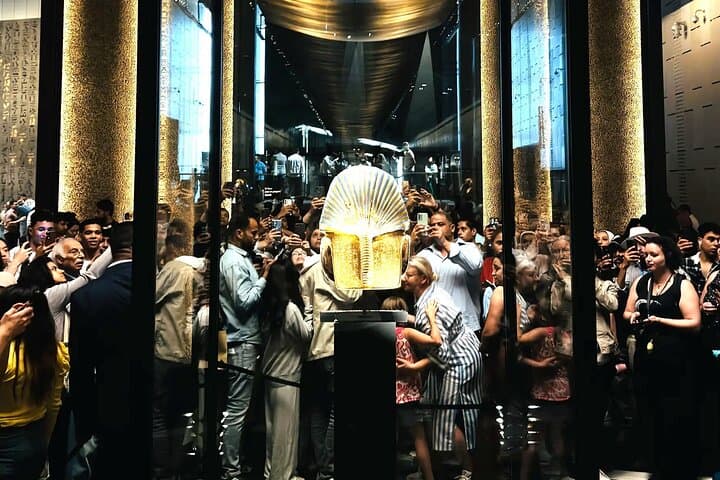
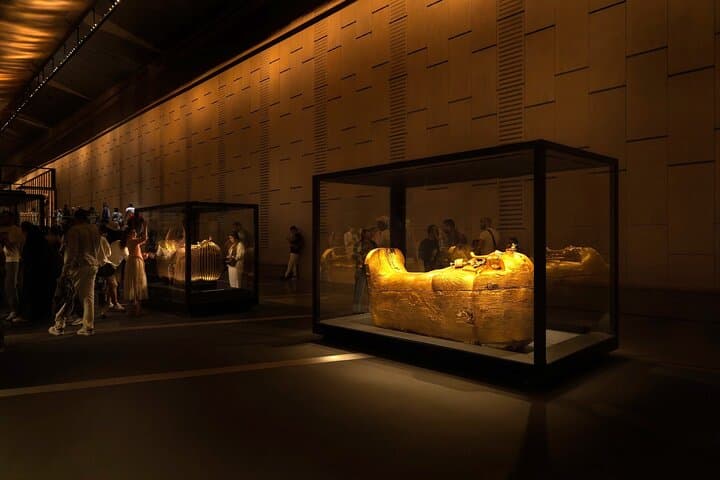
Expect close-up views of pyramid faces, the Sphinx's profile, and museum galleries that now reunite Tutankhamun's treasures with broader material culture. The GEM's conservation labs and elevated terraces offer different perspectives—archaeology in a bright, controlled setting contrasted with the raw, sunlit plateau.
Practical guidance: plan for an eight-hour day with comfortable walking shoes, sun protection, and a pace that allows time at both outdoor ruins and indoor exhibits. Bottled water and an air-conditioned vehicle are usually included; carry photocopies of travel documents and allow extra time for security checks and ticketing. Photography is welcomed in most spaces but obey signage around sensitive artifacts. If heat or crowds are a concern, request earlier morning pickup to see the plateau in softer light and cooler temperatures.
easy.
8 hours.
Suitable for most fitness levels; involves several hours of walking on level and uneven stone surfaces
This tour includes admissions as listed; check your booking details—some packages include internal pyramid entry while others offer exterior viewing only.
Photography is generally permitted in many galleries, but flash and tripods may be restricted; obey signage and staff instructions.
The full experience is about eight hours and typically includes air-conditioned transfer between the plateau and the museum.
Yes—it's rated easy physically, but consider mobility needs for walking on uneven ground and standing in galleries.
The Giza pyramids date to Egypt's Old Kingdom (circa 2600–2500 BCE); the Grand Egyptian Museum reunites many artifacts previously spread across sites, including extensive Tutankhamun material.
Visitor pressure and desert dust threaten fragile surfaces; follow paths, avoid touching stone, and support institutions that fund conservation and site management.
Cairo travelers operates guided outdoor trips and adventures with an emphasis on safety, stewardship, and memorable experiences.

Sand and stone meet the sun as you step onto the Giza Plateau: wind-scoured blocks rise like the bones of an ancient city, and the Sphinx watches with a weathered, human eye. The tour unfolds at a steady pace—first the three great pyramids (Khufu, Khafre, Menkaure) towering above the horizon, then a short transfer to the Grand Egyptian Museum, where modern galleries collect millennia into glass and light.
Sand and stone meet the sun as you step onto the Giza Plateau: wind-scoured blocks rise like the bones of an ancient city, and the Sphinx watches with a weathered, human eye. The tour unfolds at a steady pace—first the three great pyramids (Khufu, Khafre, Menkaure) towering above the horizon, then a short transfer to the Grand Egyptian Museum, where modern galleries collect millennia into glass and light.
Geography here is simple and stark: the plateau is limestone, carved and quarried through centuries, bordering the Nile valley. The pyramids date to Egypt's Old Kingdom, roughly 4,500 years ago, and their construction shaped local labor systems and early statecraft. Culturally, the site remains active—vendors, conservators, and local guides all play a role in how visitors experience these monuments.
Expect close-up views of pyramid faces, the Sphinx's profile, and museum galleries that now reunite Tutankhamun's treasures with broader material culture. The GEM's conservation labs and elevated terraces offer different perspectives—archaeology in a bright, controlled setting contrasted with the raw, sunlit plateau.
Practical guidance: plan for an eight-hour day with comfortable walking shoes, sun protection, and a pace that allows time at both outdoor ruins and indoor exhibits. Bottled water and an air-conditioned vehicle are usually included; carry photocopies of travel documents and allow extra time for security checks and ticketing. Photography is welcomed in most spaces but obey signage around sensitive artifacts. If heat or crowds are a concern, request earlier morning pickup to see the plateau in softer light and cooler temperatures.