THE ADVENTURE COLLECTIVE® · Independent discovery and booking for outdoor travel

Stand at the base of the Great Pyramid, see Tutankhamun’s treasures under modern glass, then lose yourself in the winding alleys of Khan El Khalili. This full‑day Cairo tour pairs world heritage sites with hands‑on cultural moments ideal for first‑time visitors.
Stand at the base of the Great Pyramid, see Tutankhamun’s treasures under modern glass, then lose yourself in the winding alleys of Khan El Khalili. This full‑day Cairo tour pairs world heritage sites with hands‑on cultural moments ideal for first‑time visitors.
You arrive on the Giza Plateau with wind and dust brushing past the great limestone blocks; the Great Pyramid looms, its edges sharp against a pale sky, and camels stand patient like living props. The day unfolds with a practiced rhythm: short drives between monuments, a guided walk around the Sphinx, and a lunch break that replaces the desert heat with cool shade.
Verified experiences and guided adventures in the surrounding area.
Operated by Egypt Escape Travel · Giza, Giza Governorate
You arrive on the Giza Plateau with wind and dust brushing past the great limestone blocks; the Great Pyramid looms, its edges sharp against a pale sky, and camels stand patient like living props. The day unfolds with a practiced rhythm: short drives between monuments, a guided walk around the Sphinx, and a lunch break that replaces the desert heat with cool shade.
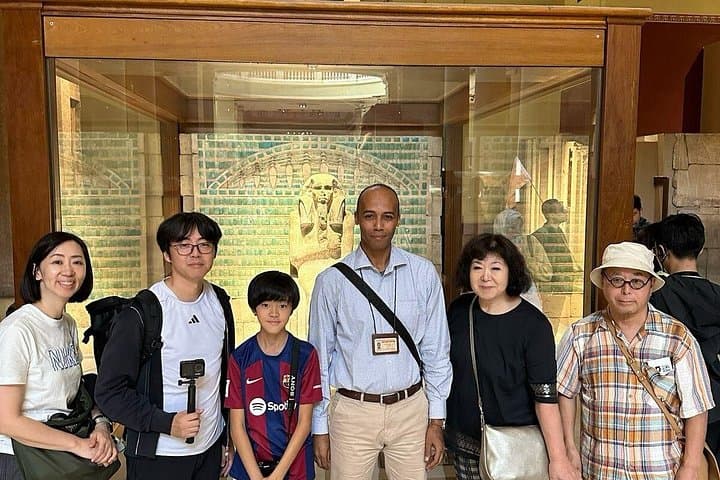
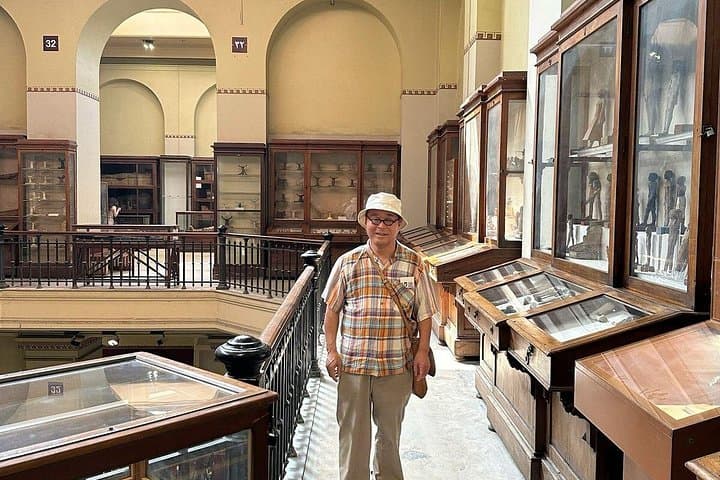
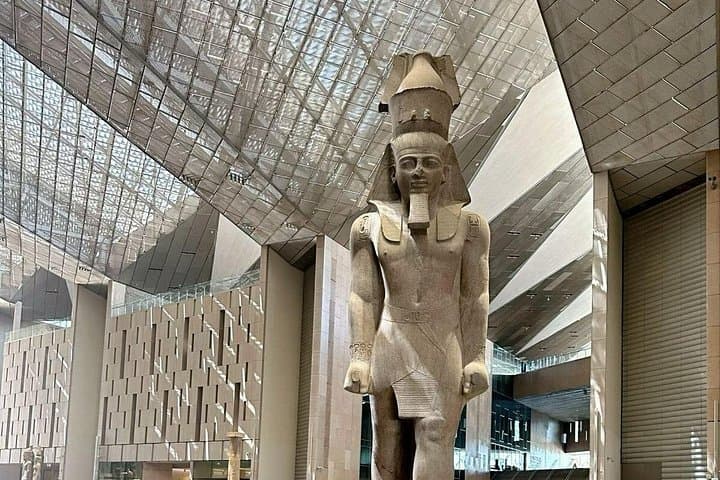
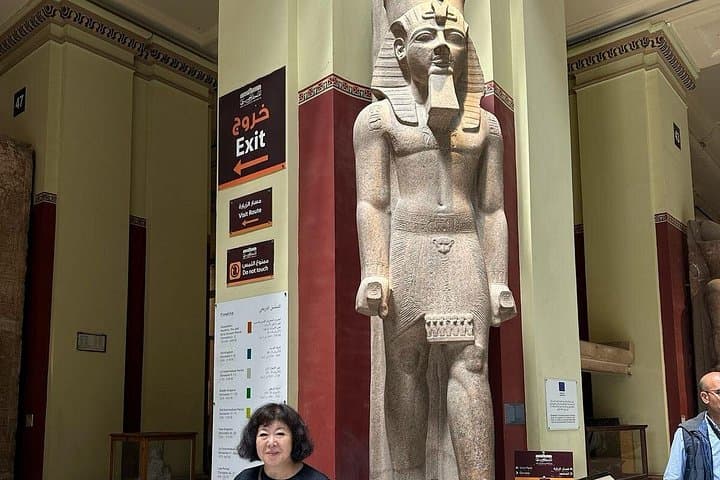
The plateau is old bedrock capped by quarried limestone—an engineered landscape that held funerary architecture for pharaohs of the Fourth Dynasty. Nearby, the Grand Egyptian Museum houses thousands of artifacts and a new, climate‑controlled context for Tutankhamun’s treasures, while Khan El Khalili carries forward centuries of trade culture where Mamluk-era alleys funnel into open courtyards of spice and brass.
Expect historical narration interwoven with practical pacing: photo stops at the pyramids, an interpretive walkthrough at the museum, and bargaining lessons at the bazaar. Admission to each site is commonly separate, and the itinerary often includes a brief camel ride on the plateau and bottled water and lunch provided.
Practical guidance: set out early to avoid peak heat and Cairo traffic, wear sturdy shoes for uneven stone and market steps, and carry sunscreen and a hat. Bring small bills for tips and purchases, and allow 30–60 minutes of travel between the plateau/GEM area and central Cairo depending on traffic. Security checkpoints and bag checks are routine—arrive with ID and minimal loose items. The route is suitable for most travelers but involves a full day on foot, city driving, and crowded public spaces.
easy.
8–10 hours.
Suitable for most fitness levels but expect several hours of walking on uneven surfaces and a full day of standing and transit.
Admissions are commonly not included in the base tour price—check your booking details and prepare cash or card for museum and pyramid entry tickets.
Expect an 8–10 hour day including driving time, guided visits, lunch, and market time—confirm exact pickup and return times with the operator.
Yes; the itinerary is listed as suitable for all fitness levels, but note uneven terrain at the plateau and long periods of walking which may be tiring for some.
Short camel rides (about 10 minutes) are often included; animals are handled by local handlers—follow guides’ instructions and avoid sudden movements.
The Giza complex dates to Egypt’s Old Kingdom (c. 2600–2500 BCE); the Grand Egyptian Museum is a modern conservation effort to centralize and protect artifacts from across ancient Egypt.
High visitor numbers threaten fragile surfaces and microclimates; the GEM’s climate control and regulated access at key sites help preserve artifacts while local guides promote respectful interaction with monuments.
Egypt Escape Travel operates guided outdoor trips and adventures with an emphasis on safety, stewardship, and memorable experiences.
You arrive on the Giza Plateau with wind and dust brushing past the great limestone blocks; the Great Pyramid looms, its edges sharp against a pale sky, and camels stand patient like living props. The day unfolds with a practiced rhythm: short drives between monuments, a guided walk around the Sphinx, and a lunch break that replaces the desert heat with cool shade.
You arrive on the Giza Plateau with wind and dust brushing past the great limestone blocks; the Great Pyramid looms, its edges sharp against a pale sky, and camels stand patient like living props. The day unfolds with a practiced rhythm: short drives between monuments, a guided walk around the Sphinx, and a lunch break that replaces the desert heat with cool shade.
The plateau is old bedrock capped by quarried limestone—an engineered landscape that held funerary architecture for pharaohs of the Fourth Dynasty. Nearby, the Grand Egyptian Museum houses thousands of artifacts and a new, climate‑controlled context for Tutankhamun’s treasures, while Khan El Khalili carries forward centuries of trade culture where Mamluk-era alleys funnel into open courtyards of spice and brass.
Expect historical narration interwoven with practical pacing: photo stops at the pyramids, an interpretive walkthrough at the museum, and bargaining lessons at the bazaar. Admission to each site is commonly separate, and the itinerary often includes a brief camel ride on the plateau and bottled water and lunch provided.
Practical guidance: set out early to avoid peak heat and Cairo traffic, wear sturdy shoes for uneven stone and market steps, and carry sunscreen and a hat. Bring small bills for tips and purchases, and allow 30–60 minutes of travel between the plateau/GEM area and central Cairo depending on traffic. Security checkpoints and bag checks are routine—arrive with ID and minimal loose items. The route is suitable for most travelers but involves a full day on foot, city driving, and crowded public spaces.