THE ADVENTURE COLLECTIVE® · Independent discovery and booking for outdoor travel

Spend a full day at Giza and Saqqara combining guided archaeology with active desert time: a 30-minute camel ride around the pyramids, entry into select tombs, and a one-hour ATV at sunset, with lunch and private transport included.
Spend a full day at Giza and Saqqara combining guided archaeology with active desert time: a 30-minute camel ride around the pyramids, entry into select tombs, and a one-hour ATV at sunset, with lunch and private transport included.
The morning light slides across the Giza plateau and the great stones throw long, cool shadows — you begin the day in the company of structures older than most maps. A local guide meets you in an air-conditioned vehicle and drives you onto the broad plain where the three great pyramids stand; the wind here has a purposeful, abrasive patience that keeps shifting the sand around the foundations.
Verified experiences and guided adventures in the surrounding area.
Operated by Travel all Egypt · Giza, Giza Governorate
The morning light slides across the Giza plateau and the great stones throw long, cool shadows — you begin the day in the company of structures older than most maps. A local guide meets you in an air-conditioned vehicle and drives you onto the broad plain where the three great pyramids stand; the wind here has a purposeful, abrasive patience that keeps shifting the sand around the foundations.
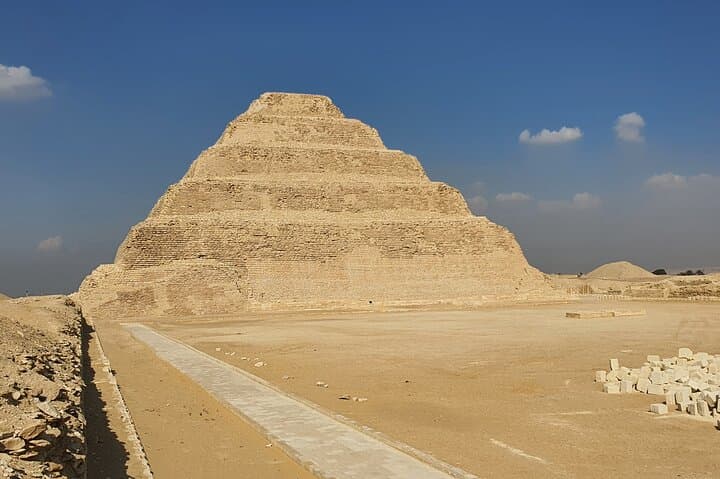
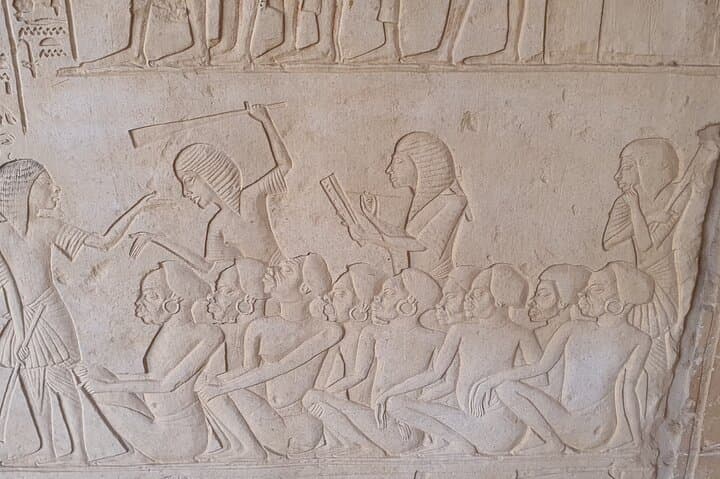
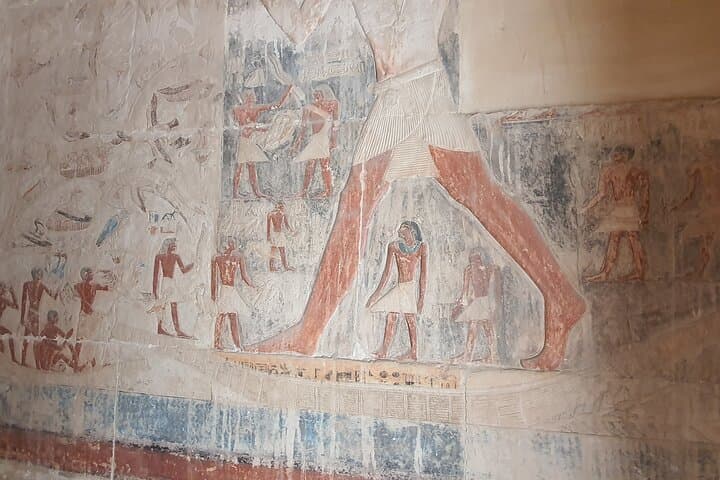
This day combines Old Kingdom archaeology and active desert time. You’ll visit the Giza complex and the Sphinx, then move to Saqqara to explore the Step Pyramid of Djoser and enter select mastabas and the Pyramid of Teti where reliefs and painted scenes reveal daily life from 4,500 years ago. Geologically, the plateau is limestone overlaid by wind-blown sand; archaeologists have been working these layers for centuries, and the sites show a very visible stratigraphy of human use.
Practicalities are straightforward: expect 7–9 hours, limited walking on uneven, sandy and paved surfaces, one 30-minute camel loop around the pyramids, and a one-hour ATV ride at sunset. Bring a hat, sturdy closed-toe shoes, sunscreen and at least 2 liters of water; midday heat can be intense and temperatures drop quickly after sunset. Modest dress is respectful at archaeological sites.
Logistics are handled by a professional guide and private transport, with entrance fees and lunch included. Time your visit for late afternoon to catch the golden hour on the plateau — it changes the angles on the stones and makes the ATV ride feel cinematic without sacrificing safety.
easy.
7–9 hours.
Light walking and short climbs; able to mount a camel and handle a short ATV ride. Not physically strenuous but requires mobility.
The tour runs about 7–9 hours and includes private transport, a professional guide, entrance fees, lunch, bottled water, a 30-minute camel ride and a one-hour ATV ride at sunset.
Yes — the itinerary includes entry to selected sites such as Teti pyramid and certain mastabas; access depends on site rules on the day of visit.
Children are generally welcome but must be supervised; the operator notes the tour is not recommended for pregnant travelers due to camel and ATV components.
A common guideline is to tip the guide and driver separately — roughly 10–15% of the tour cost shared among staff or a few USD per person for local workers, adjusted to your satisfaction.
The Giza pyramids date to Egypt's Old Kingdom (c. 2600–2500 BCE); Saqqara served as Memphis’ necropolis and holds the earliest large-scale stone architecture in Egypt.
High visitor volumes strain fragile tomb paintings and nearby archaeological deposits; stick to marked paths, avoid touching reliefs, and follow guide instructions to reduce impact.
Travel all Egypt operates guided outdoor trips and adventures with an emphasis on safety, stewardship, and memorable experiences.
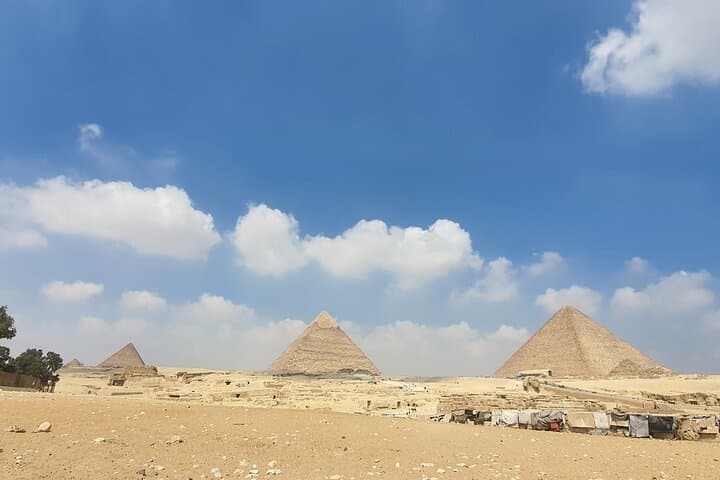
The morning light slides across the Giza plateau and the great stones throw long, cool shadows — you begin the day in the company of structures older than most maps. A local guide meets you in an air-conditioned vehicle and drives you onto the broad plain where the three great pyramids stand; the wind here has a purposeful, abrasive patience that keeps shifting the sand around the foundations.
The morning light slides across the Giza plateau and the great stones throw long, cool shadows — you begin the day in the company of structures older than most maps. A local guide meets you in an air-conditioned vehicle and drives you onto the broad plain where the three great pyramids stand; the wind here has a purposeful, abrasive patience that keeps shifting the sand around the foundations.
This day combines Old Kingdom archaeology and active desert time. You’ll visit the Giza complex and the Sphinx, then move to Saqqara to explore the Step Pyramid of Djoser and enter select mastabas and the Pyramid of Teti where reliefs and painted scenes reveal daily life from 4,500 years ago. Geologically, the plateau is limestone overlaid by wind-blown sand; archaeologists have been working these layers for centuries, and the sites show a very visible stratigraphy of human use.
Practicalities are straightforward: expect 7–9 hours, limited walking on uneven, sandy and paved surfaces, one 30-minute camel loop around the pyramids, and a one-hour ATV ride at sunset. Bring a hat, sturdy closed-toe shoes, sunscreen and at least 2 liters of water; midday heat can be intense and temperatures drop quickly after sunset. Modest dress is respectful at archaeological sites.
Logistics are handled by a professional guide and private transport, with entrance fees and lunch included. Time your visit for late afternoon to catch the golden hour on the plateau — it changes the angles on the stones and makes the ATV ride feel cinematic without sacrificing safety.