THE ADVENTURE COLLECTIVE® · Independent discovery and booking for outdoor travel

Spend a full day with an Egyptologist exploring Giza’s three pyramids, the Sphinx, and the Egyptian Museum. This private tour balances desert panoramas and curated museum time with a local lunch and hotel pickup.
Spend a full day with an Egyptologist exploring Giza’s three pyramids, the Sphinx, and the Egyptian Museum. This private tour balances desert panoramas and curated museum time with a local lunch and hotel pickup.
The morning light slices across the desert like a ruler as your air-conditioned vehicle hums toward the Giza Plateau. Sand stretches outward, then the three pyramids rise—geometry and human will stacked against the sky—while the Sphinx watches with an inscrutable expression. For two hours you’ll move at ground-level pace: photographs, paused stories from an Egyptologist, and the slow realization of scale as stone blocks the size of cars tower above.
Verified experiences and guided adventures in the surrounding area.
Operated by Hyatt Tours Egypt day tours · Giza, Giza Governorate
The morning light slices across the desert like a ruler as your air-conditioned vehicle hums toward the Giza Plateau. Sand stretches outward, then the three pyramids rise—geometry and human will stacked against the sky—while the Sphinx watches with an inscrutable expression. For two hours you’ll move at ground-level pace: photographs, paused stories from an Egyptologist, and the slow realization of scale as stone blocks the size of cars tower above.
This route threads ancient history and modern Cairo. The Giza monuments date to the Old Kingdom (around 4,500 years ago) and were built from local limestone and imported granite; the plateau’s geology explains the durable casemates and the weathered faces. After a local lunch—simple, hearty fare—you cross to Tahrir Square and the Egyptian Museum, where Tutankhamun’s mask and royal mummies put funerary craft and medical ingenuity into context.
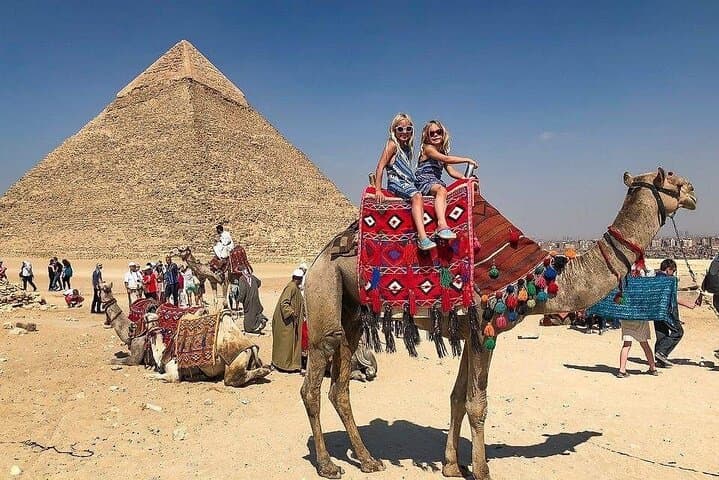
Expect a mix of open desert wind and crowded museum halls. Photography is abundant at the plateau; the museum favors focused inspection. Cultural notes: the plateau sits within a living urban landscape where vendors and camel handlers operate under informal rules—watch your belongings and negotiate fares.
Practical guidance: arrive hydrated and sun-ready, bring a hat and comfortable walking shoes with grip for uneven stone. The tour runs 6–8 hours with hotel pickup and drop-off; museum queues can be brisk, so plan for a steady pace. If you want to enter a pyramid, notify the operator in advance to reserve the limited inner chambers.
moderate.
6–8 hours.
Moderate fitness: able to walk up to 3 miles on uneven surfaces and tolerate heat for several hours
The tour lasts approximately 6–8 hours and includes hotel pickup/drop-off, entrance fees, an Egyptologist guide, lunch at a local restaurant, air-conditioned transport, and a bottled water.
Yes, but inner-chamber entry is limited; you must request pyramid entry in advance so the operator can reserve tickets.
The museum has some accessibility accommodations, but sections include stairs and crowded rooms—notify your provider in advance to arrange assistance.
Tipping is customary; a typical range is $5–$10 per person for the guide and $2–$5 for the driver, adjusted for service quality.
Giza’s pyramids were built during Egypt’s Fourth Dynasty; their construction reflects advanced quarrying and labor organization, while the Egyptian Museum collects artifacts spanning millennia of Pharaonic rule.
Visitor pressure and urban expansion strain the plateau; stick to marked paths, avoid climbing monuments, and support guides who practice responsible tourism.
Hyatt Tours Egypt day tours operates guided outdoor trips and adventures with an emphasis on safety, stewardship, and memorable experiences.
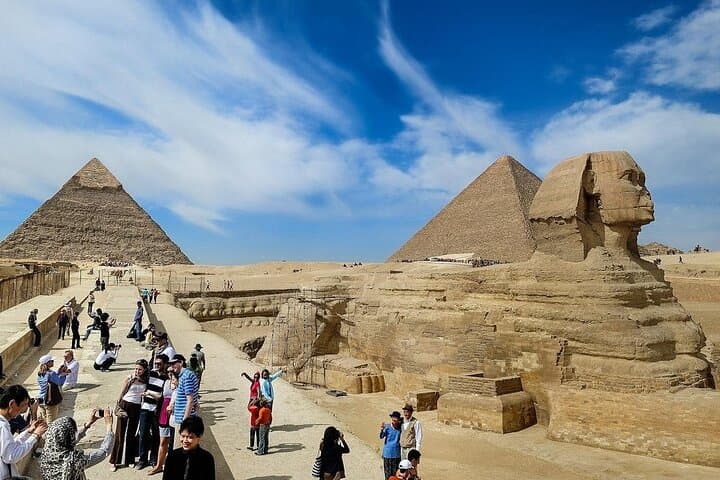
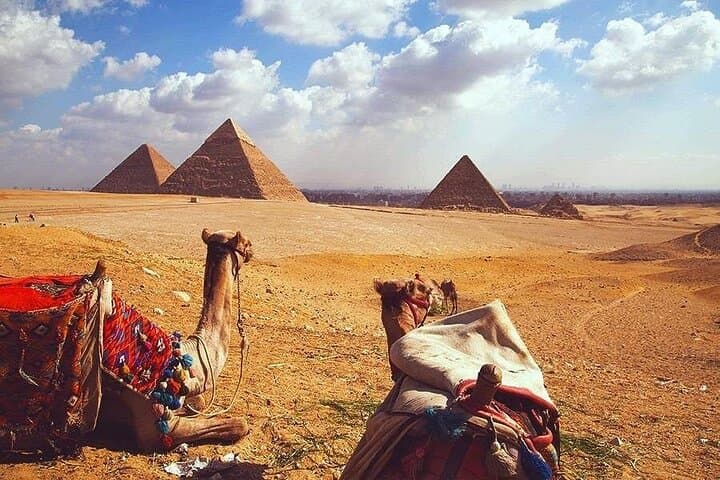
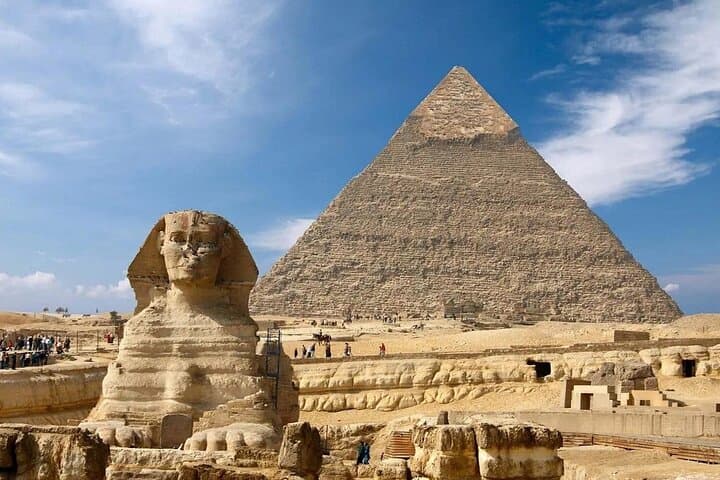
The morning light slices across the desert like a ruler as your air-conditioned vehicle hums toward the Giza Plateau. Sand stretches outward, then the three pyramids rise—geometry and human will stacked against the sky—while the Sphinx watches with an inscrutable expression. For two hours you’ll move at ground-level pace: photographs, paused stories from an Egyptologist, and the slow realization of scale as stone blocks the size of cars tower above.
The morning light slices across the desert like a ruler as your air-conditioned vehicle hums toward the Giza Plateau. Sand stretches outward, then the three pyramids rise—geometry and human will stacked against the sky—while the Sphinx watches with an inscrutable expression. For two hours you’ll move at ground-level pace: photographs, paused stories from an Egyptologist, and the slow realization of scale as stone blocks the size of cars tower above.
This route threads ancient history and modern Cairo. The Giza monuments date to the Old Kingdom (around 4,500 years ago) and were built from local limestone and imported granite; the plateau’s geology explains the durable casemates and the weathered faces. After a local lunch—simple, hearty fare—you cross to Tahrir Square and the Egyptian Museum, where Tutankhamun’s mask and royal mummies put funerary craft and medical ingenuity into context.
Expect a mix of open desert wind and crowded museum halls. Photography is abundant at the plateau; the museum favors focused inspection. Cultural notes: the plateau sits within a living urban landscape where vendors and camel handlers operate under informal rules—watch your belongings and negotiate fares.
Practical guidance: arrive hydrated and sun-ready, bring a hat and comfortable walking shoes with grip for uneven stone. The tour runs 6–8 hours with hotel pickup and drop-off; museum queues can be brisk, so plan for a steady pace. If you want to enter a pyramid, notify the operator in advance to reserve the limited inner chambers.