THE ADVENTURE COLLECTIVE® · Independent discovery and booking for outdoor travel

Spend a day moving between ancient stone and the slow flow of the Nile: morning at Giza’s pyramids and Sphinx, an afternoon among Pharaonic artifacts at the Egyptian Museum, and an evening dinner cruise on Cairo’s river. Practical inclusions like private transfers, meals, and bottled water make this an efficient way to cover major Cairo highlights.
Spend a day moving between ancient stone and the slow flow of the Nile: morning at Giza’s pyramids and Sphinx, an afternoon among Pharaonic artifacts at the Egyptian Museum, and an evening dinner cruise on Cairo’s river. Practical inclusions like private transfers, meals, and bottled water make this an efficient way to cover major Cairo highlights.
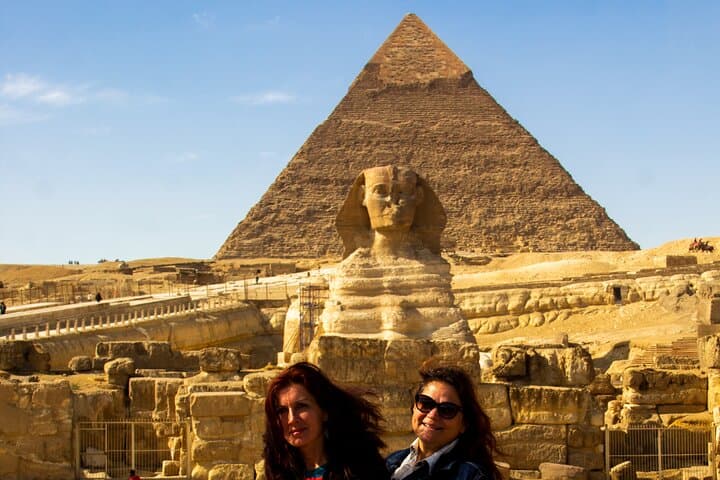
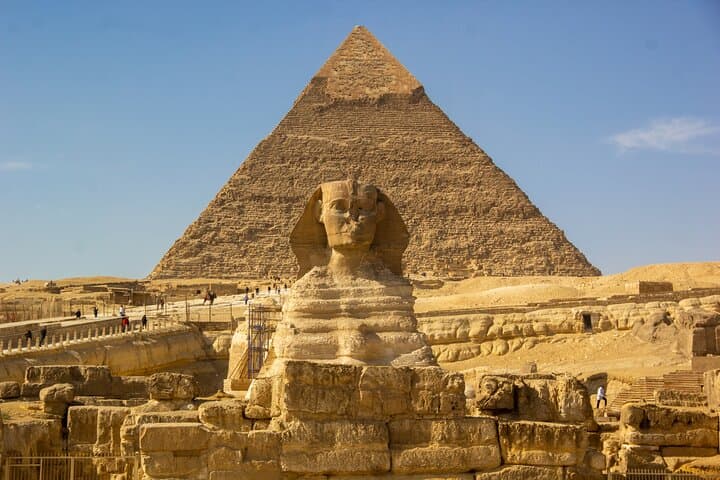
Dawn throws a hard, clear light across the Giza Plateau; the three great pyramids throw long shadows that slide over wind-swept flagstones while the Sphinx stares east, patient and unblinking. You arrive by air-conditioned vehicle and step onto a history-heavy expanse where limestone and desert meet the modern city.
Verified experiences and guided adventures in the surrounding area.
Operated by This Is Egypt · Cairo, Cairo
Dawn throws a hard, clear light across the Giza Plateau; the three great pyramids throw long shadows that slide over wind-swept flagstones while the Sphinx stares east, patient and unblinking. You arrive by air-conditioned vehicle and step onto a history-heavy expanse where limestone and desert meet the modern city.
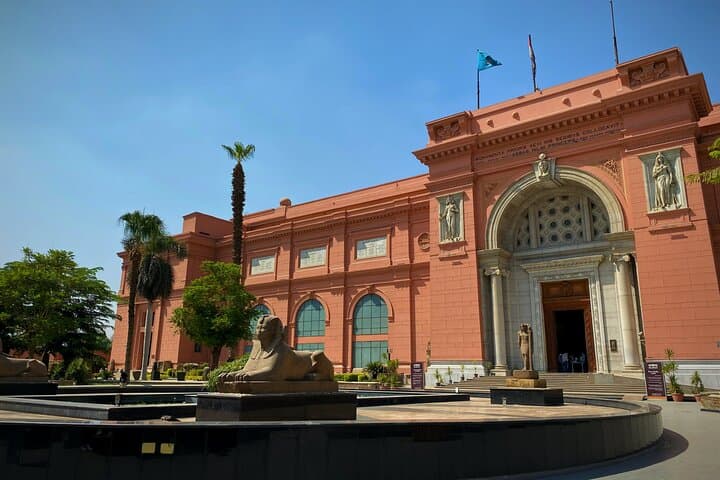
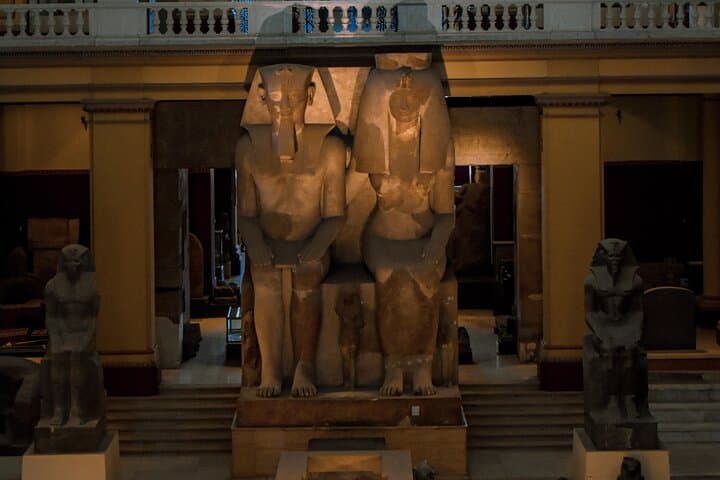
The morning stops cover the Great Pyramid complex — Khufu, Khafre and Menkaure — and the Sphinx with the nearby Valley Temple, formed from natural bedrock and dressed with centuries of human hands. Geologically, the plateau is Eocene limestone; pyramids are built from locally quarried blocks with remnants of smooth casing stones visible in places. Midday takes you to the Egyptian Museum in Tahrir, home to over 250,000 artifacts including Tutankhamun’s funerary treasures unearthed in 1922, where display rooms demand steady feet and patience.
After a hotel break you return to the river. The Nile cruise at dusk loosens the city’s edges: the river carries you past lit bridges while dancers and a chef’s set menu shape a relaxed evening.
Practical guidance: expect roughly 1–3 km of walking at the plateau on uneven stone and sand with minimal elevation change, and 1–2 hours standing in museum galleries. The full program runs about eight hours with a separate two-hour evening cruise; private vehicle transfers, bottled water, lunch and dinner are included. Bring sun protection, sturdy shoes, and modest clothing for museum interiors. Photography is generally allowed outside; check permissions inside museum halls and respect local customs.
easy.
8 hours (daytime tour) + 2-hour evening cruise.
Suitable for most fitness levels; expect several miles of walking on uneven surfaces and standing in museums.
This tour includes admissions for the pyramid complex and the Egyptian Museum as described in the itinerary.
Pickup from central Cairo hotels is standard; pickup from some airports and new districts may incur an additional charge—confirm at booking.
The operator lists wheelchair-accessible transportation and many surfaces, but some areas of the plateau and certain museum displays have steps—contact the provider to plan accessibility needs.
Photography policies can change; general photography is often allowed in public halls but flash and tripod use may be restricted and special rooms (e.g., some Tutankhamun displays) can have limits.
The Giza pyramids date to Egypt’s Old Kingdom (c. 2600–2500 BCE) as royal tombs; the Egyptian Museum’s modern collection grew rapidly after 19th–20th century excavations, highlighted by Tutankhamun’s discovery in 1922.
High visitor numbers and urban pollution stress ancient stone and museum environments; stick to marked paths, avoid touching monuments and support operators that follow conservation guidance.
This Is Egypt operates guided outdoor trips and adventures with an emphasis on safety, stewardship, and memorable experiences.
Dawn throws a hard, clear light across the Giza Plateau; the three great pyramids throw long shadows that slide over wind-swept flagstones while the Sphinx stares east, patient and unblinking. You arrive by air-conditioned vehicle and step onto a history-heavy expanse where limestone and desert meet the modern city.
Dawn throws a hard, clear light across the Giza Plateau; the three great pyramids throw long shadows that slide over wind-swept flagstones while the Sphinx stares east, patient and unblinking. You arrive by air-conditioned vehicle and step onto a history-heavy expanse where limestone and desert meet the modern city.
The morning stops cover the Great Pyramid complex — Khufu, Khafre and Menkaure — and the Sphinx with the nearby Valley Temple, formed from natural bedrock and dressed with centuries of human hands. Geologically, the plateau is Eocene limestone; pyramids are built from locally quarried blocks with remnants of smooth casing stones visible in places. Midday takes you to the Egyptian Museum in Tahrir, home to over 250,000 artifacts including Tutankhamun’s funerary treasures unearthed in 1922, where display rooms demand steady feet and patience.
After a hotel break you return to the river. The Nile cruise at dusk loosens the city’s edges: the river carries you past lit bridges while dancers and a chef’s set menu shape a relaxed evening.
Practical guidance: expect roughly 1–3 km of walking at the plateau on uneven stone and sand with minimal elevation change, and 1–2 hours standing in museum galleries. The full program runs about eight hours with a separate two-hour evening cruise; private vehicle transfers, bottled water, lunch and dinner are included. Bring sun protection, sturdy shoes, and modest clothing for museum interiors. Photography is generally allowed outside; check permissions inside museum halls and respect local customs.