THE ADVENTURE COLLECTIVE® · Independent discovery and booking for outdoor travel

Ride a camel across the Giza Plateau, stand before the Great Pyramid, and explore the Egyptian Museum’s unparalleled collection in a single, carefully timed day. This tour pairs outdoor history with museum immersion — ideal for first-time visitors.
Ride a camel across the Giza Plateau, stand before the Great Pyramid, and explore the Egyptian Museum’s unparalleled collection in a single, carefully timed day. This tour pairs outdoor history with museum immersion — ideal for first-time visitors.
The sun slides along the faces of ancient stone as the camel’s gait sets a steady rhythm across the plateau — dust lifts, voices thin, and the three pyramids of Giza cut a clean silhouette against the sky. On this full-day excursion visitors move from the broad, wind-swept terraces beside Khufu to the shadowed alleys around the Sphinx, then into the cool galleries of the Egyptian Museum where gold, glass and painted wood keep a quieter watch.
Verified experiences and guided adventures in the surrounding area.
Operated by This Is Egypt Aswan · Giza, Cairo Governorate
The sun slides along the faces of ancient stone as the camel’s gait sets a steady rhythm across the plateau — dust lifts, voices thin, and the three pyramids of Giza cut a clean silhouette against the sky. On this full-day excursion visitors move from the broad, wind-swept terraces beside Khufu to the shadowed alleys around the Sphinx, then into the cool galleries of the Egyptian Museum where gold, glass and painted wood keep a quieter watch.
These monuments date to Egypt’s Fourth Dynasty more than 4,500 years ago; the pyramids are engineered from local limestone and core blocks quarried nearby, while the Sphinx is carved from bedrock guarding the valley. In the museum, objects span the Pharaonic era: funerary goods, statuary and the famed treasures of Tutankhamun. The tour brackets living Cairo — bazaars, street vendors and modern traffic — against that deep antiquity.
Expect sandy, uneven walking and short stretches on camelback (about 20–30 minutes). Guides typically include entrance fees and lunch; security screening and crowds at the museum are common midday. Practical timing matters: mornings are cooler and light is crisper for photography. Respect local customs with modest clothing and follow site rules — climbing monuments is prohibited.
Bring sun protection, a sturdy pair of closed-toe shoes for uneven terrain, and a refillable water bottle. Keep passport or ID handy for museum entry and allow extra time for traffic between sites. The day balances spectacle and logistics: paced exploration, a dust-leaned camel ride, and a long, slow pull through Egypt’s recorded past.
easy.
8 hours.
Suitable for most fitness levels; involves moderate walking on uneven ground and a short camel ride.
Yes — the tour description lists entrance fees to the pyramids, Sphinx area and the Egyptian Museum as included.
Interior access requires a special ticket and is often not included; check with the operator beforehand if you want to go inside Khufu's chamber.
Standard hotel pickup within central Cairo is typically included; pickups from Cairo airport and certain outlying districts may incur an extra charge.
Camel rides are brief (about 20–30 minutes) and generally safe, but those with mobility issues should inform the operator; children should be accompanied and supervised.
The Giza pyramids were constructed during Egypt’s Fourth Dynasty (c. 2600–2500 BCE) as royal tombs; the Egyptian Museum houses artifacts spanning millennia, including Tutankhamun’s funerary treasures.
High visitor numbers and urban pollution stress the limestone structures; follow fenced paths, avoid touching delicate surfaces, and support local conservation through guided tours that fund maintenance.
This Is Egypt Aswan operates guided outdoor trips and adventures with an emphasis on safety, stewardship, and memorable experiences.
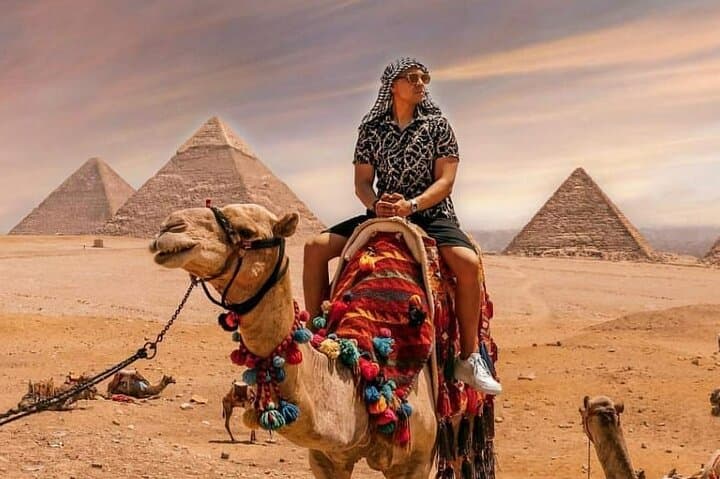



The sun slides along the faces of ancient stone as the camel’s gait sets a steady rhythm across the plateau — dust lifts, voices thin, and the three pyramids of Giza cut a clean silhouette against the sky. On this full-day excursion visitors move from the broad, wind-swept terraces beside Khufu to the shadowed alleys around the Sphinx, then into the cool galleries of the Egyptian Museum where gold, glass and painted wood keep a quieter watch.
The sun slides along the faces of ancient stone as the camel’s gait sets a steady rhythm across the plateau — dust lifts, voices thin, and the three pyramids of Giza cut a clean silhouette against the sky. On this full-day excursion visitors move from the broad, wind-swept terraces beside Khufu to the shadowed alleys around the Sphinx, then into the cool galleries of the Egyptian Museum where gold, glass and painted wood keep a quieter watch.
These monuments date to Egypt’s Fourth Dynasty more than 4,500 years ago; the pyramids are engineered from local limestone and core blocks quarried nearby, while the Sphinx is carved from bedrock guarding the valley. In the museum, objects span the Pharaonic era: funerary goods, statuary and the famed treasures of Tutankhamun. The tour brackets living Cairo — bazaars, street vendors and modern traffic — against that deep antiquity.
Expect sandy, uneven walking and short stretches on camelback (about 20–30 minutes). Guides typically include entrance fees and lunch; security screening and crowds at the museum are common midday. Practical timing matters: mornings are cooler and light is crisper for photography. Respect local customs with modest clothing and follow site rules — climbing monuments is prohibited.
Bring sun protection, a sturdy pair of closed-toe shoes for uneven terrain, and a refillable water bottle. Keep passport or ID handy for museum entry and allow extra time for traffic between sites. The day balances spectacle and logistics: paced exploration, a dust-leaned camel ride, and a long, slow pull through Egypt’s recorded past.