THE ADVENTURE COLLECTIVE® · Independent discovery and booking for outdoor travel

Walk the Giza plateau at sunrise and then step into the Egyptian Museum’s dim galleries—this private tour pairs open desert vistas with some of Egypt’s most iconic artifacts. Expect a 5–7 hour, guide-led day focused on history, practical logistics, and vantage points that beat the crowds.
Walk the Giza plateau at sunrise and then step into the Egyptian Museum’s dim galleries—this private tour pairs open desert vistas with some of Egypt’s most iconic artifacts. Expect a 5–7 hour, guide-led day focused on history, practical logistics, and vantage points that beat the crowds.
You step out of the car onto wind-polished limestone and the desert opens like a quiet theatre—three great pyramids rise, their edges catching the sun and throwing long shadows across packed sand. The wind dares you to walk closer; camel handlers call from the edge of the plateau. This is Giza: geometry and labor, stone heaped into sky-facing tombs that have watched the Nile valley for millennia.
Verified experiences and guided adventures in the surrounding area.
Operated by Stamps Tours · Giza, Cairo Governorate
You step out of the car onto wind-polished limestone and the desert opens like a quiet theatre—three great pyramids rise, their edges catching the sun and throwing long shadows across packed sand. The wind dares you to walk closer; camel handlers call from the edge of the plateau. This is Giza: geometry and labor, stone heaped into sky-facing tombs that have watched the Nile valley for millennia.
The tour threads a short history: these monuments date to Egypt’s Old Kingdom, built as royal tombs and aligned with stellar and solar cycles. Geologically the plateau is a slab of Eocene limestone quarried to build the pyramids, the same bedrock that preserves tombs and mastabas beneath the surface. Then the rhythm shifts to Tahrir Square—inside the Egyptian Museum you’ll stand before gold-crafted funerary masks and coffins from 3,000–5,000 years ago. Note: some treasures are moving to the new Grand Egyptian Museum near Giza, but the collection in Tahrir remains vast.
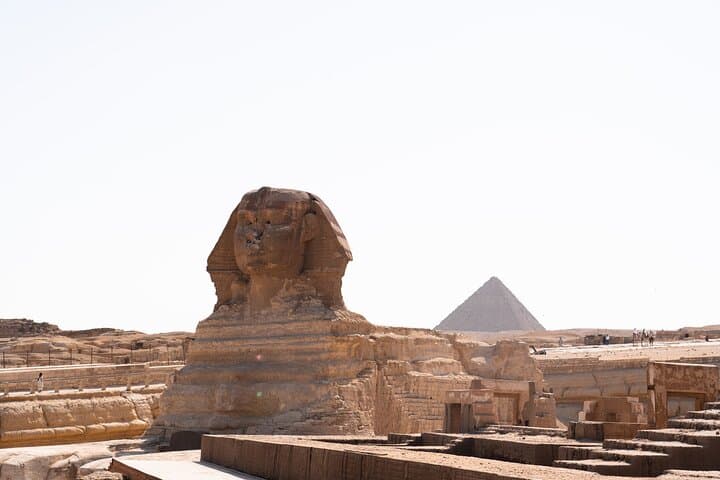
Practically: expect 5–7 hours, private transport, and a licensed guide who covers admission fees. Start early to beat heat and crowds; mornings sharpen views and reduce dust. Wear sturdy closed-toe shoes for uneven, sandy terrain; sun protection is non-negotiable. Carry passport or ID for ticketing, small bills for tips and camel photos, and a respectful outfit for museum spaces. If you want quieter moments, ask your guide to time a short sidestop for views of the Sphinx or a rooftop café over the Nile. Respect the stones—don’t climb—and leave enough time to absorb both the desert openness and the dense artifacts inside the museum.
easy.
5–7 hours.
Suitable for all fitness levels; requires walking short distances on uneven ground and brief standing periods in galleries.
Yes—this private tour includes admission to the Pyramids, the Sphinx area, and the Egyptian Museum as stated in the inclusions.
The tour runs approximately 5–7 hours depending on traffic and time spent at each site; your guide will adjust pacing as needed.
Access at Giza is limited—surfaces are uneven and sandy; the Egyptian Museum has more accessible areas but check with the operator for specific accommodations.
Dress conservatively for cultural sites: lightweight, breathable clothing that covers shoulders and knees; comfortable closed-toe shoes for outdoor walking.
The Giza pyramids were constructed during Egypt’s Old Kingdom as monumental pharaonic tombs; the Egyptian Museum (founded in the 19th century) collects artifacts spanning millennia, including treasures from Tutankhamun.
Heavy visitor numbers and environmental exposure stress these ancient stones; stick to marked paths, avoid touching masonry, and support licensed guides and local conservation initiatives.
Stamps Tours operates guided outdoor trips and adventures with an emphasis on safety, stewardship, and memorable experiences.
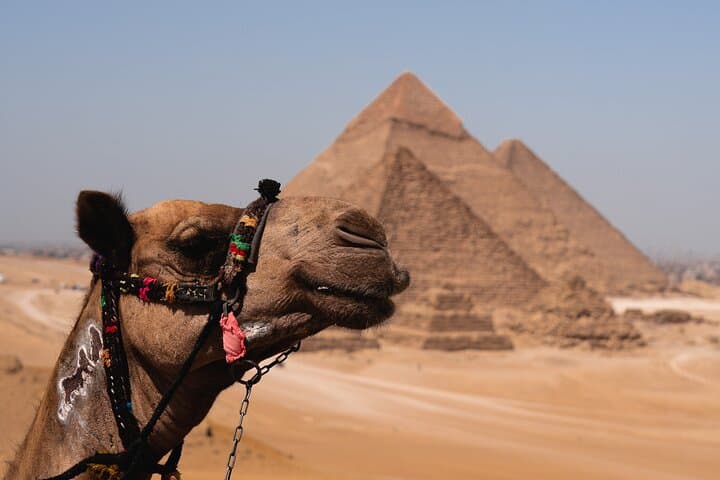
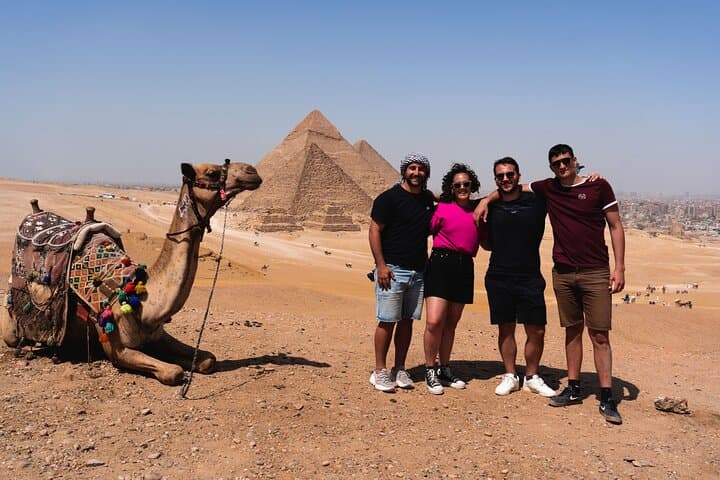
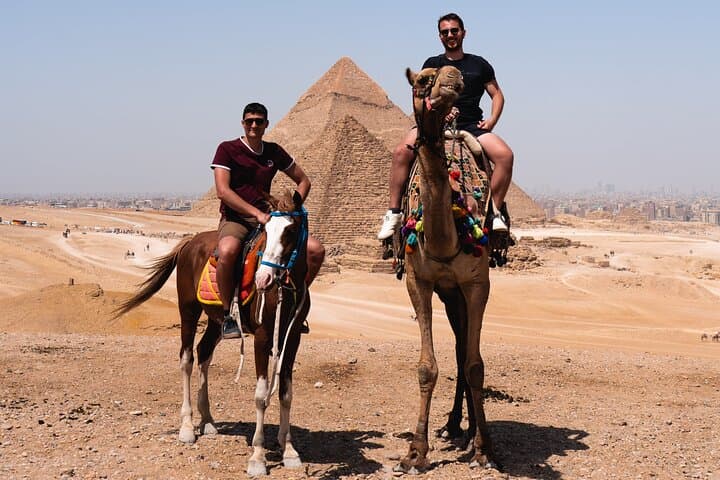
You step out of the car onto wind-polished limestone and the desert opens like a quiet theatre—three great pyramids rise, their edges catching the sun and throwing long shadows across packed sand. The wind dares you to walk closer; camel handlers call from the edge of the plateau. This is Giza: geometry and labor, stone heaped into sky-facing tombs that have watched the Nile valley for millennia.
You step out of the car onto wind-polished limestone and the desert opens like a quiet theatre—three great pyramids rise, their edges catching the sun and throwing long shadows across packed sand. The wind dares you to walk closer; camel handlers call from the edge of the plateau. This is Giza: geometry and labor, stone heaped into sky-facing tombs that have watched the Nile valley for millennia.
The tour threads a short history: these monuments date to Egypt’s Old Kingdom, built as royal tombs and aligned with stellar and solar cycles. Geologically the plateau is a slab of Eocene limestone quarried to build the pyramids, the same bedrock that preserves tombs and mastabas beneath the surface. Then the rhythm shifts to Tahrir Square—inside the Egyptian Museum you’ll stand before gold-crafted funerary masks and coffins from 3,000–5,000 years ago. Note: some treasures are moving to the new Grand Egyptian Museum near Giza, but the collection in Tahrir remains vast.
Practically: expect 5–7 hours, private transport, and a licensed guide who covers admission fees. Start early to beat heat and crowds; mornings sharpen views and reduce dust. Wear sturdy closed-toe shoes for uneven, sandy terrain; sun protection is non-negotiable. Carry passport or ID for ticketing, small bills for tips and camel photos, and a respectful outfit for museum spaces. If you want quieter moments, ask your guide to time a short sidestop for views of the Sphinx or a rooftop café over the Nile. Respect the stones—don’t climb—and leave enough time to absorb both the desert openness and the dense artifacts inside the museum.