THE ADVENTURE COLLECTIVE® · Independent discovery and booking for outdoor travel

A private half-day that pairs a guided visit to the Great Pyramids and Sphinx with a high-adrenal ATV across the Giza desert. Fast-paced, flexible, and door-to-door—this tour shows the monuments up close and lets you race dunes with the plateau in the rearview.
A private half-day that pairs a guided visit to the Great Pyramids and Sphinx with a high-adrenal ATV across the Giza desert. Fast-paced, flexible, and door-to-door—this tour shows the monuments up close and lets you race dunes with the plateau in the rearview.
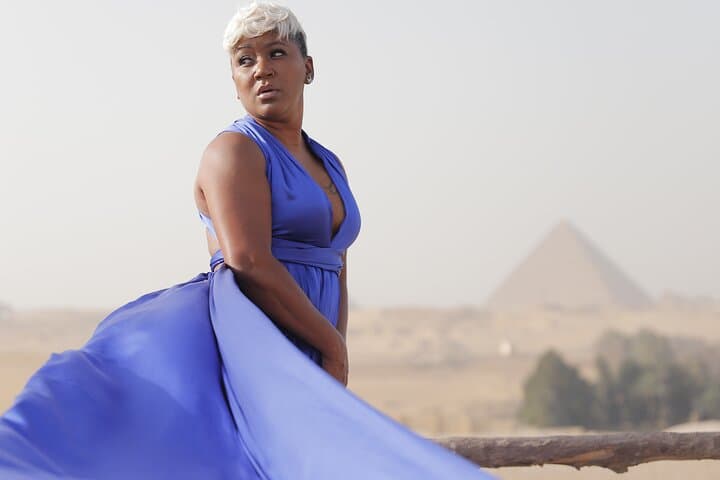
You step out of the air-conditioned vehicle and the desert breathes against your face—warm, a little gritty, the dunes already shaped by wind into ridges that dare you to cross them. Ahead, the three pyramids cut clean silhouettes against the sky; their limestone faces throw a hard, bright light that flattens distance and sharpens detail.
Verified experiences and guided adventures in the surrounding area.
Operated by Egypt Tours Online · Giza, Giza Governorate
You step out of the air-conditioned vehicle and the desert breathes against your face—warm, a little gritty, the dunes already shaped by wind into ridges that dare you to cross them. Ahead, the three pyramids cut clean silhouettes against the sky; their limestone faces throw a hard, bright light that flattens distance and sharpens detail.
The Giza Plateau is both archaeology and geology: Fourth Dynasty burial complexes built on a fossil-rich limestone ridge laid down when the Mediterranean reached this shore millions of years ago. The Great Pyramid of Khufu, Khafre’s complex with its nearby Sphinx, and Menkaure’s smaller stone mass are monuments of royal ambition and painstaking engineering. Local guides often fold in cultural notes—how quarrying and later restorations changed the plateau, and how the Sphinx’s face has been reinterpreted across eras.
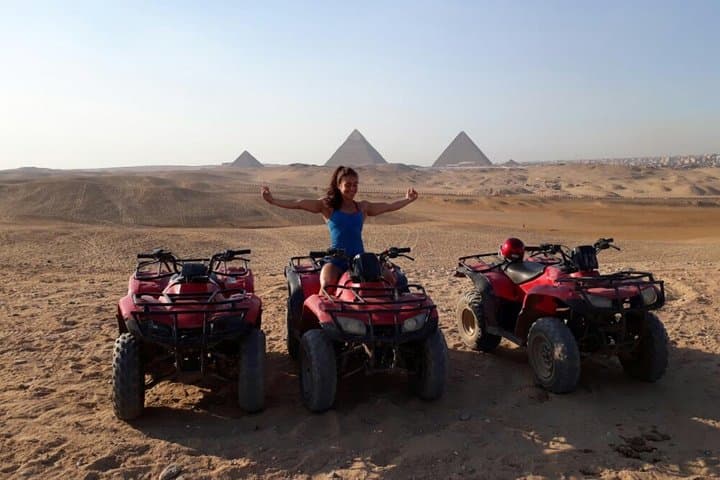
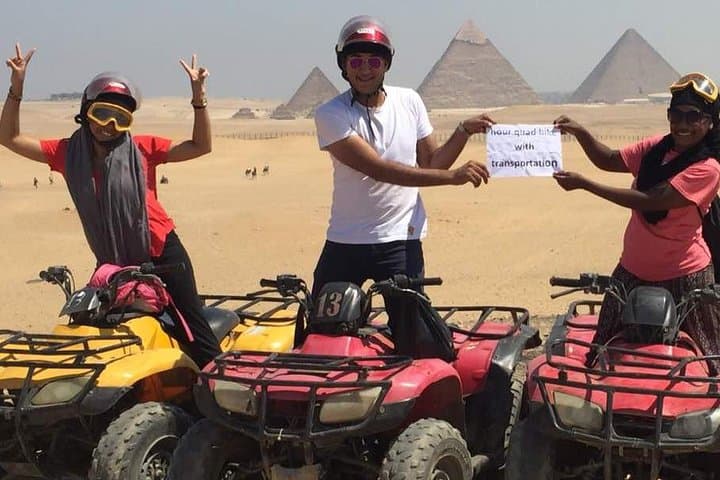
After a focused walk among the monuments you transfer to a desert staging area for a one-hour ATV or buggy run. The sand pushes and yields; dunes become a landscape that tests throttle control and timing. The ride frames the pyramids in an unexpected way—backlit, distant, monumental—perfect for photographs and the kind of memory that mixes motion and stillness.
Practical guidance: allow roughly five hours for door-to-door pickup, museum-area queues if entering, and the ATV safety briefing. Bring sun protection, layered light clothing for dust and breeze, sturdy closed shoes for both plateau surfaces and dune riding, and small bills for site staff and optional extras like camel rides or interior pyramid entry. Expect private transfers, bottled water, and a local lunch option if selected; extra charges typically apply for camel rides and entering the pyramid interior.
moderate.
5 hours.
Suitable for travelers in light-to-moderate physical shape—requires short walks on uneven limestone and the ability to climb into ATVs or buggies.
Basic entry to the Giza Plateau is generally included with guide options; interior pyramid entry is often extra and must be selected or paid for on-site.
Operators provide a safety briefing and basic instruction—ATVs are suitable for beginners with common-sense driving, but full-speed dune runs require attention and steady footing.
Yes—private door-to-door pick-up and drop-off from Cairo or Giza hotels is included in the standard service.
Both are commonly available as optional extras; camel rides and local restaurant lunches usually incur additional charges.
The Giza Necropolis dates to Egypt’s Fourth Dynasty (c. 2600–2500 BCE), with the Great Pyramid attributed to Khufu and the layout reflecting complex funerary architecture and royal cult practices.
Erosion, visitor wear, and urban encroachment are ongoing concerns; visitors are encouraged to stay on designated paths and avoid leaning on ancient masonry to limit further damage.
Egypt Tours Online operates guided outdoor trips and adventures with an emphasis on safety, stewardship, and memorable experiences.

You step out of the air-conditioned vehicle and the desert breathes against your face—warm, a little gritty, the dunes already shaped by wind into ridges that dare you to cross them. Ahead, the three pyramids cut clean silhouettes against the sky; their limestone faces throw a hard, bright light that flattens distance and sharpens detail.
You step out of the air-conditioned vehicle and the desert breathes against your face—warm, a little gritty, the dunes already shaped by wind into ridges that dare you to cross them. Ahead, the three pyramids cut clean silhouettes against the sky; their limestone faces throw a hard, bright light that flattens distance and sharpens detail.
The Giza Plateau is both archaeology and geology: Fourth Dynasty burial complexes built on a fossil-rich limestone ridge laid down when the Mediterranean reached this shore millions of years ago. The Great Pyramid of Khufu, Khafre’s complex with its nearby Sphinx, and Menkaure’s smaller stone mass are monuments of royal ambition and painstaking engineering. Local guides often fold in cultural notes—how quarrying and later restorations changed the plateau, and how the Sphinx’s face has been reinterpreted across eras.
After a focused walk among the monuments you transfer to a desert staging area for a one-hour ATV or buggy run. The sand pushes and yields; dunes become a landscape that tests throttle control and timing. The ride frames the pyramids in an unexpected way—backlit, distant, monumental—perfect for photographs and the kind of memory that mixes motion and stillness.
Practical guidance: allow roughly five hours for door-to-door pickup, museum-area queues if entering, and the ATV safety briefing. Bring sun protection, layered light clothing for dust and breeze, sturdy closed shoes for both plateau surfaces and dune riding, and small bills for site staff and optional extras like camel rides or interior pyramid entry. Expect private transfers, bottled water, and a local lunch option if selected; extra charges typically apply for camel rides and entering the pyramid interior.