THE ADVENTURE COLLECTIVE® · Independent discovery and booking for outdoor travel

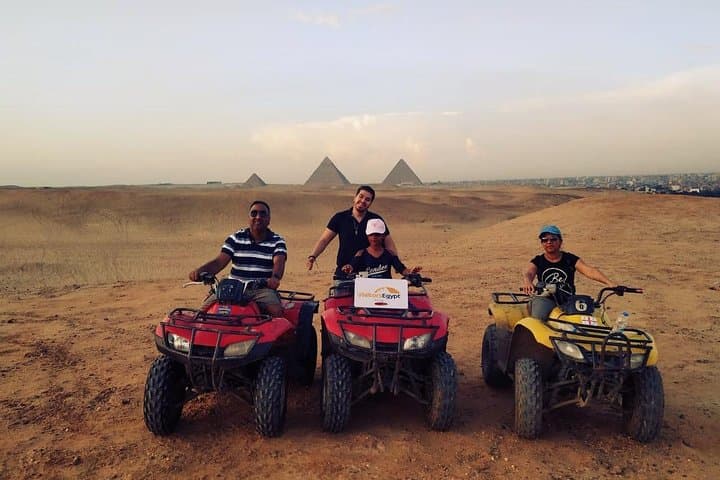
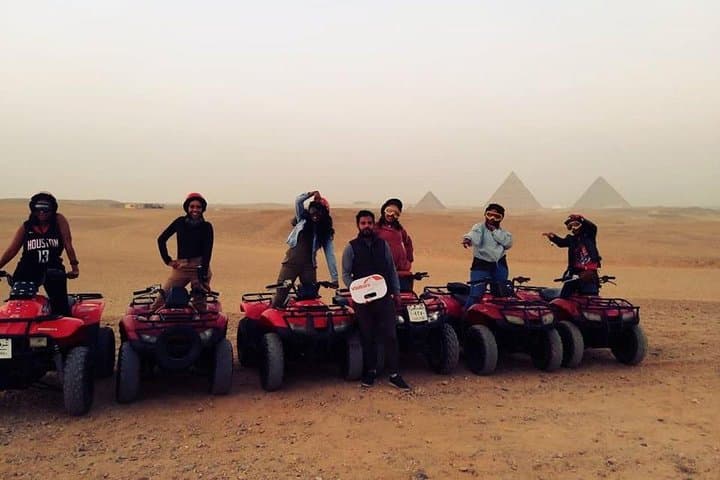
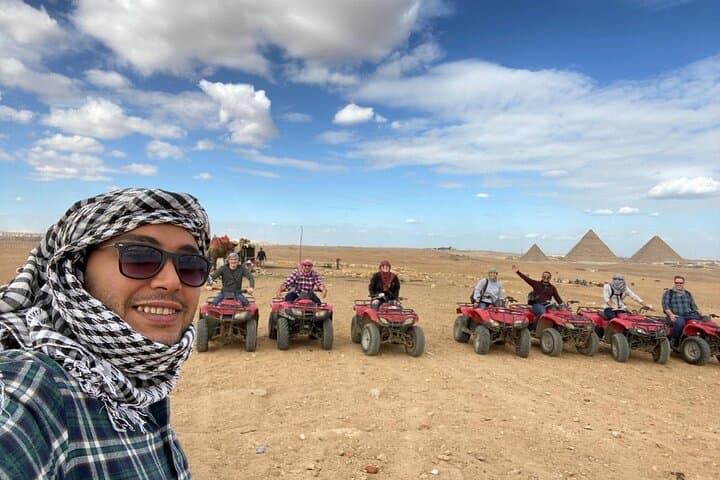
Combine a guided visit to the Great Pyramids and Sphinx with a desert quad bike safari on Giza’s plateau. This full-day tour pairs cultural context with off-road adrenaline—ideal for travelers who want history and hands-on adventure in one outing.
Combine a guided visit to the Great Pyramids and Sphinx with a desert quad bike safari on Giza’s plateau. This full-day tour pairs cultural context with off-road adrenaline—ideal for travelers who want history and hands-on adventure in one outing.
You arrive on a wind-scrubbed plateau where stone pyramids push skyward like stacked memory; the air tastes of dust and diesel, and the Sphinx watches as you shift from air-conditioned car to open desert.
Verified experiences and guided adventures in the surrounding area.
Operated by Visitors Egypt Tours · Giza, Giza Governorate
You arrive on a wind-scrubbed plateau where stone pyramids push skyward like stacked memory; the air tastes of dust and diesel, and the Sphinx watches as you shift from air-conditioned car to open desert.
The day begins with the classics: a guided walk to the panoramic overlook, the Valley Temple and the Great Sphinx, where the scale and geometry of Old Kingdom engineering become immediate. The pyramids—Khufu (Cheops), Khafre (Chephren) and Menkaure (Mykerinus)—are limestone giants from roughly 4,500 years ago, built on a bedrock saddle that gives the plateau its commanding view over the Nile floodplain.
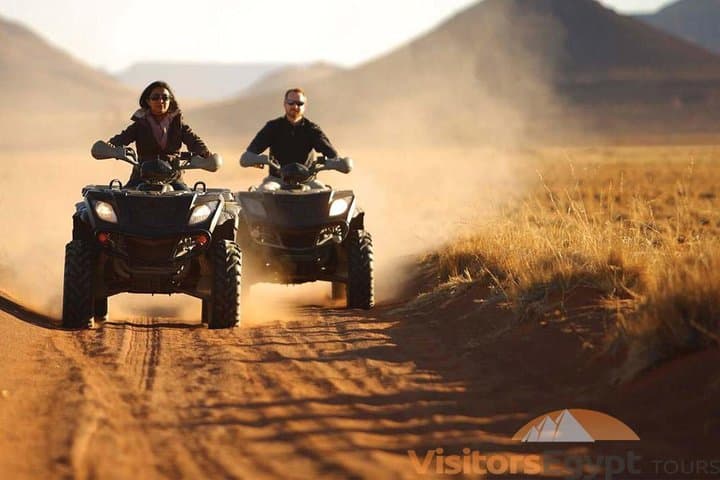
Geology here is blunt: wind-polished sandstone and compacted desert sand that yields under a quad’s tires, with small dunes and packed tracks rather than steep elevation—expect flat, open terrain with occasional soft sections that demand throttle control.
Culturally, the site is an active workplace for archaeologists and local guides; photos are plentiful, bargaining is common, and camel handlers cluster near the main approach.
Practical guidance: plan for a full 7–8 hour outing—hotel pickup in the morning, a 2–3 hour guided historical visit, then roughly 1–2 hours of quad biking around the plateau. Wear closed-toe shoes, goggles and sun protection; secure cameras and loose clothing before you ride. Hydrate early and avoid midday in summer heat. Drivers receive a safety briefing and helmets; riding is suitable for most fitness levels but requires basic bike balance.
End the day with a short transfer back to Cairo—sands settled, helmet off, with a new, immediate sense of how this desert both preserves and challenges the ancient stones.
moderate.
7–8 hours.
Suitable for most travelers in light to moderate fitness; riders should be able to stand briefly on pegs and control a light ATV.
No—most tours provide a short safety briefing and basic training; however, riders should be comfortable on two-wheeled vehicles and able to follow instructions.
This tour’s itinerary shows admission included for the Giza plateau, Valley Temple and Sphinx—confirm at booking for any internal pyramid entry.
Age and weight limits vary by operator; many providers set minimum ages for quad driving and require child seats or restrictions—check the booking requirements.
Yes—the tour includes pickup and drop-off by air-conditioned vehicle from central Cairo and many Giza hotels; confirm your exact pickup point at booking.
The Giza complex dates to Egypt’s Fourth Dynasty (about 2600–2500 BCE); Khufu’s pyramid is the largest and remains one of the ancient world’s most studied monuments.
The site is sensitive to erosion and visitor impact—do not climb monuments, stay on managed paths, avoid littering and follow guide instructions to help preserve the area.
Visitors Egypt Tours operates guided outdoor trips and adventures with an emphasis on safety, stewardship, and memorable experiences.
You arrive on a wind-scrubbed plateau where stone pyramids push skyward like stacked memory; the air tastes of dust and diesel, and the Sphinx watches as you shift from air-conditioned car to open desert.
You arrive on a wind-scrubbed plateau where stone pyramids push skyward like stacked memory; the air tastes of dust and diesel, and the Sphinx watches as you shift from air-conditioned car to open desert.
The day begins with the classics: a guided walk to the panoramic overlook, the Valley Temple and the Great Sphinx, where the scale and geometry of Old Kingdom engineering become immediate. The pyramids—Khufu (Cheops), Khafre (Chephren) and Menkaure (Mykerinus)—are limestone giants from roughly 4,500 years ago, built on a bedrock saddle that gives the plateau its commanding view over the Nile floodplain.
Geology here is blunt: wind-polished sandstone and compacted desert sand that yields under a quad’s tires, with small dunes and packed tracks rather than steep elevation—expect flat, open terrain with occasional soft sections that demand throttle control.
Culturally, the site is an active workplace for archaeologists and local guides; photos are plentiful, bargaining is common, and camel handlers cluster near the main approach.
Practical guidance: plan for a full 7–8 hour outing—hotel pickup in the morning, a 2–3 hour guided historical visit, then roughly 1–2 hours of quad biking around the plateau. Wear closed-toe shoes, goggles and sun protection; secure cameras and loose clothing before you ride. Hydrate early and avoid midday in summer heat. Drivers receive a safety briefing and helmets; riding is suitable for most fitness levels but requires basic bike balance.
End the day with a short transfer back to Cairo—sands settled, helmet off, with a new, immediate sense of how this desert both preserves and challenges the ancient stones.