THE ADVENTURE COLLECTIVE® · Independent discovery and booking for outdoor travel

Stand before millennia of stone on a morning at the Giza Plateau, then unwind on a traditional felucca as the Nile slips by. This compact day tour pairs close-up pyramid viewing and Sphinx history with a calm one-hour sail—ideal for first-time visitors to Cairo.
Stand before millennia of stone on a morning at the Giza Plateau, then unwind on a traditional felucca as the Nile slips by. This compact day tour pairs close-up pyramid viewing and Sphinx history with a calm one-hour sail—ideal for first-time visitors to Cairo.
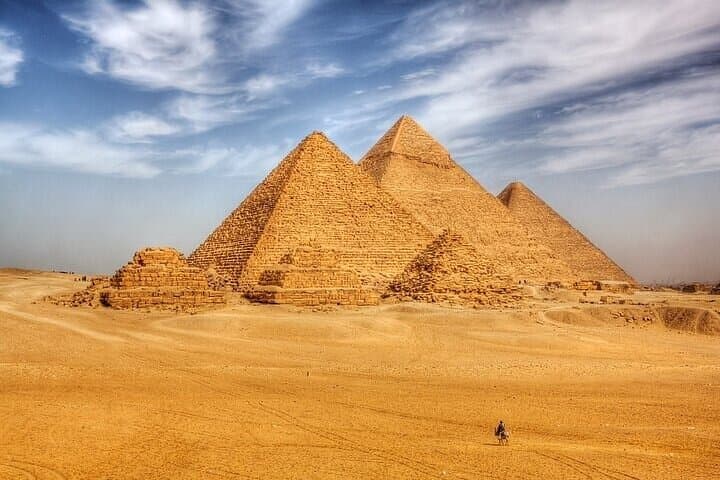
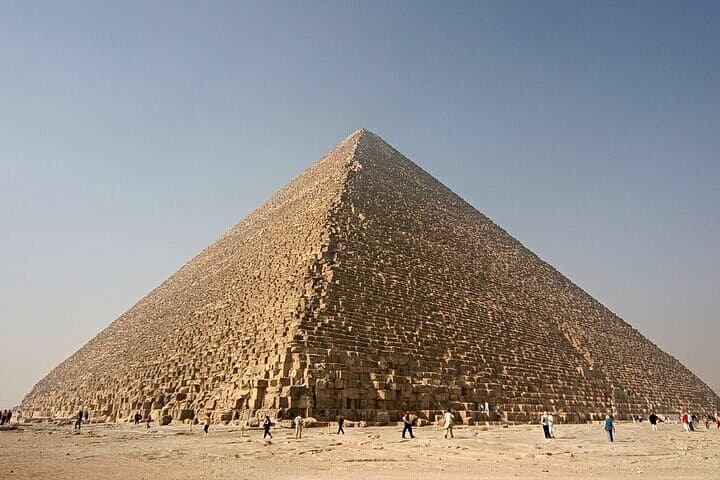
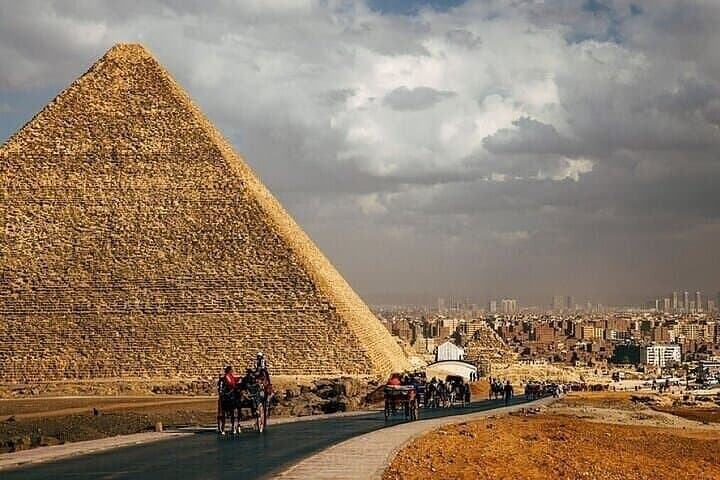
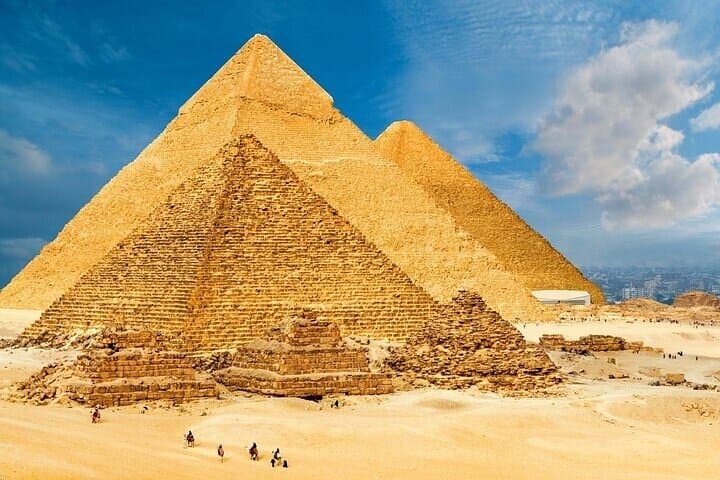
You step off the air-conditioned car into a wind that smells faintly of dust and baked limestone, and the outline of three pyramids pins the horizon like geological punctuation. Walking the Giza Plateau feels at once enormous and intimate: the Great Pyramid rises in measured blocks, the Sphinx watches with a weathered face, and Cairo’s sprawl sits like a living neighbor beyond the dunes.
Verified experiences and guided adventures in the surrounding area.
Operated by Egipto Excursiones · Giza, Giza Governorate
You step off the air-conditioned car into a wind that smells faintly of dust and baked limestone, and the outline of three pyramids pins the horizon like geological punctuation. Walking the Giza Plateau feels at once enormous and intimate: the Great Pyramid rises in measured blocks, the Sphinx watches with a weathered face, and Cairo’s sprawl sits like a living neighbor beyond the dunes.
These structures date to the Fourth Dynasty—around 4,500 years ago—engineered from local limestone and quarried stone to create funerary complexes for Khufu, Khafre and Menkaure. The plateau sits on Miocene limestone; casing stones once smoothed the surfaces before centuries and human reuse stripped many away. The Felucca, a traditional lateen-sailed wooden boat, is a later layer of Nile culture, offering a quieter, waterborne perspective on a city shaped by the river.
Expect 5 hours total: hotel pickup, guided time at the pyramids and Sphinx, and a roughly 1-hour felucca cruise. Practicalities matter—go early to avoid heat and crowds, wear sturdy closed shoes for uneven limestone pavements, and dress respectfully (light, loose clothing that covers shoulders and knees in public areas). Bring sun protection, a refillable water bottle and small cash for onsite purchases and tips. Photography is allowed in public zones but climbing monuments is illegal and enforced.
This tour combines concentrated archaeology with a calm Nile crossing—one moment you’re reading millennia in stone, the next the river’s breeze is pushing you forward toward Cairo’s riverine life. Plan for security checks and a steady pace: the day rewards patience and curiosity.
easy.
5 hours.
Suitable for most fitness levels; requires standing and walking on uneven surfaces for up to a couple of hours.
This tour’s price typically does not include the official Giza plateau entrance ticket—confirm at booking; some packages offer optional ticket add-ons.
Access inside Khufu’s pyramid is limited and requires a separate ticket with strict daily quotas; check availability in advance if that’s a priority.
The itinerary describes a private felucca experience of about one hour; confirm whether the boat is exclusive to your group when booking.
Yes—this is a low-impact day tour, though mobility constraints and heat sensitivity should be considered; the operator notes it’s not recommended for those with serious spinal, heart, or pregnancy-related concerns.
The Giza pyramids were built during Egypt’s Old Kingdom as monumental tombs for pharaohs—Khufu’s pyramid was originally about 146.6 m tall and dominated a funerary complex with temples and causeways.
Site managers balance tourism with preservation—stay on designated paths, avoid touching ancient masonry, and support local conservation initiatives through respectful visitation.
Egipto Excursiones operates guided outdoor trips and adventures with an emphasis on safety, stewardship, and memorable experiences.
You step off the air-conditioned car into a wind that smells faintly of dust and baked limestone, and the outline of three pyramids pins the horizon like geological punctuation. Walking the Giza Plateau feels at once enormous and intimate: the Great Pyramid rises in measured blocks, the Sphinx watches with a weathered face, and Cairo’s sprawl sits like a living neighbor beyond the dunes.
You step off the air-conditioned car into a wind that smells faintly of dust and baked limestone, and the outline of three pyramids pins the horizon like geological punctuation. Walking the Giza Plateau feels at once enormous and intimate: the Great Pyramid rises in measured blocks, the Sphinx watches with a weathered face, and Cairo’s sprawl sits like a living neighbor beyond the dunes.
These structures date to the Fourth Dynasty—around 4,500 years ago—engineered from local limestone and quarried stone to create funerary complexes for Khufu, Khafre and Menkaure. The plateau sits on Miocene limestone; casing stones once smoothed the surfaces before centuries and human reuse stripped many away. The Felucca, a traditional lateen-sailed wooden boat, is a later layer of Nile culture, offering a quieter, waterborne perspective on a city shaped by the river.
Expect 5 hours total: hotel pickup, guided time at the pyramids and Sphinx, and a roughly 1-hour felucca cruise. Practicalities matter—go early to avoid heat and crowds, wear sturdy closed shoes for uneven limestone pavements, and dress respectfully (light, loose clothing that covers shoulders and knees in public areas). Bring sun protection, a refillable water bottle and small cash for onsite purchases and tips. Photography is allowed in public zones but climbing monuments is illegal and enforced.
This tour combines concentrated archaeology with a calm Nile crossing—one moment you’re reading millennia in stone, the next the river’s breeze is pushing you forward toward Cairo’s riverine life. Plan for security checks and a steady pace: the day rewards patience and curiosity.