THE ADVENTURE COLLECTIVE® · Independent discovery and booking for outdoor travel

Walk among 4,500-year-old pyramids, take a short camel ride across the Giza Plateau, explore the Grand Egyptian Museum and haggle for keepsakes in Khan El-Khalili—all in a private eight-hour day tour from Cairo. Practical tips help you plan for sun, crowds and extra admissions.
Walk among 4,500-year-old pyramids, take a short camel ride across the Giza Plateau, explore the Grand Egyptian Museum and haggle for keepsakes in Khan El-Khalili—all in a private eight-hour day tour from Cairo. Practical tips help you plan for sun, crowds and extra admissions.
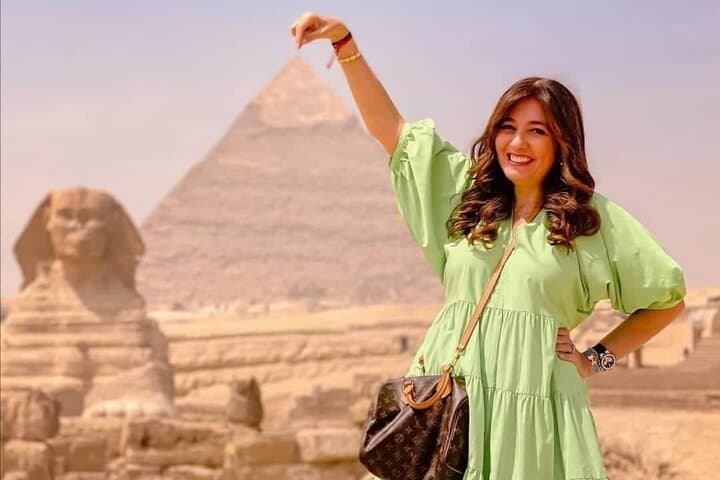
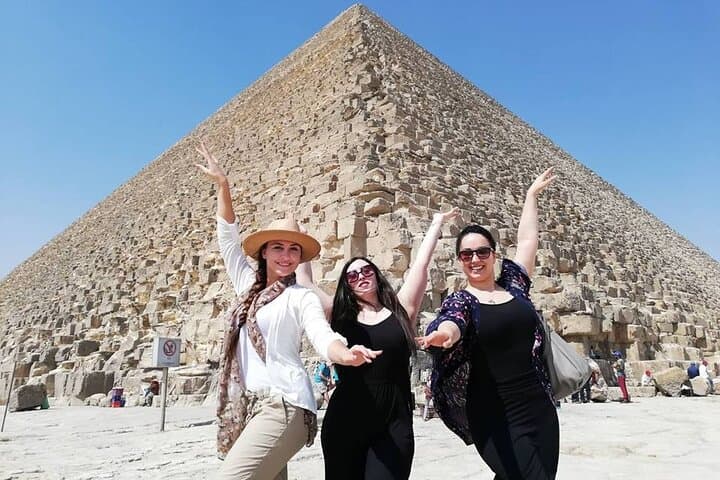
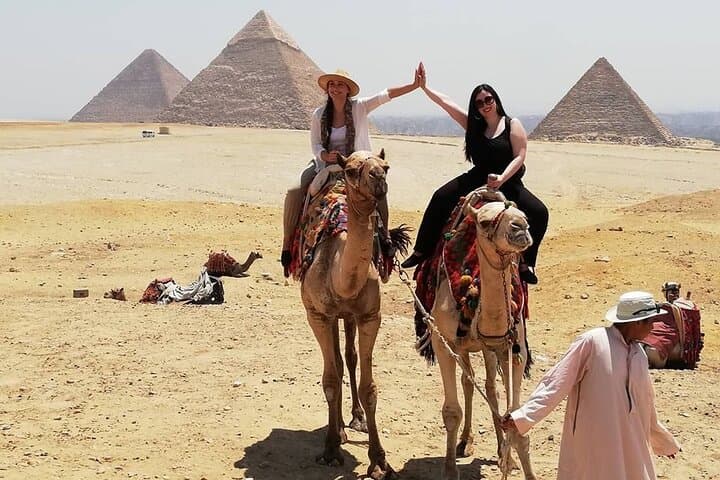
You step out of the air-conditioned van and the desert wind immediately rearranges the morning light across three stone triangles—Khufu, Khafre and Menkaure—their faces catching the sun like pages from an ancient book. A camel exhales nearby; the plateau smells of sun-baked limestone and dust, while distant Cairo hums beyond the low ridgeline.
Verified experiences and guided adventures in the surrounding area.
Operated by Twitter Egypt Travel · Giza, Cairo Governorate
You step out of the air-conditioned van and the desert wind immediately rearranges the morning light across three stone triangles—Khufu, Khafre and Menkaure—their faces catching the sun like pages from an ancient book. A camel exhales nearby; the plateau smells of sun-baked limestone and dust, while distant Cairo hums beyond the low ridgeline.
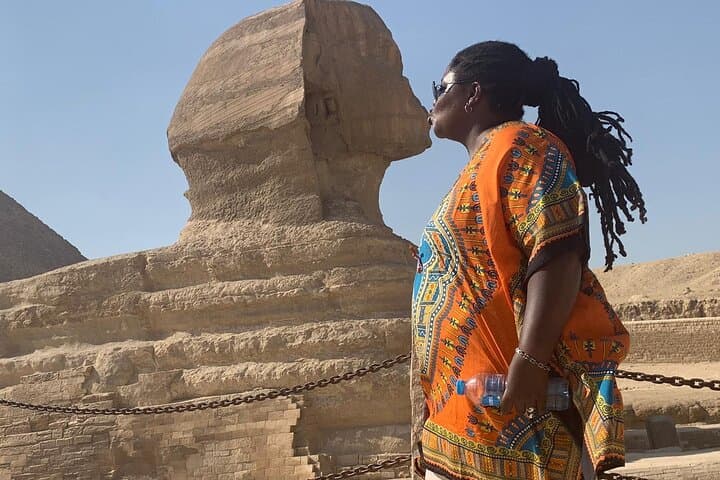
The Giza Plateau is the product of Old Kingdom ambition: the Great Pyramid (Khufu) erected around 2560 BCE, the slightly younger pyramids of Khafre and Menkaure, and the Sphinx—an enigmatic stone lion with a human face—anchoring funerary architecture tied to Egyptian beliefs about death and the afterlife. Geologically, the site sits on Eocene limestone that builders quarried and shaped into blocks that challenge modern engineering. Later layers of Cairo—Fatimid, Mamluk and Ottoman—unfurl in the markets of Khan El-Khalili, where traders and craftsmen keep centuries-old skills alive.
Practicalities are straightforward: this private, roughly eight-hour excursion includes stops at the Pyramid complex, a short camel ride (about 20–30 minutes), the Grand Egyptian Museum (home to Tutankhamun’s treasures), lunch with a view of the Sphinx, and time in Khan El-Khalili for shopping. Expect moderate walking over uneven stone, strong sun, and crowds near key monuments. Admission to some sites is commonly extra, so confirm ticket inclusions. Bring sun protection, comfortable closed-toe shoes, small change for tips and purchases, and a light scarf for respectful coverage in market and museum spaces. Early mornings and late afternoons offer cooler light and thinner crowds—timing that rewards both photographs and comfort.
moderate.
8 hours.
Moderate: able to walk over uneven stone and stand for museum tours; not suitable for those with severe mobility limits
Admission is often not included for key sites; confirm with your operator—some tours include museum entry while pyramid interior access is frequently extra.
Short guided camel rides are common and generally safe for older children; follow handlers’ instructions and check weight or age restrictions when booking.
Entry to the interior of the Great Pyramid requires a specific ticket and space is limited; many tours only view exteriors, so verify if interior access is part of your booking.
Casual but respectful clothing is recommended: cover shoulders and avoid very short shorts; comfortable footwear is also important for walking.
The main pyramids on the Giza Plateau date to Egypt’s Old Kingdom (c. 2600–2500 BCE); the Grand Egyptian Museum consolidates artifacts from across that history, including Tutankhamun’s treasures.
Site managers restrict climbing and mark sensitive areas to limit erosion; visitors should follow paths, avoid touching carved surfaces and use marked viewing areas to reduce impact.
Twitter Egypt Travel operates guided outdoor trips and adventures with an emphasis on safety, stewardship, and memorable experiences.
You step out of the air-conditioned van and the desert wind immediately rearranges the morning light across three stone triangles—Khufu, Khafre and Menkaure—their faces catching the sun like pages from an ancient book. A camel exhales nearby; the plateau smells of sun-baked limestone and dust, while distant Cairo hums beyond the low ridgeline.
You step out of the air-conditioned van and the desert wind immediately rearranges the morning light across three stone triangles—Khufu, Khafre and Menkaure—their faces catching the sun like pages from an ancient book. A camel exhales nearby; the plateau smells of sun-baked limestone and dust, while distant Cairo hums beyond the low ridgeline.
The Giza Plateau is the product of Old Kingdom ambition: the Great Pyramid (Khufu) erected around 2560 BCE, the slightly younger pyramids of Khafre and Menkaure, and the Sphinx—an enigmatic stone lion with a human face—anchoring funerary architecture tied to Egyptian beliefs about death and the afterlife. Geologically, the site sits on Eocene limestone that builders quarried and shaped into blocks that challenge modern engineering. Later layers of Cairo—Fatimid, Mamluk and Ottoman—unfurl in the markets of Khan El-Khalili, where traders and craftsmen keep centuries-old skills alive.
Practicalities are straightforward: this private, roughly eight-hour excursion includes stops at the Pyramid complex, a short camel ride (about 20–30 minutes), the Grand Egyptian Museum (home to Tutankhamun’s treasures), lunch with a view of the Sphinx, and time in Khan El-Khalili for shopping. Expect moderate walking over uneven stone, strong sun, and crowds near key monuments. Admission to some sites is commonly extra, so confirm ticket inclusions. Bring sun protection, comfortable closed-toe shoes, small change for tips and purchases, and a light scarf for respectful coverage in market and museum spaces. Early mornings and late afternoons offer cooler light and thinner crowds—timing that rewards both photographs and comfort.