THE ADVENTURE COLLECTIVE® · Independent discovery and booking for outdoor travel

Ride a camel across the Giza Plateau and view Khufu, Khafre and Menkaure from a desert perspective. This private four-hour guided tour includes hotel pickup, entry fees and an expert guide who places the monuments in archaeological and cultural context.
Ride a camel across the Giza Plateau and view Khufu, Khafre and Menkaure from a desert perspective. This private four-hour guided tour includes hotel pickup, entry fees and an expert guide who places the monuments in archaeological and cultural context.
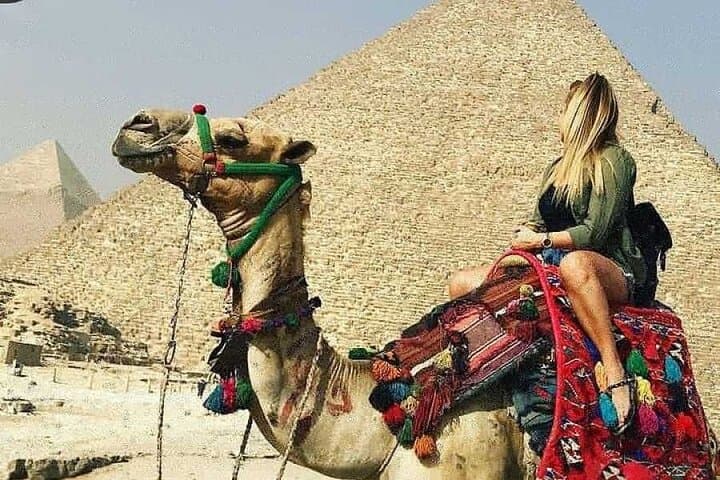
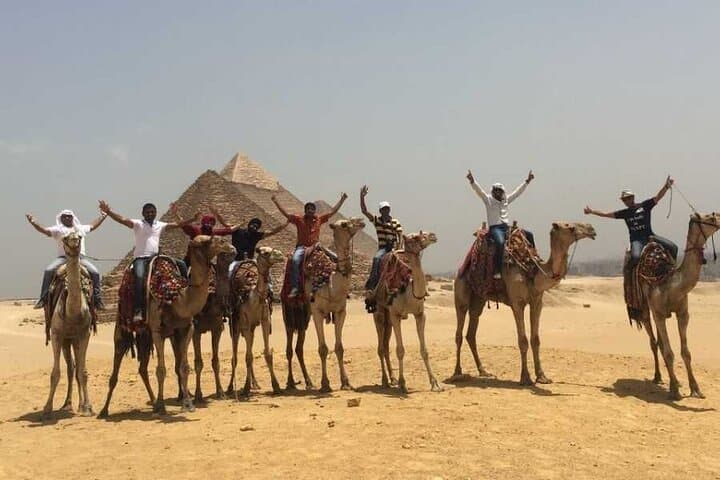
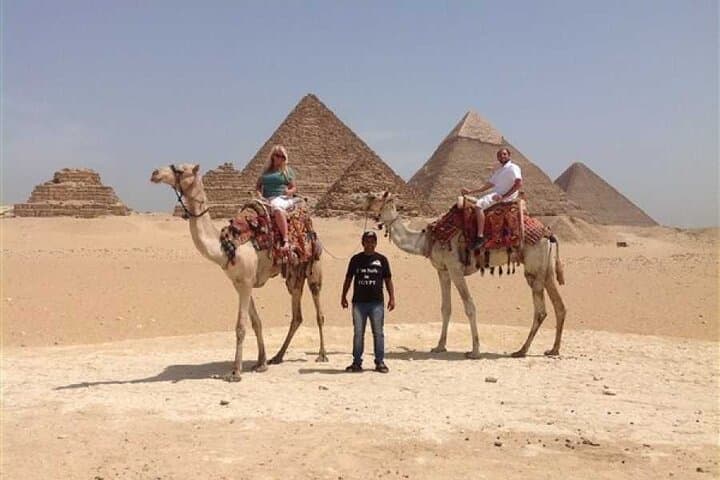
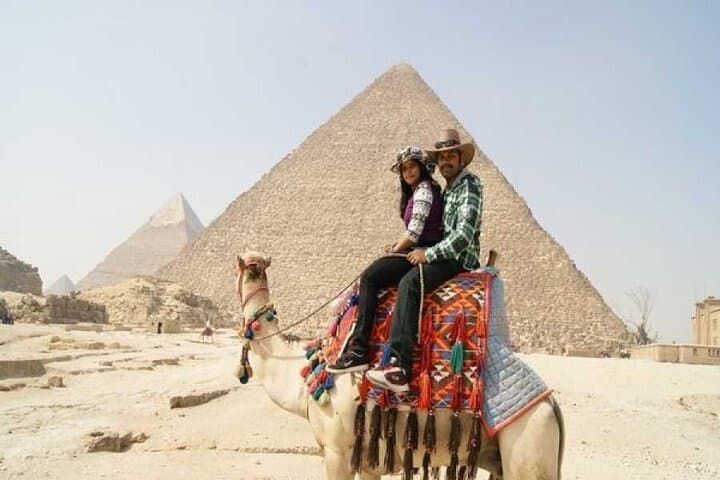
A pale morning light sweeps across a stubbled desert as a single camel silhouette punctures the horizon—this is the first image most visitors take from a guided camel tour at Giza. The animal rocks forward with quiet assurance, and beneath the rider the plateau expands: three colossal pyramids punctuating the sky, the Sphinx watching like an immovable keeper.
Verified experiences and guided adventures in the surrounding area.
Operated by Book My Egypt Tours · Giza, Giza Governorate
A pale morning light sweeps across a stubbled desert as a single camel silhouette punctures the horizon—this is the first image most visitors take from a guided camel tour at Giza. The animal rocks forward with quiet assurance, and beneath the rider the plateau expands: three colossal pyramids punctuating the sky, the Sphinx watching like an immovable keeper.
The Giza Plateau is the product of human will and local geology: Jurassic and Cretaceous limestones quarried and shaped into Khufu, Khafre and Menkaure’s monumental cores. These structures date to the Fourth Dynasty (c. 2600–2500 BCE), when state organization, skilled masonry and river-borne resources converged to build what still dominates the desert skyline.
Local culture is layered—modern Cairo hums a few kilometers away while Bedouin camel handlers and guides preserve modes of desert travel and storytelling. Expect explanations about funerary complexes, causeways and valley temples, and the Sphinx’s association with Khafre.
Practically: tours run about four hours with hotel pickup and private air-conditioned transfer; the camel segment is typically 30 minutes. Terrain is sandy and uneven with short stretches of packed limestone—total walking distances are modest (around 1–2 km between viewpoints) with negligible elevation gain. Wear closed-toe shoes, sun protection and bring water; the tour includes entry fees, guide, transfers and a bottled water. Note it’s not recommended for those with spinal, heart or pregnancy concerns. For photographers, the low-angle light of early morning or late afternoon offers the most dramatic shadows. Move deliberately, respect fenced areas, and tip handlers and guides for local support.
easy.
4 hours.
Suitable for most fitness levels; requires ability to mount a camel and walk short distances on uneven sand and limestone.
Yes—this tour includes entry fees to the Giza Plateau as part of the package.
The camel ride on this tour is approximately 30 minutes, combined with short guided stops at key viewpoints.
Children can usually participate, but the tour is not recommended for pregnant travelers or people with serious spinal or heart conditions.
The itinerary includes guided stops near the Sphinx and at viewpoints of each main pyramid; access to certain base areas is restricted for conservation reasons.
The three main pyramids date to Egypt’s Fourth Dynasty; Khufu’s Great Pyramid was the tallest man-made structure for millennia and functioned within a necropolis complex of temples and causeways.
The Giza Plateau faces impacts from urban growth, tourism wear and air pollution; visitors are asked to stay on designated paths, avoid climbing monuments and support local guides to promote responsible tourism.
Book My Egypt Tours operates guided outdoor trips and adventures with an emphasis on safety, stewardship, and memorable experiences.
A pale morning light sweeps across a stubbled desert as a single camel silhouette punctures the horizon—this is the first image most visitors take from a guided camel tour at Giza. The animal rocks forward with quiet assurance, and beneath the rider the plateau expands: three colossal pyramids punctuating the sky, the Sphinx watching like an immovable keeper.
A pale morning light sweeps across a stubbled desert as a single camel silhouette punctures the horizon—this is the first image most visitors take from a guided camel tour at Giza. The animal rocks forward with quiet assurance, and beneath the rider the plateau expands: three colossal pyramids punctuating the sky, the Sphinx watching like an immovable keeper.
The Giza Plateau is the product of human will and local geology: Jurassic and Cretaceous limestones quarried and shaped into Khufu, Khafre and Menkaure’s monumental cores. These structures date to the Fourth Dynasty (c. 2600–2500 BCE), when state organization, skilled masonry and river-borne resources converged to build what still dominates the desert skyline.
Local culture is layered—modern Cairo hums a few kilometers away while Bedouin camel handlers and guides preserve modes of desert travel and storytelling. Expect explanations about funerary complexes, causeways and valley temples, and the Sphinx’s association with Khafre.
Practically: tours run about four hours with hotel pickup and private air-conditioned transfer; the camel segment is typically 30 minutes. Terrain is sandy and uneven with short stretches of packed limestone—total walking distances are modest (around 1–2 km between viewpoints) with negligible elevation gain. Wear closed-toe shoes, sun protection and bring water; the tour includes entry fees, guide, transfers and a bottled water. Note it’s not recommended for those with spinal, heart or pregnancy concerns. For photographers, the low-angle light of early morning or late afternoon offers the most dramatic shadows. Move deliberately, respect fenced areas, and tip handlers and guides for local support.