THE ADVENTURE COLLECTIVE® · Independent discovery and booking for outdoor travel

Ride a camel around the Great Pyramids at sunset, then settle into a desert BBQ that pairs grilled kofta and local hospitality with panoramic views of Khufu, Khafre and Menkaure. Practical, atmospheric, and easy to add to a Cairo itinerary.
Ride a camel around the Great Pyramids at sunset, then settle into a desert BBQ that pairs grilled kofta and local hospitality with panoramic views of Khufu, Khafre and Menkaure. Practical, atmospheric, and easy to add to a Cairo itinerary.
Late afternoon light stretches across the Giza Plateau, the pyramids turning from sun-washed stone to long, serrated silhouettes. Guests step from an air-conditioned vehicle onto sandy ground where camels wait, patient and steady, offering a slow, rhythmic ascent that places the three great pyramids—Khufu, Khafre and Menkaure—squarely in the view.
Verified experiences and guided adventures in the surrounding area.
Operated by Three Pyramids Tours · Giza, Giza Governorate
Late afternoon light stretches across the Giza Plateau, the pyramids turning from sun-washed stone to long, serrated silhouettes. Guests step from an air-conditioned vehicle onto sandy ground where camels wait, patient and steady, offering a slow, rhythmic ascent that places the three great pyramids—Khufu, Khafre and Menkaure—squarely in the view.
The stones underfoot are mostly Cenozoic limestone and wind-blown sand; wind and time have carved the plateau into a stark backdrop that highlights the raw scale of these fourth-dynasty monuments. A local guide explains how builders moved millions of blocks here more than 4,500 years ago while the desert itself continues to push and polish the edges of the site.
After the ride, the experience shifts to a desert dining circle: charcoal grills, skewers of beef and chicken kofta, and simple salads served under canvas as twilight deepens. The meal mixes Bedouin-style hospitality with modern conveniences—an easy introduction to local culinary culture without a long trek from the city.
Practically: tours run about five hours including hotel pickup and return, so plan for an evening slot to catch sunset. Wear closed-toe shoes for the brief sandy approach, bring SPF, and carry a small amount of cash for tips. Expect moderate physical activity—mounting a camel and standing on uneven sand—but not technical difficulty.
This combo of motion and stillness—camels moving you slowly past ancient geometry, then sitting to eat as stars appear—makes the Giza sunset both cinematic and quietly manageable for most travelers.
moderate.
4–5 hours.
Suitable for travelers with moderate fitness—able to mount a camel and walk short stretches on sand.
Yes—private, air-conditioned pickup and return to most central Cairo or Giza hotels is included in the tour.
Children can join, but infants must sit on an adult’s lap and the tour is not recommended for those with back problems or pregnant travelers.
The menu usually includes grilled meats like kofta and chicken; guides can often arrange vegetarian options if notified in advance through booking questions.
Camel riding time is relatively short—typically a sunset loop designed for photo viewpoints rather than extended trekking.
The Giza pyramids date to the Fourth Dynasty (c. 2600–2500 BCE); the plateau served as a royal necropolis and remains central to Egypt’s cultural identity.
The Giza Plateau is a sensitive archaeological and natural zone—stay on permitted paths, avoid littering, and hire licensed guides who follow site regulations.
Three Pyramids Tours operates guided outdoor trips and adventures with an emphasis on safety, stewardship, and memorable experiences.
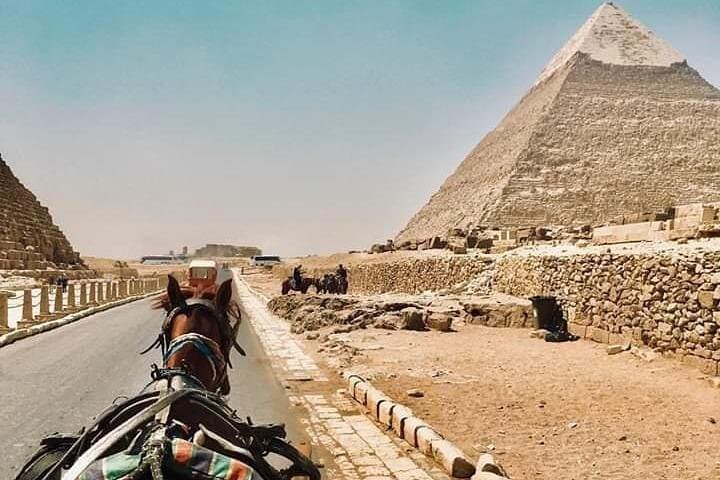
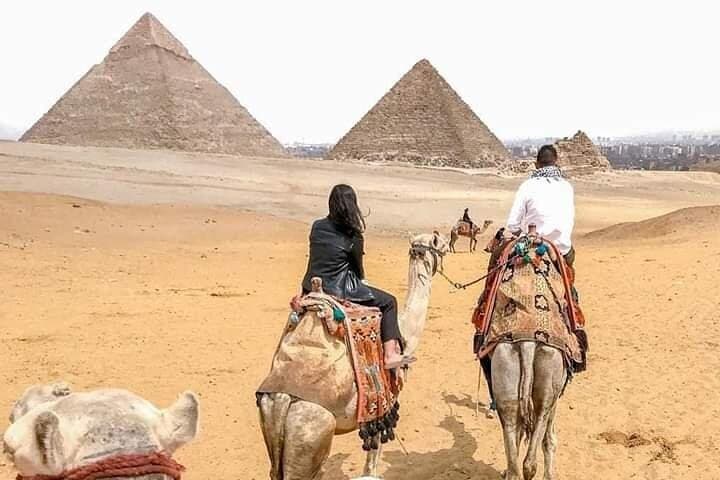
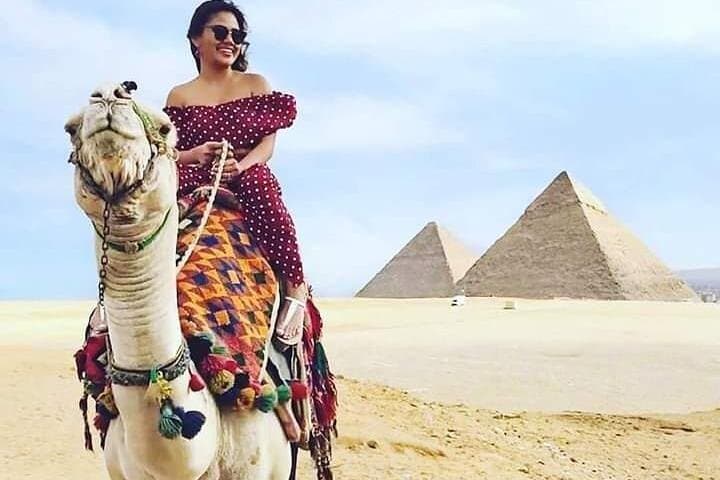
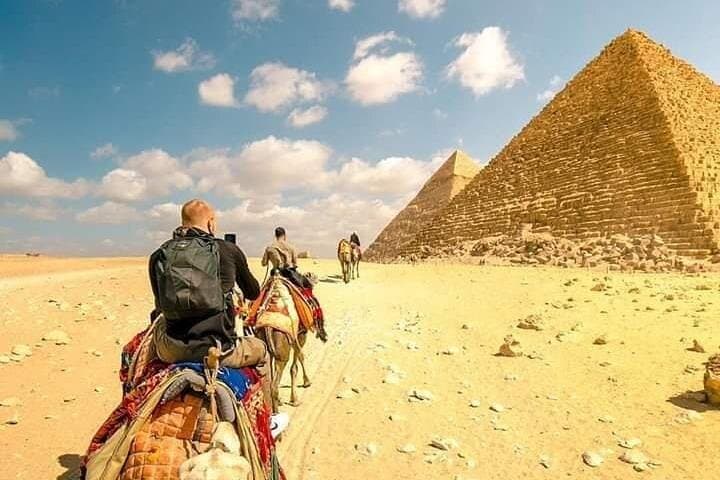
Late afternoon light stretches across the Giza Plateau, the pyramids turning from sun-washed stone to long, serrated silhouettes. Guests step from an air-conditioned vehicle onto sandy ground where camels wait, patient and steady, offering a slow, rhythmic ascent that places the three great pyramids—Khufu, Khafre and Menkaure—squarely in the view.
Late afternoon light stretches across the Giza Plateau, the pyramids turning from sun-washed stone to long, serrated silhouettes. Guests step from an air-conditioned vehicle onto sandy ground where camels wait, patient and steady, offering a slow, rhythmic ascent that places the three great pyramids—Khufu, Khafre and Menkaure—squarely in the view.
The stones underfoot are mostly Cenozoic limestone and wind-blown sand; wind and time have carved the plateau into a stark backdrop that highlights the raw scale of these fourth-dynasty monuments. A local guide explains how builders moved millions of blocks here more than 4,500 years ago while the desert itself continues to push and polish the edges of the site.
After the ride, the experience shifts to a desert dining circle: charcoal grills, skewers of beef and chicken kofta, and simple salads served under canvas as twilight deepens. The meal mixes Bedouin-style hospitality with modern conveniences—an easy introduction to local culinary culture without a long trek from the city.
Practically: tours run about five hours including hotel pickup and return, so plan for an evening slot to catch sunset. Wear closed-toe shoes for the brief sandy approach, bring SPF, and carry a small amount of cash for tips. Expect moderate physical activity—mounting a camel and standing on uneven sand—but not technical difficulty.
This combo of motion and stillness—camels moving you slowly past ancient geometry, then sitting to eat as stars appear—makes the Giza sunset both cinematic and quietly manageable for most travelers.