THE ADVENTURE COLLECTIVE® · Independent discovery and booking for outdoor travel

Ride a camel around the Great Pyramids at sunset with hotel pickup, snacks and a local guide. This private 4‑hour tour offers close-up views of the pyramids, a short camel circuit on the plateau and practical guidance for first‑time visitors.
Ride a camel around the Great Pyramids at sunset with hotel pickup, snacks and a local guide. This private 4‑hour tour offers close-up views of the pyramids, a short camel circuit on the plateau and practical guidance for first‑time visitors.
The late-afternoon sun slants low across the Giza Plateau, turning limestone faces of Khufu, Khafre and Menkaure a warm honey. You step from an air‑conditioned vehicle onto packed sand; camels lift and lower with practiced patience, the animal’s breath warming the quiet. As you swing into the saddle, the plateau shifts around you — open desert to one side, the city of Cairo to the other — and the pyramids loom like slow-moving cliffs that dare you to circle them.
Verified experiences and guided adventures in the surrounding area.
Operated by Three Pyramids Tours · Giza, Giza Governorate
The late-afternoon sun slants low across the Giza Plateau, turning limestone faces of Khufu, Khafre and Menkaure a warm honey. You step from an air‑conditioned vehicle onto packed sand; camels lift and lower with practiced patience, the animal’s breath warming the quiet. As you swing into the saddle, the plateau shifts around you — open desert to one side, the city of Cairo to the other — and the pyramids loom like slow-moving cliffs that dare you to circle them.
Built during Egypt’s Fourth Dynasty (around 2560 BCE for Khufu), the Great Pyramid was the tallest man‑made structure for millennia. The plateau’s geology is a hard, weathered limestone shelf carved by wind and human hands; nearby, the Solar Boat Museum preserves an ancient rivercraft once interred for a pharaoh’s afterlife. Camels themselves are part of the living culture here — local camel drivers have worked this ground for generations, mixing hospitality with a brisk trade in photographs.
Practical guidance: sunset is the cleanest light and coolest temperature; tours typically include hotel pickup, an English-speaking guide, light snacks and a short camel circuit rather than long desert treks. Wear closed-toe shoes for uneven footing, bring sun protection and a light layer for the cooler evening. Respect roped areas around monuments, follow your guide’s safety briefing for mounting and dismounting camels, and keep hydration in mind — the desert’s dry air moves quickly, and the plateau will reward slow, observant pacing over speed.
easy.
4 hours.
Suitable for most fitness levels; participants should be able to mount a camel with assistance and walk short distances on uneven ground.
Yes — the tour typically includes private hotel pickup and drop-off in an air‑conditioned vehicle within Giza/Cairo areas.
This camel circuit usually offers outside viewpoints of the Great Pyramids; check whether entrance to pyramid interiors is included when booking.
Yes — rides are short and guided; camel handlers assist with mounting and dismounting, but inform the operator of any mobility concerns in advance.
Light, breathable clothing, closed-toe shoes, sun protection and a light layer for cooler evenings are recommended.
The Great Pyramid of Khufu dates to c. 2560 BCE and remained the world’s tallest structure for over 3,800 years; the plateau served as a ceremonial and funerary landscape for Old Kingdom pharaohs.
High visitor numbers stress the plateau’s fragile stone and surfaces; stay on permitted paths, avoid climbing monuments and support licensed guides and conservation-friendly operators.
Three Pyramids Tours operates guided outdoor trips and adventures with an emphasis on safety, stewardship, and memorable experiences.
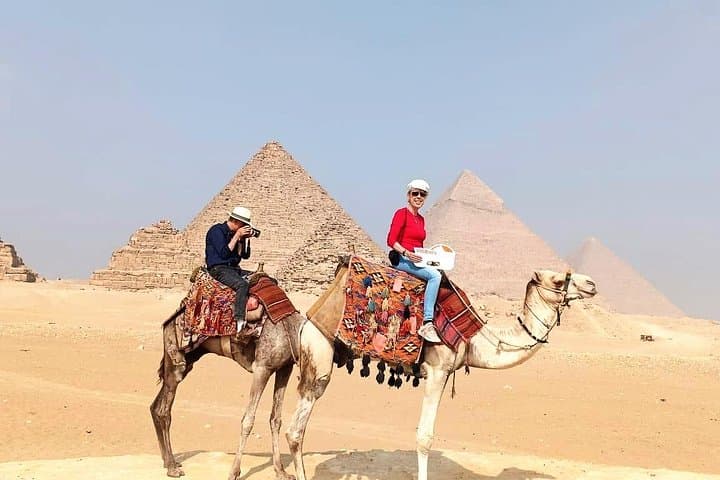
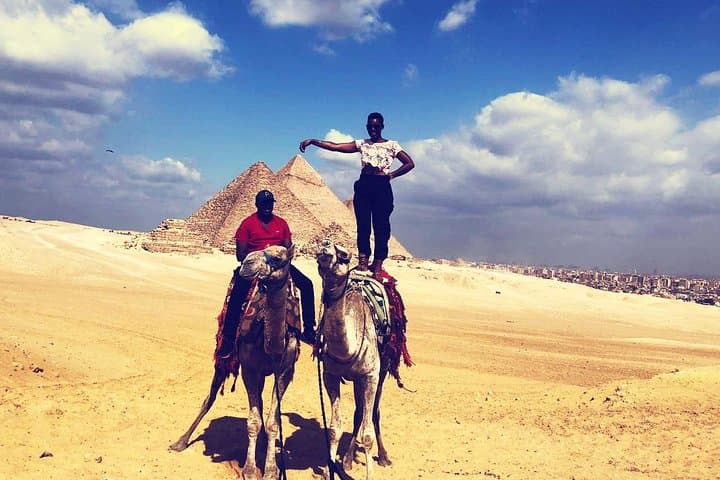
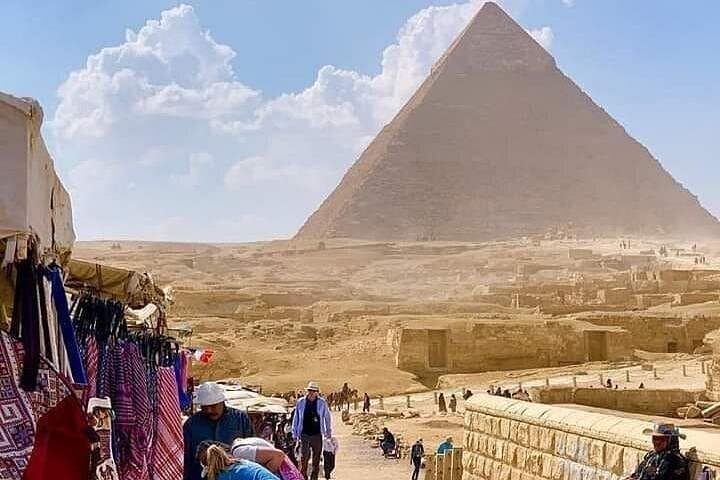
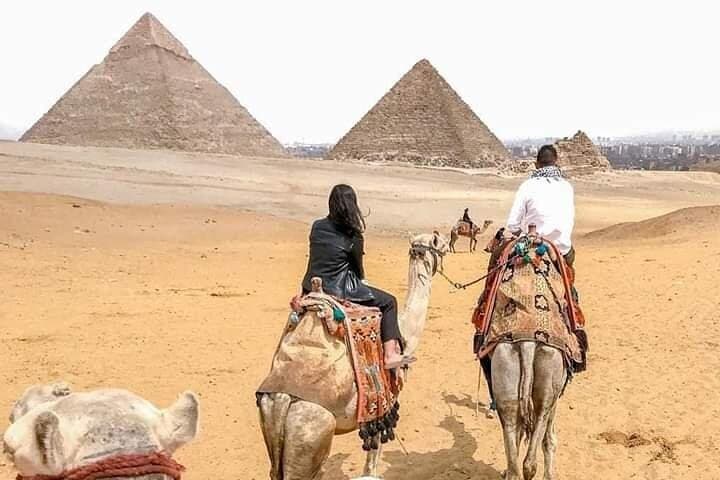
The late-afternoon sun slants low across the Giza Plateau, turning limestone faces of Khufu, Khafre and Menkaure a warm honey. You step from an air‑conditioned vehicle onto packed sand; camels lift and lower with practiced patience, the animal’s breath warming the quiet. As you swing into the saddle, the plateau shifts around you — open desert to one side, the city of Cairo to the other — and the pyramids loom like slow-moving cliffs that dare you to circle them.
The late-afternoon sun slants low across the Giza Plateau, turning limestone faces of Khufu, Khafre and Menkaure a warm honey. You step from an air‑conditioned vehicle onto packed sand; camels lift and lower with practiced patience, the animal’s breath warming the quiet. As you swing into the saddle, the plateau shifts around you — open desert to one side, the city of Cairo to the other — and the pyramids loom like slow-moving cliffs that dare you to circle them.
Built during Egypt’s Fourth Dynasty (around 2560 BCE for Khufu), the Great Pyramid was the tallest man‑made structure for millennia. The plateau’s geology is a hard, weathered limestone shelf carved by wind and human hands; nearby, the Solar Boat Museum preserves an ancient rivercraft once interred for a pharaoh’s afterlife. Camels themselves are part of the living culture here — local camel drivers have worked this ground for generations, mixing hospitality with a brisk trade in photographs.
Practical guidance: sunset is the cleanest light and coolest temperature; tours typically include hotel pickup, an English-speaking guide, light snacks and a short camel circuit rather than long desert treks. Wear closed-toe shoes for uneven footing, bring sun protection and a light layer for the cooler evening. Respect roped areas around monuments, follow your guide’s safety briefing for mounting and dismounting camels, and keep hydration in mind — the desert’s dry air moves quickly, and the plateau will reward slow, observant pacing over speed.