THE ADVENTURE COLLECTIVE® · Independent discovery and booking for outdoor travel

Ride a camel or horse around the Giza Plateau with views of Khufu, Khafre, Menkaure, and the Sphinx. This guided experience pairs close-up panoramas with local stories and practical tips for a comfortable visit.
Ride a camel or horse around the Giza Plateau with views of Khufu, Khafre, Menkaure, and the Sphinx. This guided experience pairs close-up panoramas with local stories and practical tips for a comfortable visit.
Dawn light spreads over limestone faces as a camel's silhouette moves against the stepped mass of Khufu. You climb into a padded saddle, the animal settles, and the desert—quiet, wind-swept, and surprisingly green in places—begins to nudge you past the Great Pyramid, Khafre's shadow, and the watchful profile of the Sphinx.
Verified experiences and guided adventures in the surrounding area.
Operated by Visitors Egypt Tours · Giza, Cairo Governorate
Dawn light spreads over limestone faces as a camel's silhouette moves against the stepped mass of Khufu. You climb into a padded saddle, the animal settles, and the desert—quiet, wind-swept, and surprisingly green in places—begins to nudge you past the Great Pyramid, Khafre's shadow, and the watchful profile of the Sphinx.
This ride threads modern storytelling through five millennia of history. The pyramids are monumental burial platforms from the Fourth Dynasty; the surrounding plateau records quarry scars, workers' cemeteries, and later reuse of stone that shaped Cairo's growth. Geologically, the plateau is Miocene limestone—solid underfoot but eroded into ridges and hollows that give the ride subtle changes in pitch and panorama.
Culturally, handlers and guides will share oral histories and local lore you won't find in guidebooks: practical know-how about camels, historical anecdotes, and how the site fits into modern Egyptian life. Visitors encounter a working landscape—domesticated dromedaries and a few resident vendors—rather than untouched wilderness.
Practical guidance: book a morning slot to avoid midday heat and crowded peak hours; bring at least 1.5–2 liters of water, a wide-brim hat, and closed-toe shoes for mounting and dismounting. Expect loose sand and short ledges—ride durations can run several hours including transfers, so plan for sun protection and a light layer for cooler mornings. Respect ropes and signage: some zones are fragile archaeological surfaces. With a steady pace and a patient mount, the ride delivers direct, tactile access to one of the world's most iconic landscapes.
easy.
5–6 hours (including transfers).
Light fitness — ability to sit in a saddle and mount/dismount; not physically strenuous but expect uneven footing.
Yes — the tour includes transfers by air-conditioned vehicle from arranged pickup points in Cairo; confirm your pickup location when booking.
Yes — providers typically offer horses or camels; state your preference when booking so they can prepare the appropriate mount.
The tour is generally suitable for a wide range of ages, but mounting and sitting in a saddle may be difficult for some; discuss special needs with the operator beforehand.
The tour listing indicates entrance fees are included — confirm at booking and carry ID in case it's requested at entry checkpoints.
The Giza Plateau hosts Fourth Dynasty pyramids built around 2600–2500 BCE; these funerary complexes included temples, causeways, and workers' settlements that changed Egypt's cultural landscape.
Visit with a guide and stick to marked areas to minimize erosion and wear on archaeological surfaces; avoid littering and respect ongoing preservation work.
Visitors Egypt Tours operates guided outdoor trips and adventures with an emphasis on safety, stewardship, and memorable experiences.
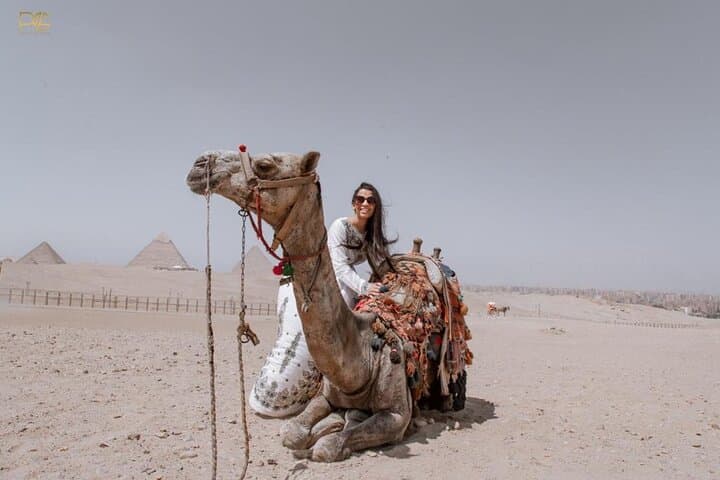


Dawn light spreads over limestone faces as a camel's silhouette moves against the stepped mass of Khufu. You climb into a padded saddle, the animal settles, and the desert—quiet, wind-swept, and surprisingly green in places—begins to nudge you past the Great Pyramid, Khafre's shadow, and the watchful profile of the Sphinx.
Dawn light spreads over limestone faces as a camel's silhouette moves against the stepped mass of Khufu. You climb into a padded saddle, the animal settles, and the desert—quiet, wind-swept, and surprisingly green in places—begins to nudge you past the Great Pyramid, Khafre's shadow, and the watchful profile of the Sphinx.
This ride threads modern storytelling through five millennia of history. The pyramids are monumental burial platforms from the Fourth Dynasty; the surrounding plateau records quarry scars, workers' cemeteries, and later reuse of stone that shaped Cairo's growth. Geologically, the plateau is Miocene limestone—solid underfoot but eroded into ridges and hollows that give the ride subtle changes in pitch and panorama.
Culturally, handlers and guides will share oral histories and local lore you won't find in guidebooks: practical know-how about camels, historical anecdotes, and how the site fits into modern Egyptian life. Visitors encounter a working landscape—domesticated dromedaries and a few resident vendors—rather than untouched wilderness.
Practical guidance: book a morning slot to avoid midday heat and crowded peak hours; bring at least 1.5–2 liters of water, a wide-brim hat, and closed-toe shoes for mounting and dismounting. Expect loose sand and short ledges—ride durations can run several hours including transfers, so plan for sun protection and a light layer for cooler mornings. Respect ropes and signage: some zones are fragile archaeological surfaces. With a steady pace and a patient mount, the ride delivers direct, tactile access to one of the world's most iconic landscapes.