THE ADVENTURE COLLECTIVE® · Independent discovery and booking for outdoor travel

Ride a camel or horse around Giza’s iconic monuments on a five-hour guided loop that mixes hands-on desert travel with on-site history. Expect panoramic views, practical tips for heat and footing, and in-ride stories from local guides.
Ride a camel or horse around Giza’s iconic monuments on a five-hour guided loop that mixes hands-on desert travel with on-site history. Expect panoramic views, practical tips for heat and footing, and in-ride stories from local guides.
The sun slants across open sand as a camel’s slow rhythm sets the pace and the Great Pyramid fills the horizon. On this five-hour circuit around the Giza plateau, riders move through broad painted desert, skirt the Valley Temple, and circle the Sphinx while a guide threads historical detail into the ride.
Verified experiences and guided adventures in the surrounding area.
Operated by Visitors Egypt Tours · Giza, Giza Governorate
The sun slants across open sand as a camel’s slow rhythm sets the pace and the Great Pyramid fills the horizon. On this five-hour circuit around the Giza plateau, riders move through broad painted desert, skirt the Valley Temple, and circle the Sphinx while a guide threads historical detail into the ride.
Geology here is plain to read: limestone quarried for cheops towers on the plateau’s bedrock, wind-polished ridges and scattered chert nodules hint at ancient shorelines. Culturally, the route traces millennia of human presence—Pharaonic mortuary complexes, later funerary avenues and modern Bedouin working animals currently used for visitor transport. Guides commonly explain construction theories, funerary rites, and local folklore not always found in textbooks.
Expect short, steady bursts of riding with photo stops and periods on foot near monuments. Terrain is sand and compacted desert; footing can be uneven around ruins. Heat and sun are the primary hazards, and wind can whip grit across exposed skin.
Practical guidance: wear closed shoes, lightweight long sleeves, and a wide-brimmed hat; bring 1–2 liters of water and sunscreen. If you prefer a horse instead of a camel, request that at booking. Transfers are usually by air-conditioned vehicle from Cairo hotels; mobile ticketing and private-guide options are common. For accessibility, ask the operator about specific mounting assistance—some animals and saddle setups are friendlier to riders with limited mobility.
This ride is both a cultural primer and an accessible desert outing—ideal for travelers wanting a tactile, immediate connection to the world’s oldest stone monuments.
easy.
5 hours.
Suitable for most fitness levels; must be able to mount/dismount and tolerate short periods of standing or walking on sand.
Yes—operators typically offer either camel or horse; specify your preference at booking and confirm on pickup.
Most tours include air-conditioned transfers from central Cairo or agreed pickup points; confirm your pickup location when you book.
The tour is marketed as suitable for most fitness levels, but it’s not recommended for travelers with spinal injuries—ask about mounting aid and saddle comfort for children and those with mobility issues.
Standard policy allows a full refund if you cancel at least 24 hours before departure; operators may cancel in bad weather and will notify you in advance.
The Giza plateau holds Fourth Dynasty complexes—Cheops, Chephren and Mykerinus—built on locally quarried limestone and aligned to ancient astronomical and funerary practices.
Visitor numbers and souvenir animal use put pressure on local ecology and working animals; choose operators that treat animals humanely and follow marked paths to protect archaeological remains.
Visitors Egypt Tours operates guided outdoor trips and adventures with an emphasis on safety, stewardship, and memorable experiences.
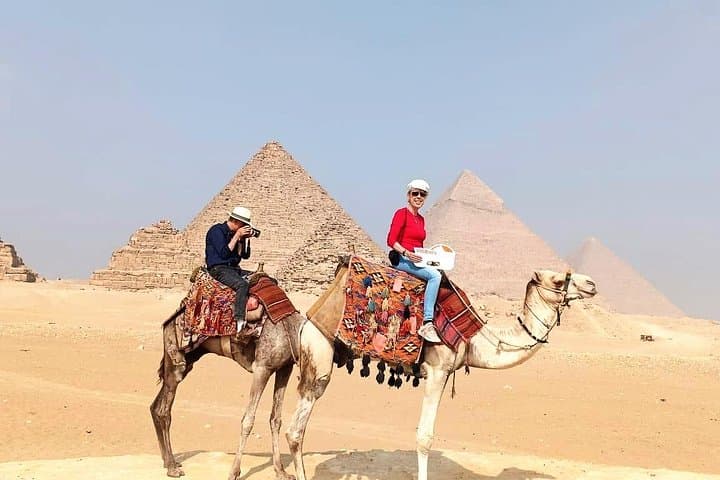


The sun slants across open sand as a camel’s slow rhythm sets the pace and the Great Pyramid fills the horizon. On this five-hour circuit around the Giza plateau, riders move through broad painted desert, skirt the Valley Temple, and circle the Sphinx while a guide threads historical detail into the ride.
The sun slants across open sand as a camel’s slow rhythm sets the pace and the Great Pyramid fills the horizon. On this five-hour circuit around the Giza plateau, riders move through broad painted desert, skirt the Valley Temple, and circle the Sphinx while a guide threads historical detail into the ride.
Geology here is plain to read: limestone quarried for cheops towers on the plateau’s bedrock, wind-polished ridges and scattered chert nodules hint at ancient shorelines. Culturally, the route traces millennia of human presence—Pharaonic mortuary complexes, later funerary avenues and modern Bedouin working animals currently used for visitor transport. Guides commonly explain construction theories, funerary rites, and local folklore not always found in textbooks.
Expect short, steady bursts of riding with photo stops and periods on foot near monuments. Terrain is sand and compacted desert; footing can be uneven around ruins. Heat and sun are the primary hazards, and wind can whip grit across exposed skin.
Practical guidance: wear closed shoes, lightweight long sleeves, and a wide-brimmed hat; bring 1–2 liters of water and sunscreen. If you prefer a horse instead of a camel, request that at booking. Transfers are usually by air-conditioned vehicle from Cairo hotels; mobile ticketing and private-guide options are common. For accessibility, ask the operator about specific mounting assistance—some animals and saddle setups are friendlier to riders with limited mobility.
This ride is both a cultural primer and an accessible desert outing—ideal for travelers wanting a tactile, immediate connection to the world’s oldest stone monuments.