THE ADVENTURE COLLECTIVE® · Independent discovery and booking for outdoor travel

Ride a camel across the Giza Plateau for intimate views of Cheops, Chephren, and Mykerinus, plus the Great Sphinx and the Valley Temple. This guided tour blends brief desert travel with close encounters of ancient engineering and sweeping panoramas.
Ride a camel across the Giza Plateau for intimate views of Cheops, Chephren, and Mykerinus, plus the Great Sphinx and the Valley Temple. This guided tour blends brief desert travel with close encounters of ancient engineering and sweeping panoramas.
A low sun spills across the desert as your camel rises, gait steady beneath you. Sand whispers under padded feet and the three great pyramids—Cheops, Chephren, and Mykerinus—loom like carved geometry against the sky. The ride threads between ridges of wind-sculpted sand and the compacted paths tourists and traders have used for generations.
Verified experiences and guided adventures in the surrounding area.
Operated by This Is Egypt · Giza, Giza Governorate
A low sun spills across the desert as your camel rises, gait steady beneath you. Sand whispers under padded feet and the three great pyramids—Cheops, Chephren, and Mykerinus—loom like carved geometry against the sky. The ride threads between ridges of wind-sculpted sand and the compacted paths tourists and traders have used for generations.
The Giza Plateau records 4,500 years of human ambition: Old Kingdom funerary architecture, the Great Sphinx guarding a valley temple used in mummification rituals, and later layers of Bedouin desert culture that adapted camel travel to the rhythms of this landscape. Geologically, the plateau is limestone bench carved by erosion; the stones you see were quarried locally and placed with staggering precision.
Expect close-up views of pyramid faces, a guided stop at the Sphinx and Valley Temple, and a panoramic vantage where nine pyramids are visible on the horizon. The camel portion usually lasts under three hours, paired with short walks on uneven, sandy ground.
Practical notes: wear closed-toe shoes with good ankle support, sun protection, and bring water—the desert claims moisture fast. Camels are steady but mounting and dismounting require balance; let the handler assist. Cameras are welcome; flash photography is avoided inside protected spaces. Tours typically include transfers, entrance fees, and a guide; confirm pick-up locations when booking as airport or suburban pickups can cost extra.
This is an accessible, sensory way to connect with one of the world’s oldest landscapes—bring patience, hydration, and respect for a site that still hums with history.
easy.
2.5–4 hours.
Suitable for most fitness levels; must be able to mount/dismount a camel and walk short distances on sand.
Yes—this tour states that entrance fees to the mentioned sites are included in the price.
Generally yes; the tour notes suitability for all fitness levels, but handlers should assist with mounting and dismounting and some participants may prefer to walk instead.
Yes—small backpacks and cameras are allowed; avoid large bags in restricted areas and respect any site photography rules.
Standard pickups from central Cairo hotels are usually included; airport and certain outer suburbs may incur additional charges—confirm at booking.
The plateau is home to Old Kingdom pharaohs’ pyramids and the Great Sphinx; the Valley Temple near the Sphinx was used for mummification rituals and purification prior to burial.
Visitors should stay on designated routes, avoid climbing monuments, and minimize plastic use; local guides work with authorities to protect fragile archaeology.
This Is Egypt operates guided outdoor trips and adventures with an emphasis on safety, stewardship, and memorable experiences.
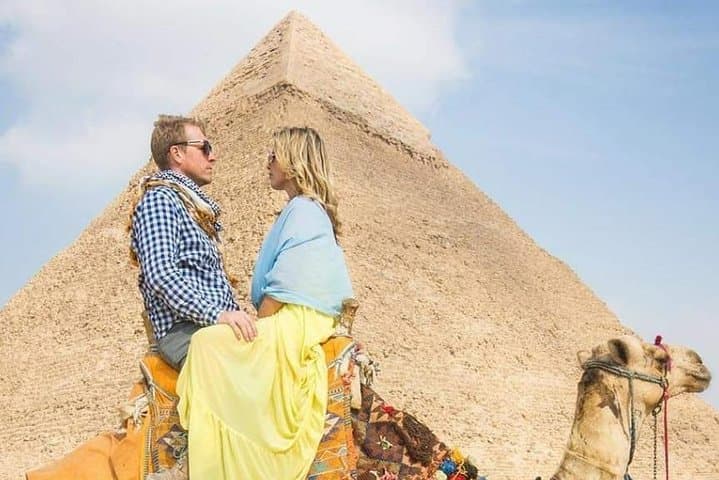


A low sun spills across the desert as your camel rises, gait steady beneath you. Sand whispers under padded feet and the three great pyramids—Cheops, Chephren, and Mykerinus—loom like carved geometry against the sky. The ride threads between ridges of wind-sculpted sand and the compacted paths tourists and traders have used for generations.
A low sun spills across the desert as your camel rises, gait steady beneath you. Sand whispers under padded feet and the three great pyramids—Cheops, Chephren, and Mykerinus—loom like carved geometry against the sky. The ride threads between ridges of wind-sculpted sand and the compacted paths tourists and traders have used for generations.
The Giza Plateau records 4,500 years of human ambition: Old Kingdom funerary architecture, the Great Sphinx guarding a valley temple used in mummification rituals, and later layers of Bedouin desert culture that adapted camel travel to the rhythms of this landscape. Geologically, the plateau is limestone bench carved by erosion; the stones you see were quarried locally and placed with staggering precision.
Expect close-up views of pyramid faces, a guided stop at the Sphinx and Valley Temple, and a panoramic vantage where nine pyramids are visible on the horizon. The camel portion usually lasts under three hours, paired with short walks on uneven, sandy ground.
Practical notes: wear closed-toe shoes with good ankle support, sun protection, and bring water—the desert claims moisture fast. Camels are steady but mounting and dismounting require balance; let the handler assist. Cameras are welcome; flash photography is avoided inside protected spaces. Tours typically include transfers, entrance fees, and a guide; confirm pick-up locations when booking as airport or suburban pickups can cost extra.
This is an accessible, sensory way to connect with one of the world’s oldest landscapes—bring patience, hydration, and respect for a site that still hums with history.