THE ADVENTURE COLLECTIVE® · Independent discovery and booking for outdoor travel

See the only surviving Ancient Wonder up close on a private half-day tour from Cairo. This trip combines guided history at the pyramids, a visit to the Sphinx and about 30 minutes of camel time on the plateau—ideal for photographers and first-time visitors.
See the only surviving Ancient Wonder up close on a private half-day tour from Cairo. This trip combines guided history at the pyramids, a visit to the Sphinx and about 30 minutes of camel time on the plateau—ideal for photographers and first-time visitors.
On the wind-scoured plain of the Giza Plateau the Great Pyramid rises like a patient giant, its limestone faces catching the sun as camels thread the sandy rims. In the hush between tour groups you can feel the desert nudging history forward; sand and stone have been keeping time here for four millennia.
Verified experiences and guided adventures in the surrounding area.
Operated by Egypt Lifetime Tours · Giza, Giza Governorate
On the wind-scoured plain of the Giza Plateau the Great Pyramid rises like a patient giant, its limestone faces catching the sun as camels thread the sandy rims. In the hush between tour groups you can feel the desert nudging history forward; sand and stone have been keeping time here for four millennia.
The plateau holds the three major Old Kingdom pyramids—Khufu (Cheops), Khafre (Chephren) and Menkaure—built around 2600–2500 BCE as funerary complexes for the pharaohs. Archaeologically the site records ancient quarrying, precise stone masonry and ritual landscapes; nearby the Valley Temple and the Sphinx link royal power, mortuary cults and solar symbolism. Geologically the plateau sits on Miocene limestone that makes the massive blocks possible and gives the pyramids their pale, weathered look.
Culturally you'll meet guides trained in Egyptology, local camel handlers, and vendors selling papyrus and spices; conversation often moves from construction theories to mummification and the sun‑boat recovered in 1954.
Practically, a half‑day private tour with hotel pickup covers close-up views of Khufu, stops for photos of Khafre and Menkaure, a visit to the Sphinx and Valley Temple, and roughly 30 minutes on a camel along sandy tracks. Expect unpaved walking, sun exposure, and short climbs on uneven ground; entrance fees and optional museum or pyramid‑interior access are paid separately. Bring sun protection, a refillable water bottle, sturdy shoes and a sense of patience for crowds and traffic. Morning light is best for photos; late afternoon offers cooler temperatures and longer shadows that dramatize the stones.
easy.
3–4 hours.
Suitable for most fitness levels; requires walking on uneven, sandy ground and standing for photos.
No; standard entrance fees for the Giza Plateau, pyramid interiors or museums are typically paid separately and may be charged by card on-site.
The advertised camel time is approximately 30 minutes alongside the pyramids, but actual duration can vary slightly; confirm with your guide at the start.
The provider lists wheelchair-accessible pickup and options, but the plateau itself has uneven ground and limited wheelchair access to close viewpoints—check in advance for accommodations.
Interior entry is optional and requires a separate ticket; availability can be limited and depends on current site rules.
The Giza complex dates to Egypt’s Fourth Dynasty (c. 2600–2500 BCE); the pyramids functioned as royal tombs within larger funerary complexes and reflect extensive quarrying and labor organization.
High visitor numbers and wind-driven sand contribute to erosion; follow site rules, don’t climb monuments, and support licensed guides and local conservation fees when offered.
Egypt Lifetime Tours operates guided outdoor trips and adventures with an emphasis on safety, stewardship, and memorable experiences.


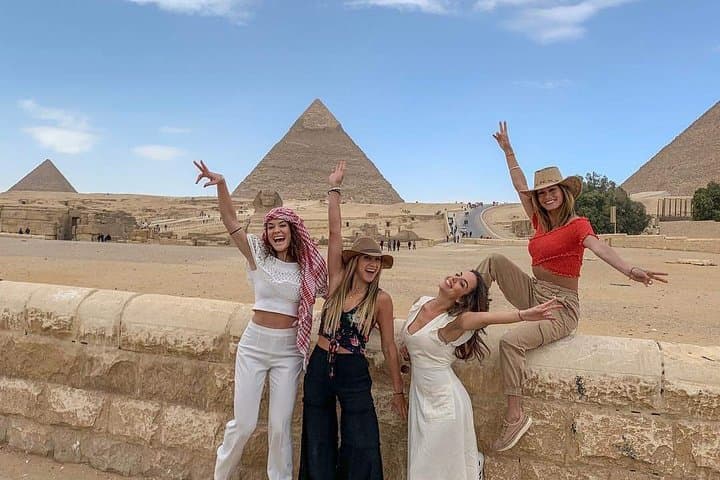
On the wind-scoured plain of the Giza Plateau the Great Pyramid rises like a patient giant, its limestone faces catching the sun as camels thread the sandy rims. In the hush between tour groups you can feel the desert nudging history forward; sand and stone have been keeping time here for four millennia.
On the wind-scoured plain of the Giza Plateau the Great Pyramid rises like a patient giant, its limestone faces catching the sun as camels thread the sandy rims. In the hush between tour groups you can feel the desert nudging history forward; sand and stone have been keeping time here for four millennia.
The plateau holds the three major Old Kingdom pyramids—Khufu (Cheops), Khafre (Chephren) and Menkaure—built around 2600–2500 BCE as funerary complexes for the pharaohs. Archaeologically the site records ancient quarrying, precise stone masonry and ritual landscapes; nearby the Valley Temple and the Sphinx link royal power, mortuary cults and solar symbolism. Geologically the plateau sits on Miocene limestone that makes the massive blocks possible and gives the pyramids their pale, weathered look.
Culturally you'll meet guides trained in Egyptology, local camel handlers, and vendors selling papyrus and spices; conversation often moves from construction theories to mummification and the sun‑boat recovered in 1954.
Practically, a half‑day private tour with hotel pickup covers close-up views of Khufu, stops for photos of Khafre and Menkaure, a visit to the Sphinx and Valley Temple, and roughly 30 minutes on a camel along sandy tracks. Expect unpaved walking, sun exposure, and short climbs on uneven ground; entrance fees and optional museum or pyramid‑interior access are paid separately. Bring sun protection, a refillable water bottle, sturdy shoes and a sense of patience for crowds and traffic. Morning light is best for photos; late afternoon offers cooler temperatures and longer shadows that dramatize the stones.