THE ADVENTURE COLLECTIVE® · Independent discovery and booking for outdoor travel

Visit the Giza Plateau’s pyramids and the Sphinx, then unwind on a traditional felucca along the Nile. This private, four‑hour loop pairs archaeology, a museum stop, camel options, and a riverside sail.
Visit the Giza Plateau’s pyramids and the Sphinx, then unwind on a traditional felucca along the Nile. This private, four‑hour loop pairs archaeology, a museum stop, camel options, and a riverside sail.
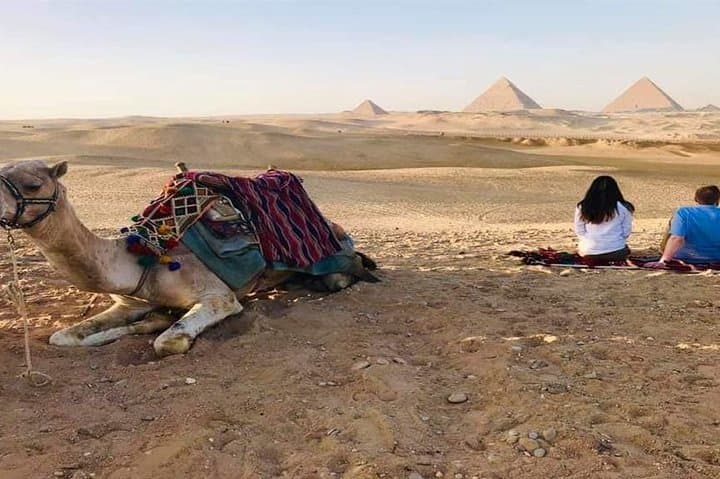
The morning light on the Giza plateau is blunt and planar, throwing the Great Pyramid into hard shadow as your guide leads the minivan up to the parking ridge. Sand smells dry and mineral; vendors set out scarves and bottles while the plateau opens into raw geometry—stones stacked across millennia, the Sphinx staring east with an immovable gaze.
Verified experiences and guided adventures in the surrounding area.
Operated by Egypt Tours USA · Cairo, Giza Governorate
The morning light on the Giza plateau is blunt and planar, throwing the Great Pyramid into hard shadow as your guide leads the minivan up to the parking ridge. Sand smells dry and mineral; vendors set out scarves and bottles while the plateau opens into raw geometry—stones stacked across millennia, the Sphinx staring east with an immovable gaze.
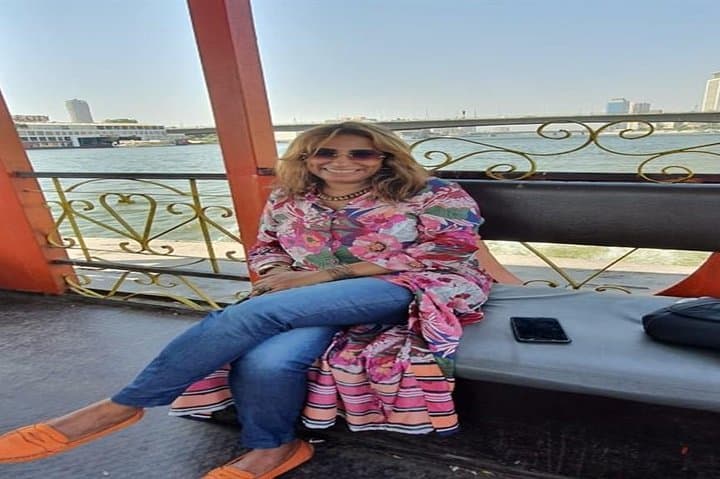
This half-day loop ties clear sightlines to deeper context: these are Old Kingdom monuments—Cheops, Chefren, Mykerinos—built from local limestone and worked by forced and paid labor over centuries. The valley temple and nearby Solar Boat Museum explain funerary logistics; geology here is visible in the quarried bedrock beneath your feet. Crossing to the Nile, the river changes the script: its slow current has shaped Cairo since pharaonic times and still powers local life. A felucca ride offers low-slung views of riverside neighborhoods, birds lifting and skimming over the water as the wind fills the late-afternoon sail.
Expect a guided, private rhythm: hotel pickup in Cairo or Giza, archaeological stops with entrance fees, a short camel option, lunch, then a one-hour felucca sail. Practicalities matter—bring sun protection, carry water, and leave bulky bags on the minivan. Photography is abundant but respect posted rules around monuments and officials; climbing is prohibited and heavily policed.
This tour suits travelers who want concentrated history with manageable logistics and a quiet stretch of river to close the day: efficient, sensory, and grounded in place.
easy.
4 hours.
Suitable for most fitness levels; involves short walks on uneven ground and boarding a small boat.
Yes—this tour’s entrance fees for the Giza plateau and the Solar Boat Museum are included in the itinerary.
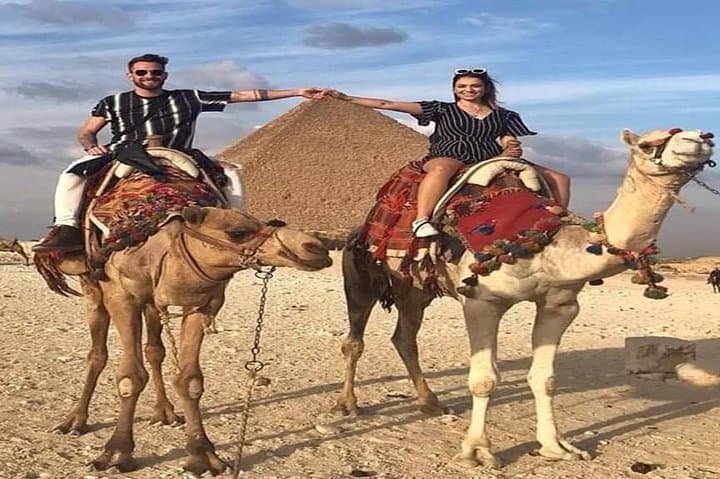
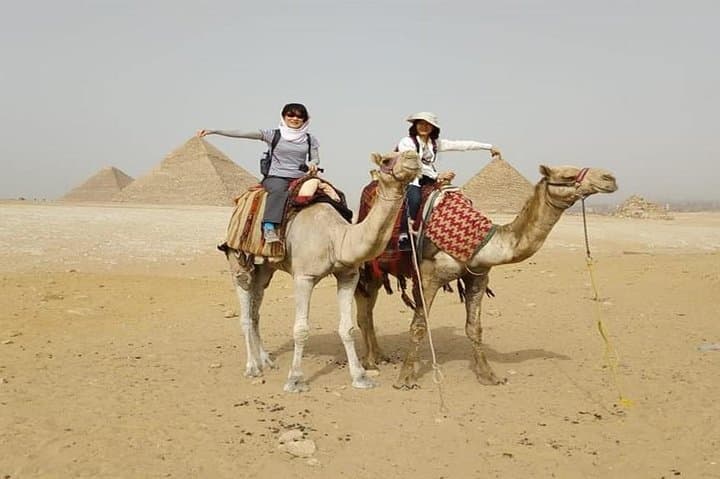
Camel rides are usually offered during the visit and are typically included or available as an optional extra—confirm with the operator before booking.
Feluccas are low and steady; if you are sensitive to motion, sit mid-boat, focus on the horizon, and take motion-sickness measures beforehand.
The operator lists wheelchair-accessible transportation, but plateau surfaces are uneven; full access to all viewpoints may be limited—ask the provider about specific needs.
The Giza complex dates to Egypt’s Fourth Dynasty (c. 2600–2500 BCE), reflecting centralized state organization for monumental tomb construction.
Visitor pressure stresses fragile surfaces and nearby development; stick to paths, avoid touching masonry, and support licensed local guides to promote sustainable tourism.
Egypt Tours USA operates guided outdoor trips and adventures with an emphasis on safety, stewardship, and memorable experiences.
The morning light on the Giza plateau is blunt and planar, throwing the Great Pyramid into hard shadow as your guide leads the minivan up to the parking ridge. Sand smells dry and mineral; vendors set out scarves and bottles while the plateau opens into raw geometry—stones stacked across millennia, the Sphinx staring east with an immovable gaze.
The morning light on the Giza plateau is blunt and planar, throwing the Great Pyramid into hard shadow as your guide leads the minivan up to the parking ridge. Sand smells dry and mineral; vendors set out scarves and bottles while the plateau opens into raw geometry—stones stacked across millennia, the Sphinx staring east with an immovable gaze.
This half-day loop ties clear sightlines to deeper context: these are Old Kingdom monuments—Cheops, Chefren, Mykerinos—built from local limestone and worked by forced and paid labor over centuries. The valley temple and nearby Solar Boat Museum explain funerary logistics; geology here is visible in the quarried bedrock beneath your feet. Crossing to the Nile, the river changes the script: its slow current has shaped Cairo since pharaonic times and still powers local life. A felucca ride offers low-slung views of riverside neighborhoods, birds lifting and skimming over the water as the wind fills the late-afternoon sail.
Expect a guided, private rhythm: hotel pickup in Cairo or Giza, archaeological stops with entrance fees, a short camel option, lunch, then a one-hour felucca sail. Practicalities matter—bring sun protection, carry water, and leave bulky bags on the minivan. Photography is abundant but respect posted rules around monuments and officials; climbing is prohibited and heavily policed.
This tour suits travelers who want concentrated history with manageable logistics and a quiet stretch of river to close the day: efficient, sensory, and grounded in place.