THE ADVENTURE COLLECTIVE® · Independent discovery and booking for outdoor travel

Pair the Egyptian Museum’s Tutankhamun treasures with the raw presence of the Giza Pyramids on a private half-day tour from Cairo. Expect uneven sandy terrain, strong sun, and a fast-paced, history-rich route.
Pair the Egyptian Museum’s Tutankhamun treasures with the raw presence of the Giza Pyramids on a private half-day tour from Cairo. Expect uneven sandy terrain, strong sun, and a fast-paced, history-rich route.
You step onto the Giza Plateau with winded grains of sand pressing at your boots and the Great Pyramid towering like a patient engineer. The stone faces hold heat and story; camels chew quietly while the Nile, a short drive away, seems to dare the city to forget it.
Verified experiences and guided adventures in the surrounding area.
Operated by nonaegypt · Giza, Giza Governorate
You step onto the Giza Plateau with winded grains of sand pressing at your boots and the Great Pyramid towering like a patient engineer. The stone faces hold heat and story; camels chew quietly while the Nile, a short drive away, seems to dare the city to forget it.
The tour pairs two of Egypt’s clearest cultural punches: the late-19th/early-20th-century Egyptian Museum—home to the Tutankhamun collection and roughly 120,000 artifacts—and the three major pyramids of Giza, built from limestone and granite during the Fourth Dynasty (c. 2600–2500 BCE). Geology is obvious here: quarried Tura limestone gives the pyramids their pale armor, while the plateau’s wind-scoured surface exposes millennia of human labor.
Culturally, the route threads modern Cairo markets and Coptic alleys with millennia-old mortuary practices. Local insights include the Solar Boat Museum beside Khufu and the compact scale of the Egyptian Museum: you’ll see highlights, not everything.
Practical guidance: expect 4–5 hours of walking on uneven, sandy ground. Wear sturdy, closed shoes and sun protection; bring cash for tips, a light scarf for modesty at religious sites, and a refillable water bottle. Pickup and private transport are typically included, and optional extras like a felucca ride or camel encounter can add 30–60 minutes.
Timing matters: early morning or late afternoon light improves photos and cuts heat. Respect site rules—no climbing, follow escorts, and keep to marked paths to help preserve fragile archaeology.
easy.
4–5 hours.
Suitable for most fitness levels; requires standing and moderate walking on uneven ground.
Most private tours include pickup and drop-off from hotels in Cairo and Giza—confirm your pickup point when booking.
Camel rides and felucca trips are commonly offered as optional add-ons; expect extra cost and around 30–60 minutes additional time.
The Egyptian Museum has limited accessibility and the Giza Plateau has uneven terrain and sand; travelers with mobility concerns should notify the operator in advance to arrange assistance or modified access.
Tipping is customary for guides, drivers, and service staff; small notes in local currency are preferred.
The Giza pyramids date to Egypt’s Fourth Dynasty (c. 2600–2500 BCE); the Egyptian Museum (opened 1902) houses massive collections including Tutankhamun’s funerary goods.
Sites face erosion, tourist wear, and urban encroachment—stick to marked areas, avoid touching fragile reliefs, and follow guide instructions to minimize impact.
nonaegypt operates guided outdoor trips and adventures with an emphasis on safety, stewardship, and memorable experiences.
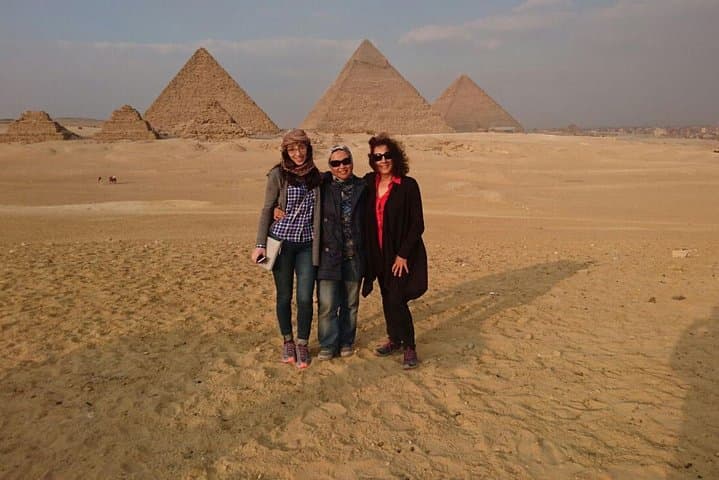
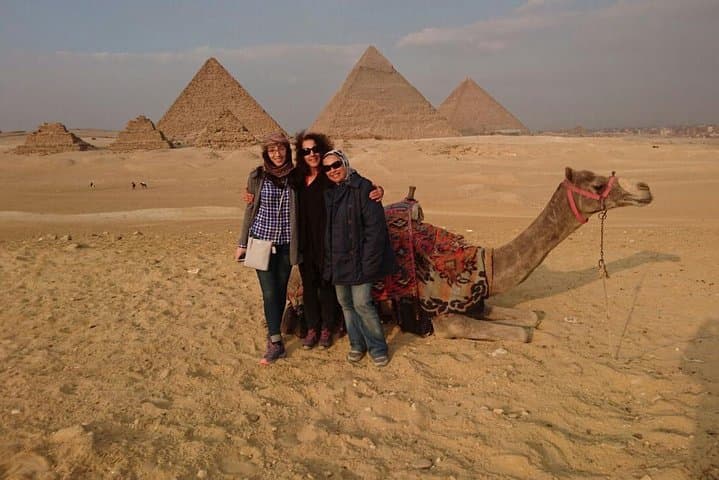
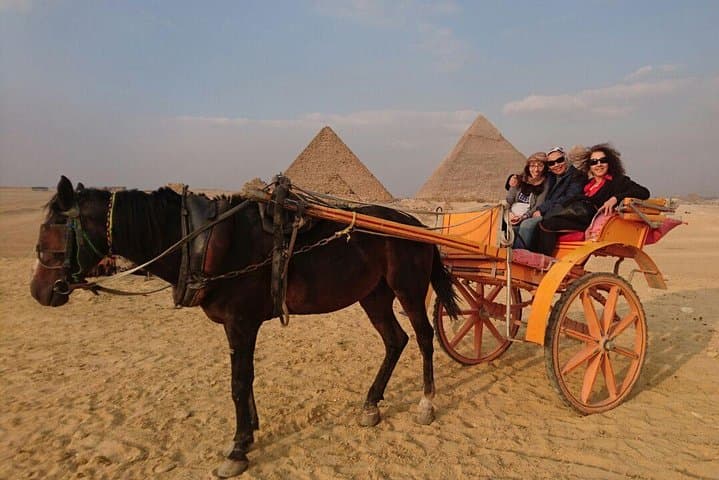
You step onto the Giza Plateau with winded grains of sand pressing at your boots and the Great Pyramid towering like a patient engineer. The stone faces hold heat and story; camels chew quietly while the Nile, a short drive away, seems to dare the city to forget it.
You step onto the Giza Plateau with winded grains of sand pressing at your boots and the Great Pyramid towering like a patient engineer. The stone faces hold heat and story; camels chew quietly while the Nile, a short drive away, seems to dare the city to forget it.
The tour pairs two of Egypt’s clearest cultural punches: the late-19th/early-20th-century Egyptian Museum—home to the Tutankhamun collection and roughly 120,000 artifacts—and the three major pyramids of Giza, built from limestone and granite during the Fourth Dynasty (c. 2600–2500 BCE). Geology is obvious here: quarried Tura limestone gives the pyramids their pale armor, while the plateau’s wind-scoured surface exposes millennia of human labor.
Culturally, the route threads modern Cairo markets and Coptic alleys with millennia-old mortuary practices. Local insights include the Solar Boat Museum beside Khufu and the compact scale of the Egyptian Museum: you’ll see highlights, not everything.
Practical guidance: expect 4–5 hours of walking on uneven, sandy ground. Wear sturdy, closed shoes and sun protection; bring cash for tips, a light scarf for modesty at religious sites, and a refillable water bottle. Pickup and private transport are typically included, and optional extras like a felucca ride or camel encounter can add 30–60 minutes.
Timing matters: early morning or late afternoon light improves photos and cuts heat. Respect site rules—no climbing, follow escorts, and keep to marked paths to help preserve fragile archaeology.