THE ADVENTURE COLLECTIVE® · Independent discovery and booking for outdoor travel

Spend a full day crossing time—from the steppe of the Giza Plateau to the curated halls of the Egyptian Museum. This compact guide explains what to expect, how to prepare, and where to focus your time on a 5–7 hour private tour.
Spend a full day crossing time—from the steppe of the Giza Plateau to the curated halls of the Egyptian Museum. This compact guide explains what to expect, how to prepare, and where to focus your time on a 5–7 hour private tour.
You arrive before the sun burns the horizon, the Giza Plateau throwing long shadows across weathered limestone as the Great Pyramid looms like an engineered mountain. The wind tugs at your scarf and the plateau seems to measure your pace—slow enough to read the stones, quick enough to keep the dust from settling on your camera.
Verified experiences and guided adventures in the surrounding area.
Operated by Perfect Day Tours · Cairo, Giza Governorate
You arrive before the sun burns the horizon, the Giza Plateau throwing long shadows across weathered limestone as the Great Pyramid looms like an engineered mountain. The wind tugs at your scarf and the plateau seems to measure your pace—slow enough to read the stones, quick enough to keep the dust from settling on your camera.
This full-day excursion pairs the ancient geometry of Giza with the glass-and-stone galleries of the Egyptian Museum. The pyramids—Khufu, Khafre and Menkaure—are funerary complexes built over 4,500 years ago; their blocks carry the grainy story of quarrying, transport and ritual. The museum, opened in 1902, houses the Narmer Palette, statues of Old Kingdom rulers and the Tutankhamun treasures that brought modern fascination to Egyptology.
Cairo’s landscape is both archaeological and living: vendors call from shaded corners, stray cats patrol the stone, and the Solar Boat Museum keeps a plank-built funerary ship at Khufu’s base. Local guides translate hieroglyphs of power into practical context—what stratum of society paid for each monument and how the plateau’s geology dictated construction methods.
Practical guidance: tours typically run 5–7 hours with hotel pickup around 8:00 a.m.; wear sturdy closed shoes to navigate uneven stones and loose sand, bring a full water bottle and sun protection, and carry local currency for tips and small purchases. If you plan to enter a pyramid chamber, expect narrow passages and additional entry rules. Allow time at the museum for the Tutankhamun galleries; security and bag checks are standard. A morning start avoids the heat and most crowds, and modest clothing respects local culture.
easy.
5–7 hours.
Light walking on uneven surfaces and short stairs; suitable for most fitness levels
Many tours offer pyramid interior access as an add-on; entry is limited and can involve narrow, low-ceiling passages—check in advance and disclose mobility needs.
The museum provides accessible routes and some services, but older galleries may have uneven floors; the tour notes wheelchair-accessible options in its inclusions.
This tour includes a complimentary short camel ride on the Giza Plateau; negotiate the duration and price for additional time directly with handlers.
Major sites accept cards for tickets, but vendors, tips, and smaller purchases are cash-friendly—carry small Egyptian pound notes.
The Giza pyramids were built as royal tomb complexes in the Old Kingdom; the Egyptian Museum, established in 1902, became the primary repository for finds from across Egypt, including Tutankhamun’s treasures.
High visitor volume stresses fragile surfaces and local infrastructure—stick to marked paths, avoid climbing on monuments, and use established guides to minimize impact.
Perfect Day Tours operates guided outdoor trips and adventures with an emphasis on safety, stewardship, and memorable experiences.


You arrive before the sun burns the horizon, the Giza Plateau throwing long shadows across weathered limestone as the Great Pyramid looms like an engineered mountain. The wind tugs at your scarf and the plateau seems to measure your pace—slow enough to read the stones, quick enough to keep the dust from settling on your camera.
You arrive before the sun burns the horizon, the Giza Plateau throwing long shadows across weathered limestone as the Great Pyramid looms like an engineered mountain. The wind tugs at your scarf and the plateau seems to measure your pace—slow enough to read the stones, quick enough to keep the dust from settling on your camera.
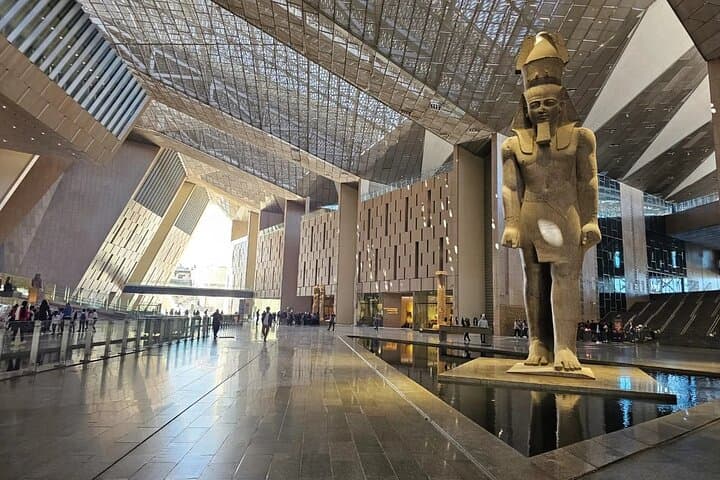
This full-day excursion pairs the ancient geometry of Giza with the glass-and-stone galleries of the Egyptian Museum. The pyramids—Khufu, Khafre and Menkaure—are funerary complexes built over 4,500 years ago; their blocks carry the grainy story of quarrying, transport and ritual. The museum, opened in 1902, houses the Narmer Palette, statues of Old Kingdom rulers and the Tutankhamun treasures that brought modern fascination to Egyptology.
Cairo’s landscape is both archaeological and living: vendors call from shaded corners, stray cats patrol the stone, and the Solar Boat Museum keeps a plank-built funerary ship at Khufu’s base. Local guides translate hieroglyphs of power into practical context—what stratum of society paid for each monument and how the plateau’s geology dictated construction methods.
Practical guidance: tours typically run 5–7 hours with hotel pickup around 8:00 a.m.; wear sturdy closed shoes to navigate uneven stones and loose sand, bring a full water bottle and sun protection, and carry local currency for tips and small purchases. If you plan to enter a pyramid chamber, expect narrow passages and additional entry rules. Allow time at the museum for the Tutankhamun galleries; security and bag checks are standard. A morning start avoids the heat and most crowds, and modest clothing respects local culture.