THE ADVENTURE COLLECTIVE® · Independent discovery and booking for outdoor travel

See the Giza plateau and the Egyptian Museum in a single day: an efficient, private layover tour that pairs sunrise‑friendly pyramid views and a curated museum visit with time for shopping and airport transfers.
See the Giza plateau and the Egyptian Museum in a single day: an efficient, private layover tour that pairs sunrise‑friendly pyramid views and a curated museum visit with time for shopping and airport transfers.
You step out of Cairo International Airport and the desert light throws long shadows across the road as your private car threads toward the plateau. The Pyramids of Giza rise from the sands like angles of stone—Cheops, Chephren and Mykerinus—each face flattened by time but still exacting in scale. A complimentary half‑hour camel ride gives the plateau a moving perspective: the camels rock like old boats and the wind seems to nudge you toward the Sphinx’s watchful jaw.
Verified experiences and guided adventures in the surrounding area.
Operated by MyEgyTours · Giza, Cairo
You step out of Cairo International Airport and the desert light throws long shadows across the road as your private car threads toward the plateau. The Pyramids of Giza rise from the sands like angles of stone—Cheops, Chephren and Mykerinus—each face flattened by time but still exacting in scale. A complimentary half‑hour camel ride gives the plateau a moving perspective: the camels rock like old boats and the wind seems to nudge you toward the Sphinx’s watchful jaw.
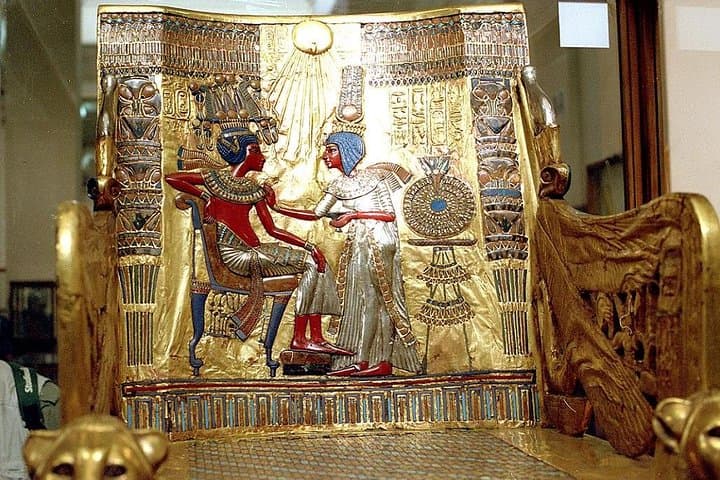
The stones beneath your feet are Old Kingdom work, roughly 4,500 years old; the Sphinx is conventionally attributed to Khafre. The plateau’s limestone and casing histories explain the now-raw surfaces you see. Later, an air‑conditioned transfer takes you to the Egyptian Museum in Tahrir Square, home to hundreds of thousands of artifacts including Tutankhamen’s treasure—objects that outline five millennia of Nile‑valley civilization.
Along the route you’ll pass Cairo’s layered cityscape: Ottoman-era streets, midcentury facades, and market alleys that funnel into Khan el-Khalili for quick shopping. Expect brisk bargaining, concentrated crowds, and an intensity of heat and light that demands planning.
Practical guidance: start early to avoid midday heat, carry ID and printed or mobile tickets for site access, and keep hydration within arm’s reach. Footwear should handle sand, uneven stone and museum floors. Allow time margins for traffic and airport transfers—the tour compresses a lot into eight to ten hours but delivers the essentials of ancient Egypt for travelers on a layover.
easy.
8–10 hours.
Basic walking fitness; able to stand for guided explanation, climb short uneven steps, and handle heat.
Yes—this tour includes a complimentary half‑hour camel ride on the Giza plateau as described in the itinerary.
Yes—the Egyptian Museum’s Tutankhamen collection is part of the standard visit; specific display locations can change within the museum.
The tour is listed as wheelchair accessible for transfers, but the plateau involves uneven terrain and sand; contact the operator to confirm accommodations for the pyramids area.
Allow at least 10–12 hours between scheduled flights to account for pickup, traffic, site time and return—this tour occupies roughly 8–10 hours.
The Giza pyramids date to Egypt’s Old Kingdom (c. 2600–2500 BCE); the Sphinx is traditionally linked to Pharaoh Khafre. The Egyptian Museum houses one of the largest collections of Pharaonic artifacts in the world.
Visitor pressure and urban pollution stress archaeological sites—stay on marked paths, avoid climbing monuments, and follow guide instructions to minimize impact.
MyEgyTours operates guided outdoor trips and adventures with an emphasis on safety, stewardship, and memorable experiences.



You step out of Cairo International Airport and the desert light throws long shadows across the road as your private car threads toward the plateau. The Pyramids of Giza rise from the sands like angles of stone—Cheops, Chephren and Mykerinus—each face flattened by time but still exacting in scale. A complimentary half‑hour camel ride gives the plateau a moving perspective: the camels rock like old boats and the wind seems to nudge you toward the Sphinx’s watchful jaw.
You step out of Cairo International Airport and the desert light throws long shadows across the road as your private car threads toward the plateau. The Pyramids of Giza rise from the sands like angles of stone—Cheops, Chephren and Mykerinus—each face flattened by time but still exacting in scale. A complimentary half‑hour camel ride gives the plateau a moving perspective: the camels rock like old boats and the wind seems to nudge you toward the Sphinx’s watchful jaw.
The stones beneath your feet are Old Kingdom work, roughly 4,500 years old; the Sphinx is conventionally attributed to Khafre. The plateau’s limestone and casing histories explain the now-raw surfaces you see. Later, an air‑conditioned transfer takes you to the Egyptian Museum in Tahrir Square, home to hundreds of thousands of artifacts including Tutankhamen’s treasure—objects that outline five millennia of Nile‑valley civilization.
Along the route you’ll pass Cairo’s layered cityscape: Ottoman-era streets, midcentury facades, and market alleys that funnel into Khan el-Khalili for quick shopping. Expect brisk bargaining, concentrated crowds, and an intensity of heat and light that demands planning.
Practical guidance: start early to avoid midday heat, carry ID and printed or mobile tickets for site access, and keep hydration within arm’s reach. Footwear should handle sand, uneven stone and museum floors. Allow time margins for traffic and airport transfers—the tour compresses a lot into eight to ten hours but delivers the essentials of ancient Egypt for travelers on a layover.