THE ADVENTURE COLLECTIVE® · Independent discovery and booking for outdoor travel

Spend a full day moving from the monumental Giza Plateau to the Egyptian Museum and the bustling alleys of Khan el-Khalili. This private tour blends outdoor exploration with curated museum time and local market culture.
Spend a full day moving from the monumental Giza Plateau to the Egyptian Museum and the bustling alleys of Khan el-Khalili. This private tour blends outdoor exploration with curated museum time and local market culture.
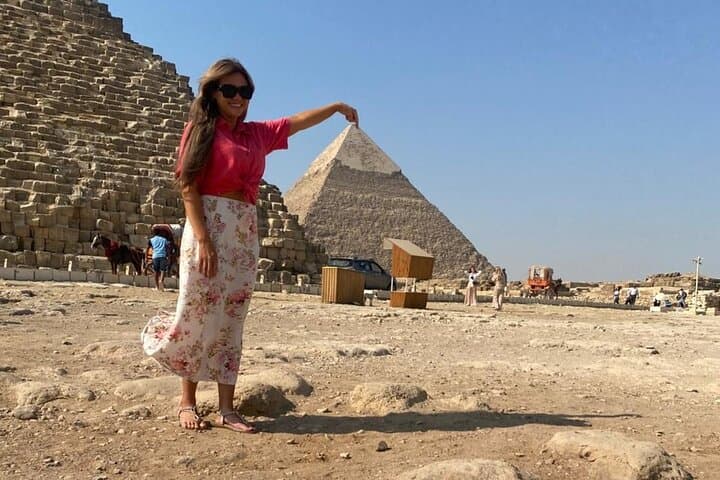
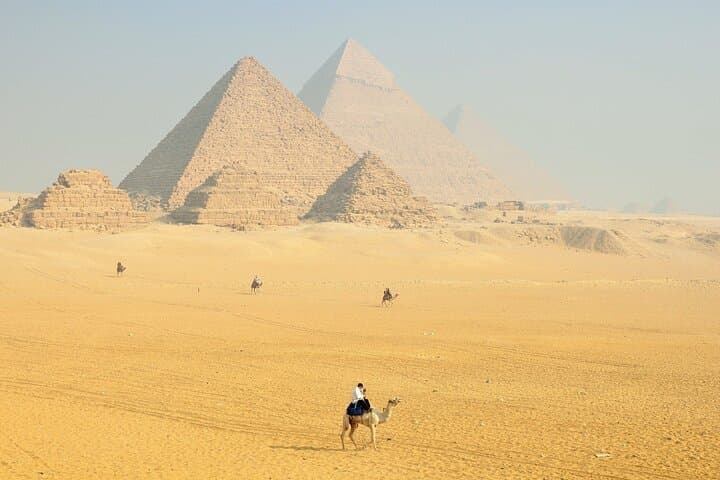
You arrive on the Giza Plateau as the sun makes the limestone glow; the air is dry and the pyramids loom, their stepped profiles throwing long, geometric shadows across wind-swept sand.
Verified experiences and guided adventures in the surrounding area.
Operated by Crown Egypt Tours · Giza, Giza Governorate
You arrive on the Giza Plateau as the sun makes the limestone glow; the air is dry and the pyramids loom, their stepped profiles throwing long, geometric shadows across wind-swept sand.
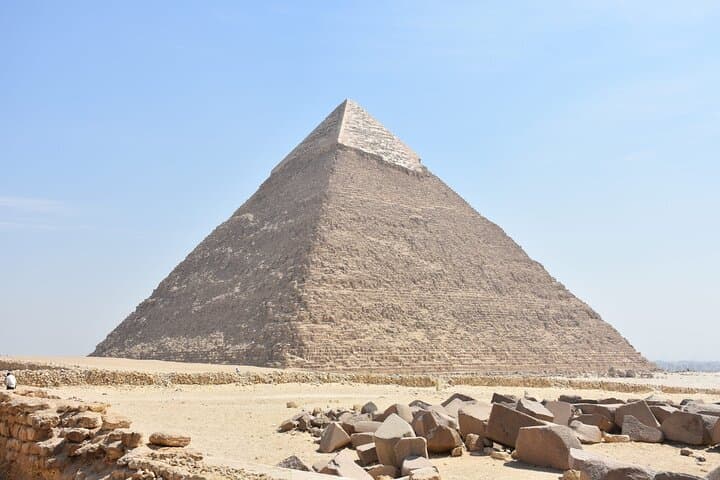
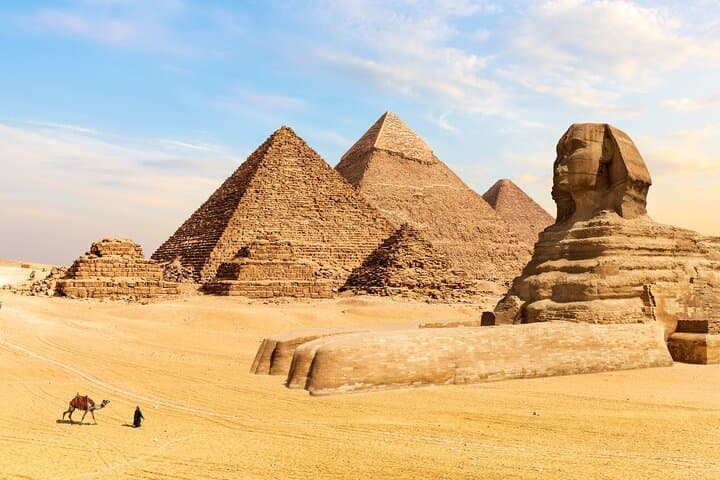
The Great Pyramid (Khufu) dominates the site — a stone-built mountain from roughly 2560 BCE — while Khafre’s pyramid and the reclining Great Sphinx keep silent watch. Geologically the plateau is a compacted limestone cap cut by ancient quarrying; you’ll feel the abrasive desert wind and hear the distant urban pulse of Greater Cairo.
History is immediate here: these stone giants were built as funerary monuments in Egypt’s Old Kingdom. A short drive away, the old Egyptian Museum in downtown Cairo holds more than 120,000 artifacts, including Tutankhamun finds, while the new Grand Egyptian Museum (GEM) at Giza reinterprets those stories in modern galleries.
Finish in Khan el-Khalili, a centuries-old bazaar where spices, brassware and coffeehouses crowd narrow alleys — the market culture is as much a living attraction as the ruins.
Practical guidance: this private day tour runs about 8–10 hours with hotel pickup; expect several hours on foot over uneven pavement and compact sand. Wear sturdy closed-toe shoes, sun protection and bring cash for small purchases and tips. Museums have security checks and varying photo rules; pack patience for queues at high season. Aim for early morning or late afternoon light at the pyramids for cooler temperatures and better photos. Respect barriers and the fragile stonework — stay on marked paths, hydrate frequently, and let a local guide shape the timing to avoid crowds and midday heat.
easy.
8–10 hours.
Suitable for anyone who can walk several hours at a moderate pace; expect uneven surfaces and short sandy stretches.
Yes — the itinerary indicates admissions to the Giza Plateau sites and the Egyptian Museum (or Grand Egyptian Museum) are included; confirm which museum is selected when booking.
The tour lists wheelchair accessibility, but the Giza Plateau has uneven terrain and some areas are difficult to navigate — contact the operator in advance to arrange suitable access.
Lunch at a local restaurant is included in the tour package; let the operator know dietary needs ahead of time.
Yes — the option for GEM versus the older Museum is offered in the itinerary; GEM is adjacent to Giza and provides newer exhibits and different visitor flows.
The Great Pyramid dates to the Fourth Dynasty (circa 2560 BCE); Khafre’s complex includes the Sphinx, thought to represent the pharaoh as a lion-bodied guardian.
Heavy tourism stresses fragile stone and archaeological contexts — stay on designated routes, avoid touching ancient masonry and support licensed guides who follow site protection rules.
Crown Egypt Tours operates guided outdoor trips and adventures with an emphasis on safety, stewardship, and memorable experiences.
You arrive on the Giza Plateau as the sun makes the limestone glow; the air is dry and the pyramids loom, their stepped profiles throwing long, geometric shadows across wind-swept sand.
You arrive on the Giza Plateau as the sun makes the limestone glow; the air is dry and the pyramids loom, their stepped profiles throwing long, geometric shadows across wind-swept sand.
The Great Pyramid (Khufu) dominates the site — a stone-built mountain from roughly 2560 BCE — while Khafre’s pyramid and the reclining Great Sphinx keep silent watch. Geologically the plateau is a compacted limestone cap cut by ancient quarrying; you’ll feel the abrasive desert wind and hear the distant urban pulse of Greater Cairo.
History is immediate here: these stone giants were built as funerary monuments in Egypt’s Old Kingdom. A short drive away, the old Egyptian Museum in downtown Cairo holds more than 120,000 artifacts, including Tutankhamun finds, while the new Grand Egyptian Museum (GEM) at Giza reinterprets those stories in modern galleries.
Finish in Khan el-Khalili, a centuries-old bazaar where spices, brassware and coffeehouses crowd narrow alleys — the market culture is as much a living attraction as the ruins.
Practical guidance: this private day tour runs about 8–10 hours with hotel pickup; expect several hours on foot over uneven pavement and compact sand. Wear sturdy closed-toe shoes, sun protection and bring cash for small purchases and tips. Museums have security checks and varying photo rules; pack patience for queues at high season. Aim for early morning or late afternoon light at the pyramids for cooler temperatures and better photos. Respect barriers and the fragile stonework — stay on marked paths, hydrate frequently, and let a local guide shape the timing to avoid crowds and midday heat.