THE ADVENTURE COLLECTIVE® · Independent discovery and booking for outdoor travel

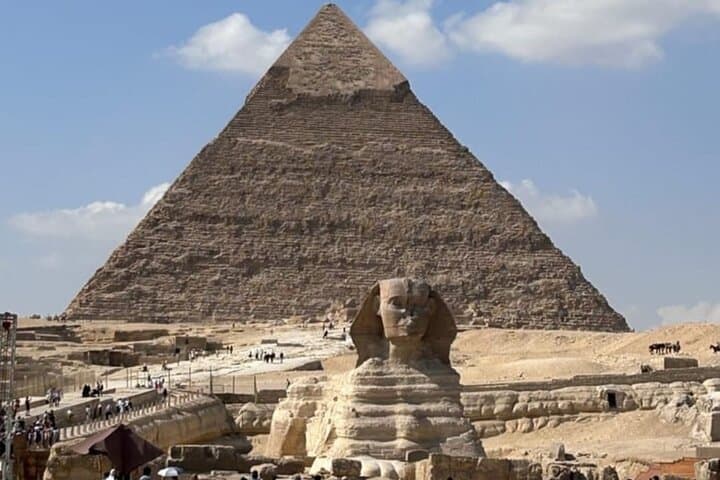
Stand before the Great Pyramid and the Sphinx on a guided walk across the Giza Plateau. This 4–5 hour tour pairs expert narration about pharaohs and engineering with an optional camel ride for classic desert views.
Stand before the Great Pyramid and the Sphinx on a guided walk across the Giza Plateau. This 4–5 hour tour pairs expert narration about pharaohs and engineering with an optional camel ride for classic desert views.
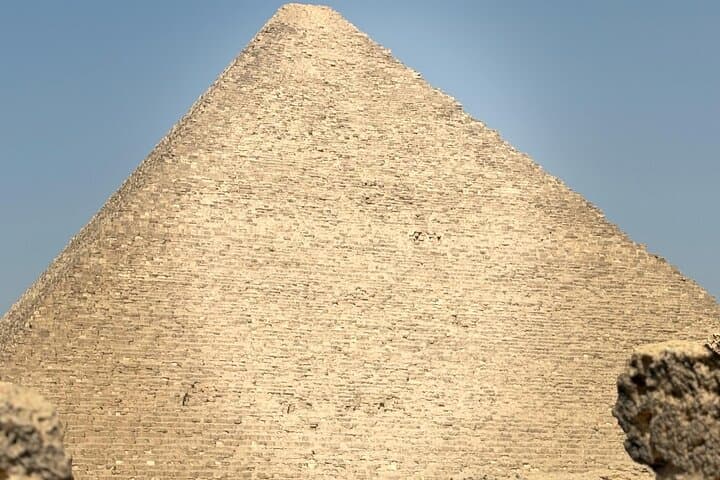
The sun catches the limestone faces of Khufu, Khafre and Menkaure as a breeze pushes fine sand along the Giza Plateau — the air smells faintly of dust and diesel from the nearby roads, and the scale of the stones becomes immediate: angles, joints and shadows that measured time itself.
Verified experiences and guided adventures in the surrounding area.
Operated by NFRT Tours · Giza, Giza Governorate
The sun catches the limestone faces of Khufu, Khafre and Menkaure as a breeze pushes fine sand along the Giza Plateau — the air smells faintly of dust and diesel from the nearby roads, and the scale of the stones becomes immediate: angles, joints and shadows that measured time itself.
An expert guide leads the group across broad, worn paths, narrating how these tombs rose from bedrock more than 4,500 years ago. Geology plays a role here: the plateau’s Tura limestone and local bedrock supplied blocks; the Nile’s ancient floodplain made transport possible. Culture and ritual thread every stop — from the Valley Temple’s preparation zones to the Sphinx, whose enigmatic face has watched the western horizon for millennia.
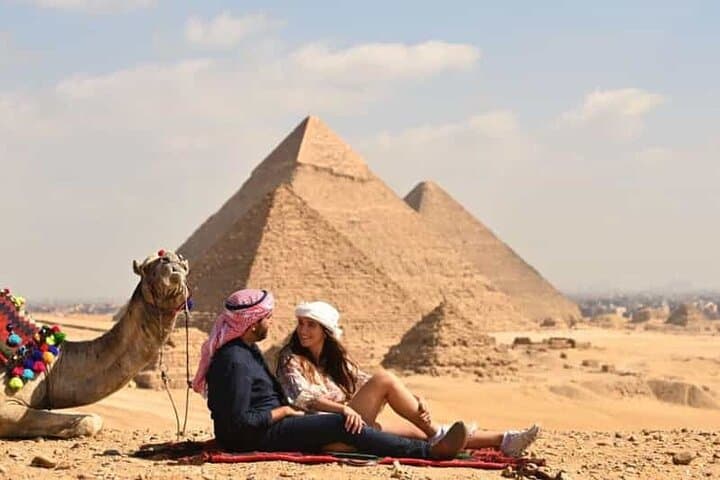
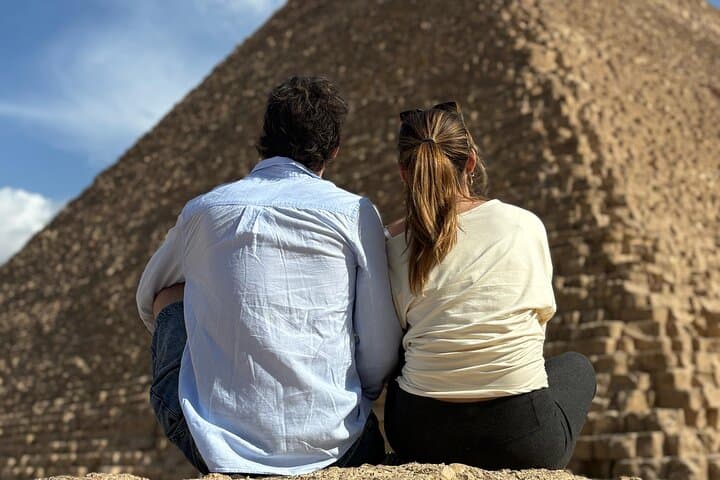
Practical experience matters: expect uneven, sandy surfaces and open sun; the optional camel ride gives a cinematic vantage but is extra and variable in duration. Photography windows are generous, but climbing the monuments is prohibited. Timing affects mood — early morning light softens the stone, late afternoon shadows sharpen relief and crowds thin after the midday surge.
Bring sun protection, steady footwear, and a plan for hydration; guided timing usually covers transport and bottled water but leaves free time for slow observation. Respect local rules, follow your guide’s route, and allocate at least four hours to move deliberately between the pyramids, the Sphinx and the nearby Valley Temple — it’s an archaeological landscape that rewards slow attention.
easy.
4–5 hours.
Suitable for most fitness levels; participants should be able to walk on uneven, sandy ground for several hours.
General access to the Giza Plateau is included in most tours; internal entry to specific pyramid chambers is usually extra and may be limited.
Optional camel rides vary by operator; expect 10–30 minutes depending on the package and negotiation at the site.
The plateau has uneven ground and sand; accessibility is limited—contact the operator in advance to discuss needs and possible transport arrangements.
Photography for personal use is allowed; drones are restricted and generally require permits from Egyptian authorities.
The pyramids were built as royal tomb complexes during Egypt’s Old Kingdom; massive labor organization and local limestone quarries shaped the plateau’s layout.
Visitor pressure and urban development threaten the site’s setting; follow marked paths, avoid souvenirs made from archaeological debris, and support licensed guides who contribute to sustainable tourism.
NFRT Tours operates guided outdoor trips and adventures with an emphasis on safety, stewardship, and memorable experiences.
The sun catches the limestone faces of Khufu, Khafre and Menkaure as a breeze pushes fine sand along the Giza Plateau — the air smells faintly of dust and diesel from the nearby roads, and the scale of the stones becomes immediate: angles, joints and shadows that measured time itself.
The sun catches the limestone faces of Khufu, Khafre and Menkaure as a breeze pushes fine sand along the Giza Plateau — the air smells faintly of dust and diesel from the nearby roads, and the scale of the stones becomes immediate: angles, joints and shadows that measured time itself.
An expert guide leads the group across broad, worn paths, narrating how these tombs rose from bedrock more than 4,500 years ago. Geology plays a role here: the plateau’s Tura limestone and local bedrock supplied blocks; the Nile’s ancient floodplain made transport possible. Culture and ritual thread every stop — from the Valley Temple’s preparation zones to the Sphinx, whose enigmatic face has watched the western horizon for millennia.
Practical experience matters: expect uneven, sandy surfaces and open sun; the optional camel ride gives a cinematic vantage but is extra and variable in duration. Photography windows are generous, but climbing the monuments is prohibited. Timing affects mood — early morning light softens the stone, late afternoon shadows sharpen relief and crowds thin after the midday surge.
Bring sun protection, steady footwear, and a plan for hydration; guided timing usually covers transport and bottled water but leaves free time for slow observation. Respect local rules, follow your guide’s route, and allocate at least four hours to move deliberately between the pyramids, the Sphinx and the nearby Valley Temple — it’s an archaeological landscape that rewards slow attention.