THE ADVENTURE COLLECTIVE® · Independent discovery and booking for outdoor travel

Experience a full-day loop from the Great Pyramid to the Nile: guided exploration of the pyramids and Sphinx, a 20-minute camel ride, a 60-minute ATV across the plateau, and a two-hour evening dinner cruise on the Nile. This tour blends history, active desert travel, and Cairo evenings.
Experience a full-day loop from the Great Pyramid to the Nile: guided exploration of the pyramids and Sphinx, a 20-minute camel ride, a 60-minute ATV across the plateau, and a two-hour evening dinner cruise on the Nile. This tour blends history, active desert travel, and Cairo evenings.
You step off the air-conditioned vehicle and into a wind that has been shaping stone and sand for millennia. The Giza Plateau spreads out under a low, brilliant sky: dusty trails, limestone outcrops, the three great pyramids rising from the plain like geometric mountains. The Sphinx crouches nearby, its face weathered by desert breath and urban smog.
Verified experiences and guided adventures in the surrounding area.
Operated by Blue Nile Tours · Giza, Cairo Governorate
You step off the air-conditioned vehicle and into a wind that has been shaping stone and sand for millennia. The Giza Plateau spreads out under a low, brilliant sky: dusty trails, limestone outcrops, the three great pyramids rising from the plain like geometric mountains. The Sphinx crouches nearby, its face weathered by desert breath and urban smog.
Built in the Old Kingdom (c. 2600–2500 BCE), the pyramids here mark Egypt’s engineering apex—Khufu’s Great Pyramid still dominates as the sole surviving Wonder of the Ancient World. The plateau itself is a compacted bed of sand, gravel and exposed limestone that rises roughly 60–100 m above the Nile floodplain, offering panoramic views of modern Giza and the city beyond.
Culture is immediate: vendors call softly, camels scent the air, and your Egyptologist fills in ritual and construction details while pointing out the Valley Temple’s dressed stone blocks used in royal embalming.
Practically, expect 8–10 hours of activity with flexible stop times. Walking over uneven sand and limestone requires steady shoes; camel rides last about 20 minutes and the ATV segment covers several kilometers across open desert in roughly 60 minutes. The day ends with a two-hour Nile dinner cruise—cool breeze, live music, and a contrast to the sun-baked plateau.
Plan for sun protection, cash for small purchases, and patience with crowds at popular photo points. Guides usually handle permits for pyramid interiors if you want that optional visit. Stay on marked routes, respect site rules, and bring hydration—this is a cultural and sensory marathon, not just a photo stop.
moderate.
8–10 hours.
Suitable for travelers who can walk 1–2 hours on uneven ground and mount a camel or ATV with basic mobility.
Yes—entry to the interior requires a separate, limited ticket; your guide can advise and arrange it if available that day.
Operators provide basic safety briefings; ATVs are generally guided and camels are led—reasonable mobility is required but no prior experience is necessary.
Yes—the full-day itinerary includes flexible stops for a traditional lunch and shopping opportunities; allow cash for purchases.
The tour is rated easy for general fitness, but the plateau involves uneven ground; contact the operator ahead to arrange vehicle access and assistance.
The Giza complex dates to Egypt’s Fourth Dynasty (c. 2600 BCE); Khufu’s Great Pyramid was the world’s tallest structure for millennia, and the Sphinx is typically linked to Khafre’s funerary complex.
Heavy visitation and urban encroachment stress the plateau’s fragile stone and soils; staying on marked paths, avoiding litter, and following guide instructions helps protect the monuments.
Blue Nile Tours operates guided outdoor trips and adventures with an emphasis on safety, stewardship, and memorable experiences.
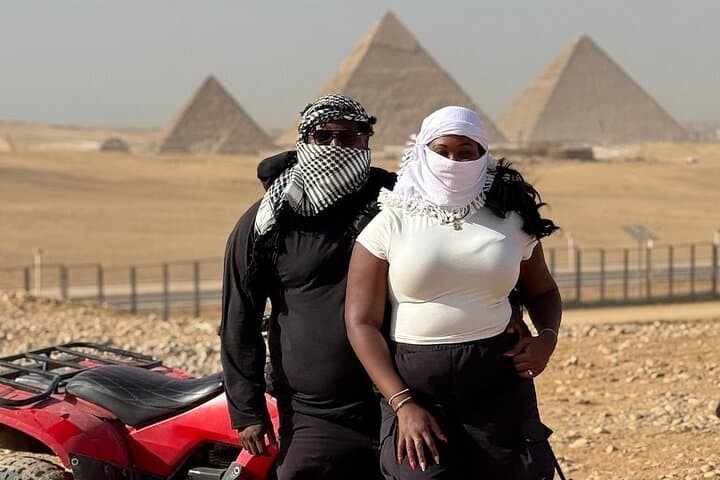
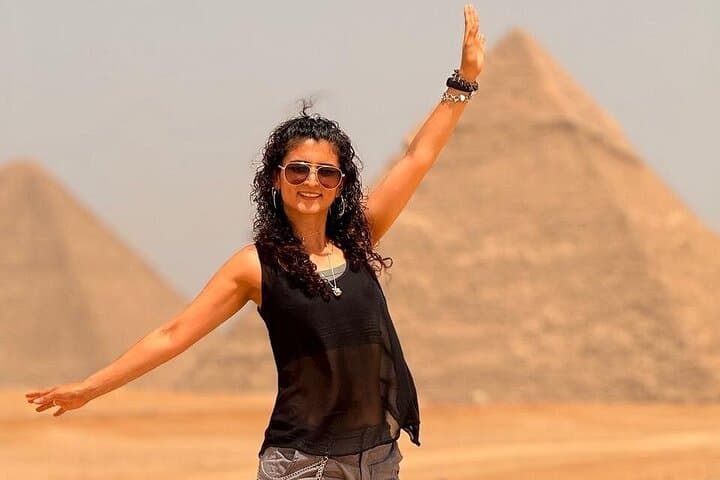
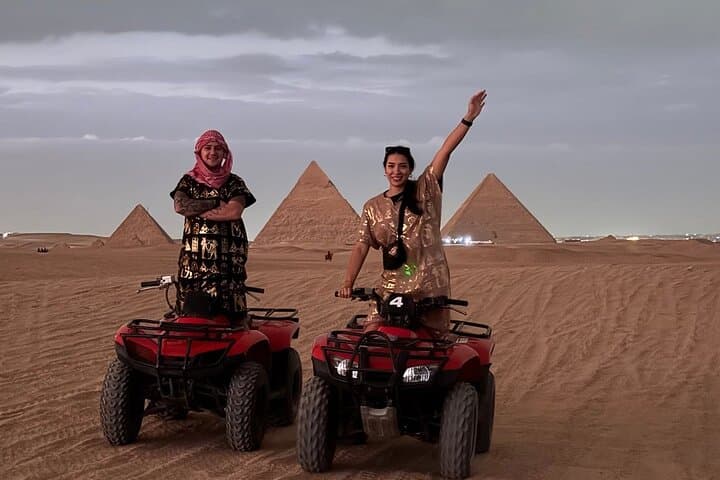
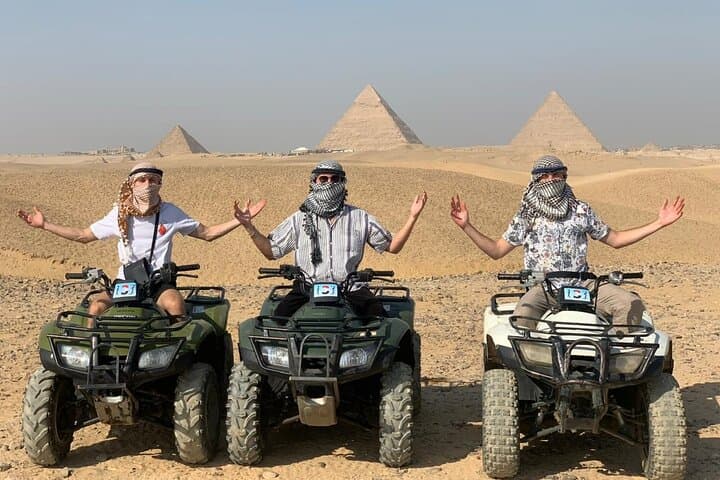
You step off the air-conditioned vehicle and into a wind that has been shaping stone and sand for millennia. The Giza Plateau spreads out under a low, brilliant sky: dusty trails, limestone outcrops, the three great pyramids rising from the plain like geometric mountains. The Sphinx crouches nearby, its face weathered by desert breath and urban smog.
You step off the air-conditioned vehicle and into a wind that has been shaping stone and sand for millennia. The Giza Plateau spreads out under a low, brilliant sky: dusty trails, limestone outcrops, the three great pyramids rising from the plain like geometric mountains. The Sphinx crouches nearby, its face weathered by desert breath and urban smog.
Built in the Old Kingdom (c. 2600–2500 BCE), the pyramids here mark Egypt’s engineering apex—Khufu’s Great Pyramid still dominates as the sole surviving Wonder of the Ancient World. The plateau itself is a compacted bed of sand, gravel and exposed limestone that rises roughly 60–100 m above the Nile floodplain, offering panoramic views of modern Giza and the city beyond.
Culture is immediate: vendors call softly, camels scent the air, and your Egyptologist fills in ritual and construction details while pointing out the Valley Temple’s dressed stone blocks used in royal embalming.
Practically, expect 8–10 hours of activity with flexible stop times. Walking over uneven sand and limestone requires steady shoes; camel rides last about 20 minutes and the ATV segment covers several kilometers across open desert in roughly 60 minutes. The day ends with a two-hour Nile dinner cruise—cool breeze, live music, and a contrast to the sun-baked plateau.
Plan for sun protection, cash for small purchases, and patience with crowds at popular photo points. Guides usually handle permits for pyramid interiors if you want that optional visit. Stay on marked routes, respect site rules, and bring hydration—this is a cultural and sensory marathon, not just a photo stop.