THE ADVENTURE COLLECTIVE® · Independent discovery and booking for outdoor travel

Walk quietly through Bellevue Forest Reserve and track giraffes on a small‑group 4x4 and bushwalk safari near Addo. This intimate 1.75–2 hour experience pairs expert FGASA guides with close-up wildlife moments and sunrise or sundowner refreshments.
Walk quietly through Bellevue Forest Reserve and track giraffes on a small‑group 4x4 and bushwalk safari near Addo. This intimate 1.75–2 hour experience pairs expert FGASA guides with close-up wildlife moments and sunrise or sundowner refreshments.
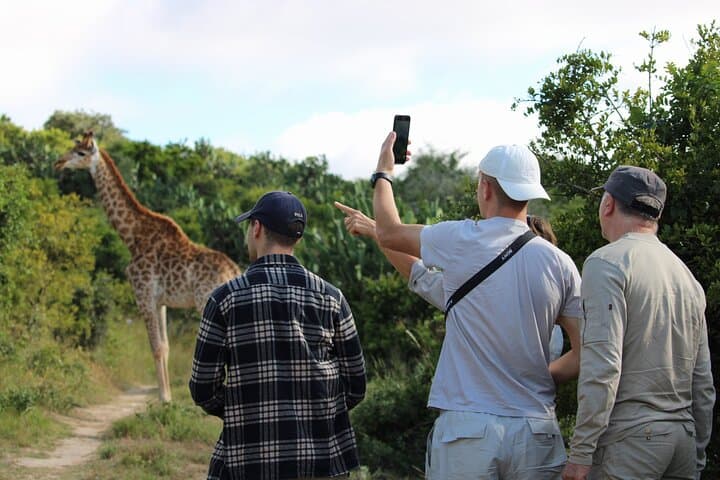
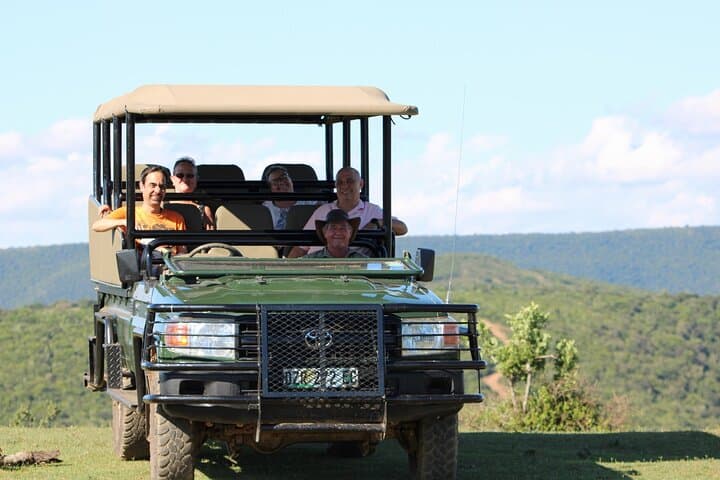
The dust rises in a slow, confident ribbon as the 4x4 eases onto a game trail and the bush exhales around you. Sunlight threads through low acacia, catching on the long lashes of a giraffe that blinks down at the group. This is not the herd-from-a-vehicle safari; this is walking in the wake of giants — close enough to hear a slow, dry rustle as a giraffe browses, far enough to let the animal decide the pace.
Verified experiences and guided adventures in the surrounding area.
Operated by Bellevue Forest Reserve · Addo, Eastern Cape
The dust rises in a slow, confident ribbon as the 4x4 eases onto a game trail and the bush exhales around you. Sunlight threads through low acacia, catching on the long lashes of a giraffe that blinks down at the group. This is not the herd-from-a-vehicle safari; this is walking in the wake of giants — close enough to hear a slow, dry rustle as a giraffe browses, far enough to let the animal decide the pace.
Bellevue Forest Reserve sits in the eastern reaches of the Greater Addo region, a landscape shaped by ancient sandstones and coastal influences that create pockets of dense bushveld inside a working game reserve. Addo’s conservation story began nearly a century ago to save an isolated population of elephants; today private reserves like Bellevue extend habitat and offer low-impact ways to meet wildlife. The terrain here is gently undulating: ridgelines of rounded quartzite, shallow valleys where springbuck and impala pause at seasonal waterholes, and thicker forested runs where giraffes have adapted to browse on taller woody species.
There’s a cultural rhythm to the morning — a short 4x4 spin through the property, a quiet briefing from a FGASA‑qualified trails guide, and then a measured walk with a group capped at ten. Guides read spoor and vegetation as easily as a map, pointing out giraffe feeding signs, spoor of kudu, and the comical alertness of meerkats on termite mounds. The experience often finishes at Eagles Nest Lookout Lounge, where coffee and a breakfast spread are served with views that make the quiet feel earned.
Practicalities: expect roughly 1 hour 45 minutes on-site, including the drive and walk. Terrain is uneven but not technical — compacted dirt tracks and short bush paths; stable, closed-toe shoes with grip are recommended. Mornings are cooler and offer the best light for photography; afternoons bring warmer, golden hues and the option of sundowners in the bush. The activity suits most fitness levels but is not recommended for those with serious back or heart conditions.
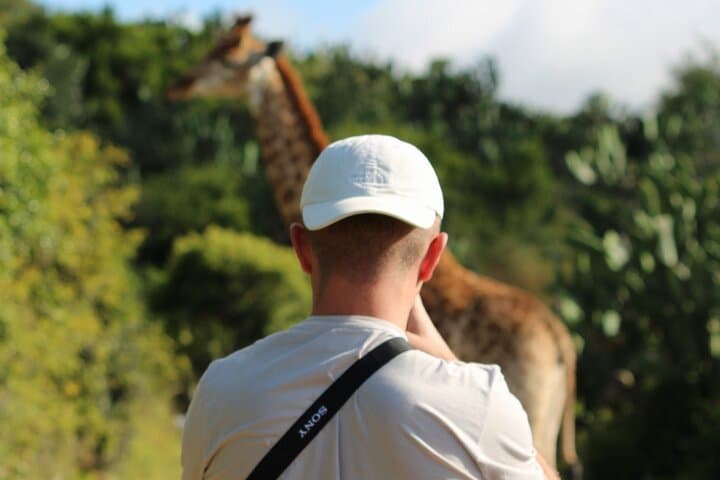
Respect for wildlife is woven into the itinerary: keep voices low, follow the guide’s positioning, and don’t offer food. Bring a sun hat, layered clothing for changing temperatures, and a camera with a moderate telephoto (200–300mm ideal) if you want close, uncropped frames. Bellevue’s guiding philosophy is conservation through connection — small groups, minimal disturbance, and a slow pace that lets the animals choose distance. For travelers who want an intimate, grounded encounter with one of Africa’s most graceful species, this is as close as you’ll respectfully get.
easy.
1.5–2 hours.
Light walking on uneven ground; suitable for most people who can stand and walk short bush paths.
Guides keep a respectful distance determined by the animal’s behavior; you’ll often be within photographic range without causing disturbance.
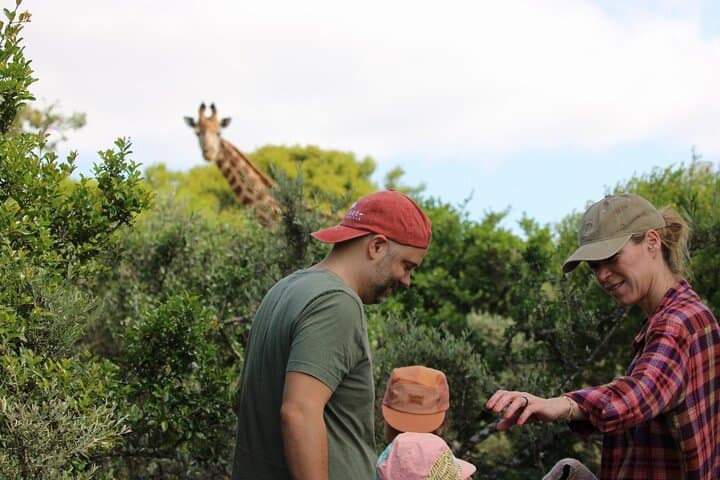
Yes—families are welcome; children should be supervised and remain quiet and close to adults during the bushwalk.
Expect zebra, kudu, impala, springbuck, warthogs, meerkats and a variety of birds; sightings depend on season and time of day.
Yes—guides are FGASA trained and carry firearms for safety; their priority is safe, low‑impact wildlife encounters.
Full refund if you cancel at least 24 hours before the scheduled departure; trips may be canceled in bad weather or if minimum numbers aren’t met.
Yes—Bellevue offers combinations with Big 5 safaris and lodge spa treatments; ask at booking to arrange back‑to‑back experiences.
Addo and surrounding private reserves expanded after the 1930s to protect regional elephant populations; private conservancies now help connect fragmented habitats in the Eastern Cape.
Bellevue operates small groups and guided footwork to minimize disturbance—follow guide instructions and avoid feeding or approaching wildlife to support ongoing conservation efforts.
Bellevue Forest Reserve operates guided outdoor trips and adventures with an emphasis on safety, stewardship, and memorable experiences.
The dust rises in a slow, confident ribbon as the 4x4 eases onto a game trail and the bush exhales around you. Sunlight threads through low acacia, catching on the long lashes of a giraffe that blinks down at the group. This is not the herd-from-a-vehicle safari; this is walking in the wake of giants — close enough to hear a slow, dry rustle as a giraffe browses, far enough to let the animal decide the pace.
The dust rises in a slow, confident ribbon as the 4x4 eases onto a game trail and the bush exhales around you. Sunlight threads through low acacia, catching on the long lashes of a giraffe that blinks down at the group. This is not the herd-from-a-vehicle safari; this is walking in the wake of giants — close enough to hear a slow, dry rustle as a giraffe browses, far enough to let the animal decide the pace.
Bellevue Forest Reserve sits in the eastern reaches of the Greater Addo region, a landscape shaped by ancient sandstones and coastal influences that create pockets of dense bushveld inside a working game reserve. Addo’s conservation story began nearly a century ago to save an isolated population of elephants; today private reserves like Bellevue extend habitat and offer low-impact ways to meet wildlife. The terrain here is gently undulating: ridgelines of rounded quartzite, shallow valleys where springbuck and impala pause at seasonal waterholes, and thicker forested runs where giraffes have adapted to browse on taller woody species.
There’s a cultural rhythm to the morning — a short 4x4 spin through the property, a quiet briefing from a FGASA‑qualified trails guide, and then a measured walk with a group capped at ten. Guides read spoor and vegetation as easily as a map, pointing out giraffe feeding signs, spoor of kudu, and the comical alertness of meerkats on termite mounds. The experience often finishes at Eagles Nest Lookout Lounge, where coffee and a breakfast spread are served with views that make the quiet feel earned.
Practicalities: expect roughly 1 hour 45 minutes on-site, including the drive and walk. Terrain is uneven but not technical — compacted dirt tracks and short bush paths; stable, closed-toe shoes with grip are recommended. Mornings are cooler and offer the best light for photography; afternoons bring warmer, golden hues and the option of sundowners in the bush. The activity suits most fitness levels but is not recommended for those with serious back or heart conditions.
Respect for wildlife is woven into the itinerary: keep voices low, follow the guide’s positioning, and don’t offer food. Bring a sun hat, layered clothing for changing temperatures, and a camera with a moderate telephoto (200–300mm ideal) if you want close, uncropped frames. Bellevue’s guiding philosophy is conservation through connection — small groups, minimal disturbance, and a slow pace that lets the animals choose distance. For travelers who want an intimate, grounded encounter with one of Africa’s most graceful species, this is as close as you’ll respectfully get.