THE ADVENTURE COLLECTIVE® · Independent discovery and booking for outdoor travel

A short, family-friendly hike just outside Heraklion, Giouhtas rises to 811 m with archaeological sites, a summit church, and sweeping views to Dia island. Expect 4–5 hours on mixed trails with rich flora and resident griffon vultures.
A short, family-friendly hike just outside Heraklion, Giouhtas rises to 811 m with archaeological sites, a summit church, and sweeping views to Dia island. Expect 4–5 hours on mixed trails with rich flora and resident griffon vultures.
The trail rises quietly out of olive groves and sun-baked terraces, the stone walls thinning as you climb. A breeze off the Aegean cuts across the scrub and suddenly the city of Heraklion sits below like a map; Dia island hovers on the horizon. The path to Giouhtas' 811 m summit is straightforward but alive — herbs scent the air and griffon vultures wheel above, daring you to look up.
Verified experiences and guided adventures in the surrounding area.
Operated by ANY DESTINATION · Heraklion, Crete
The trail rises quietly out of olive groves and sun-baked terraces, the stone walls thinning as you climb. A breeze off the Aegean cuts across the scrub and suddenly the city of Heraklion sits below like a map; Dia island hovers on the horizon. The path to Giouhtas' 811 m summit is straightforward but alive — herbs scent the air and griffon vultures wheel above, daring you to look up.
Giouhtas (Juktas) was sacred to the Minoans; local tradition links the mountain to Zeus and several archaeological sites dot its slopes. Geologically it's a limestone outcrop shaped by Mediterranean erosion, with steep faces and gentler ridgelines that offer clear sightlines to Psiloritis (Ida) and the Dikti range. A small monastery and the church of Lord Christ mark the peak, both reminders of continuous human use from ancient ritual to Christian devotion.
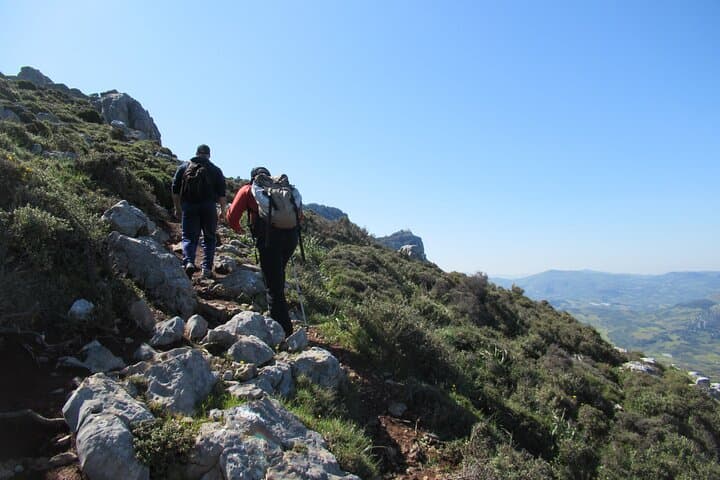
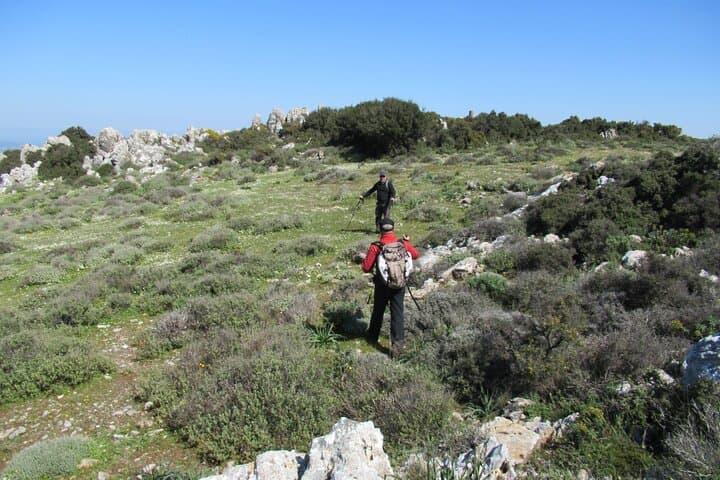
Practical guidance: the route is family-friendly and typically guided in groups, taking roughly 4–5 hours round-trip on mixed dirt and rocky paths with about 600–800 m cumulative elevation gain depending on approach. Expect strong sun in summer and brisk winds any time of year; good footwear and layered clothing will make the walk easier. Hydrate often — water is limited on the mountain — and carry a map or follow a guide. Cameras capture the sweeping views, but leave rare plants undisturbed. With a steady pace the ascent feels steady rather than technical, and the summit rewards you with a broad panorama that places Crete's mountains, vineyards, and sea in one sweeping view.
easy.
4–5 hours.
Suitable for most fitness levels; be comfortable walking 3–5 hours over uneven ground and short steeper pitches.
Guided outings typically take 4–5 hours round-trip with roughly 600–800 m cumulative elevation gain depending on the approach.
Yes—this is family-friendly when children are supervised; expect uneven footing on some sections and maintain a steady, cautious pace.
Guided trips usually include an English-speaking trekking guide and optional trekking poles or backpacks on request; confirm pickup and inclusions when booking.
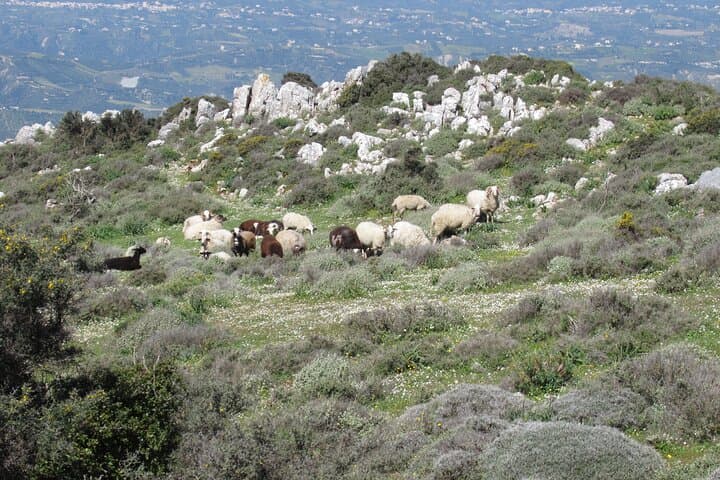
Look for griffon vultures circling above and mountain birds like rock partridges, as well as reptiles and Mediterranean shrubs that support insects.
Giouhtas was an important Minoan sacred mountain with archaeological remains; local lore links it to Zeus, and the summit hosts a historic church and monastery.
Trails and fragile plant habitats are sensitive — stay on marked paths, pack out trash, and avoid removing herbs or artifacts.
ANY DESTINATION operates guided outdoor trips and adventures with an emphasis on safety, stewardship, and memorable experiences.
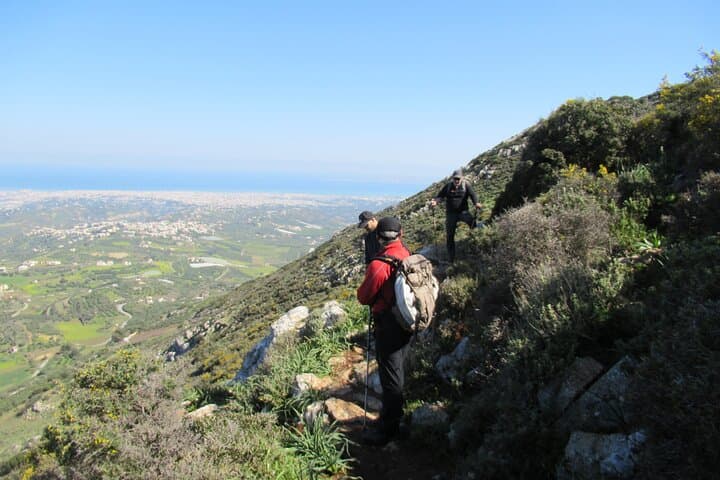
The trail rises quietly out of olive groves and sun-baked terraces, the stone walls thinning as you climb. A breeze off the Aegean cuts across the scrub and suddenly the city of Heraklion sits below like a map; Dia island hovers on the horizon. The path to Giouhtas' 811 m summit is straightforward but alive — herbs scent the air and griffon vultures wheel above, daring you to look up.
The trail rises quietly out of olive groves and sun-baked terraces, the stone walls thinning as you climb. A breeze off the Aegean cuts across the scrub and suddenly the city of Heraklion sits below like a map; Dia island hovers on the horizon. The path to Giouhtas' 811 m summit is straightforward but alive — herbs scent the air and griffon vultures wheel above, daring you to look up.
Giouhtas (Juktas) was sacred to the Minoans; local tradition links the mountain to Zeus and several archaeological sites dot its slopes. Geologically it's a limestone outcrop shaped by Mediterranean erosion, with steep faces and gentler ridgelines that offer clear sightlines to Psiloritis (Ida) and the Dikti range. A small monastery and the church of Lord Christ mark the peak, both reminders of continuous human use from ancient ritual to Christian devotion.
Practical guidance: the route is family-friendly and typically guided in groups, taking roughly 4–5 hours round-trip on mixed dirt and rocky paths with about 600–800 m cumulative elevation gain depending on approach. Expect strong sun in summer and brisk winds any time of year; good footwear and layered clothing will make the walk easier. Hydrate often — water is limited on the mountain — and carry a map or follow a guide. Cameras capture the sweeping views, but leave rare plants undisturbed. With a steady pace the ascent feels steady rather than technical, and the summit rewards you with a broad panorama that places Crete's mountains, vineyards, and sea in one sweeping view.