THE ADVENTURE COLLECTIVE® · Independent discovery and booking for outdoor travel

Suit up and drive a street-legal go-kart through Ginza and past Tokyo Tower in a guided 60-minute city run. Learn the route, license requirements, and practical tips to make the most of this legal, costumed urban drive.
Suit up and drive a street-legal go-kart through Ginza and past Tokyo Tower in a guided 60-minute city run. Learn the route, license requirements, and practical tips to make the most of this legal, costumed urban drive.
The small go-kart hums beneath a neon canopy as riders peel away from Ginza’s polished storefronts, a line of costumed drivers threading through avenues that have seen samurai processions and post-war rebuilding. Within sixty minutes the route pushes past Tokyo Tower’s orange lattice, skirts the Imperial Palace outer gardens and slips by Tokyo Station and Kabuki-za—an urban sprint that turns city landmarks into a moving postcard.
Verified experiences and guided adventures in the surrounding area.
Operated by Neo Tokyo Kart Ginza · Tokyo, Tokyo
The small go-kart hums beneath a neon canopy as riders peel away from Ginza’s polished storefronts, a line of costumed drivers threading through avenues that have seen samurai processions and post-war rebuilding. Within sixty minutes the route pushes past Tokyo Tower’s orange lattice, skirts the Imperial Palace outer gardens and slips by Tokyo Station and Kabuki-za—an urban sprint that turns city landmarks into a moving postcard.
Ginza’s streets reflect layers of history: Meiji-era modernization after the 1872 fire, the late-20th-century rise of department stores, and the disciplined geometry of Edo-period planning still visible around the palace moat. The pavement itself sits on alluvial plains reclaimed and reshaped over centuries, so the ride alternates between tight commercial blocks and broad boulevards under high-rise shadows.
Culturally the experience is playful and performative—costumes and photo stops lean into Tokyo’s appetite for character and spectacle—yet it’s on public roads, requiring legal compliance and courtesy toward pedestrians and traffic. Expect quick accelerations but low top speeds; the fun is in the view and the choreography of city driving, not racing.
Practical edge: the operator provides costumes and a photo service, but drivers must present the correct driving credentials (original license, valid IDP when required, and passport), be at least 18, and note that certain nationalities are restricted from driving in Japan. Book early for lighter traffic windows, bring closed-toe shoes, and allow extra time for document checks—this is an urban, regulated thrill rather than a casual joyride.
easy.
60 minutes.
Suitable for all fitness levels; basic mobility and ability to climb in/out of a small kart required
Yes. You must bring an original driving license and passport; many nationalities also require an International Driving Permit under the 1949 convention—confirm requirements before booking.
Participants must be at least 18 years old to drive.
The activity is weather-dependent; operators will offer a reschedule or full refund if the run is canceled for safety reasons.
Yes. Some passport holders are prohibited from driving in Japan; verify with the operator before booking because rules vary by country and document type.
Ginza was rebuilt in Western-style brick after an 1872 fire and evolved into Tokyo’s premier shopping and theater district; nearby Kabuki-za dates to the late 19th century and anchors Tokyo’s traditional performing arts scene.
This activity runs on public streets—minimize noise, follow traffic rules, and avoid obstructing pedestrians; responsible operators enforce safety and discourage illegal street racing.
Neo Tokyo Kart Ginza operates guided outdoor trips and adventures with an emphasis on safety, stewardship, and memorable experiences.

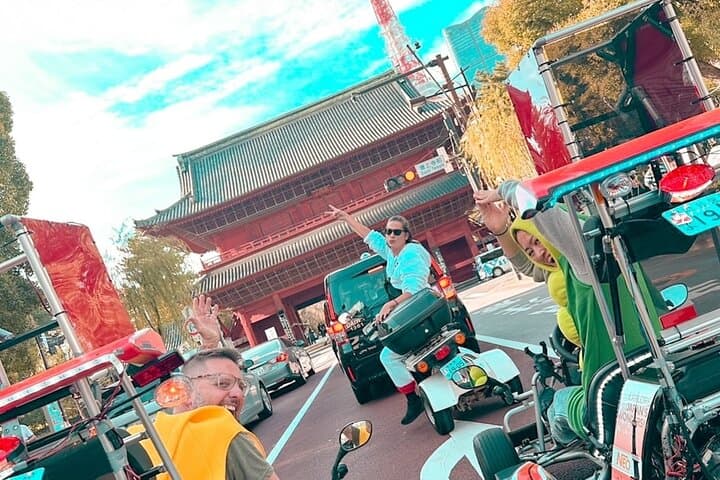
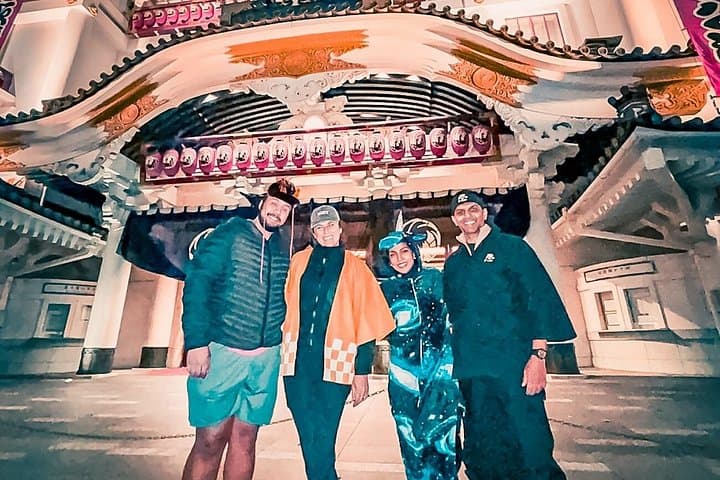

The small go-kart hums beneath a neon canopy as riders peel away from Ginza’s polished storefronts, a line of costumed drivers threading through avenues that have seen samurai processions and post-war rebuilding. Within sixty minutes the route pushes past Tokyo Tower’s orange lattice, skirts the Imperial Palace outer gardens and slips by Tokyo Station and Kabuki-za—an urban sprint that turns city landmarks into a moving postcard.
The small go-kart hums beneath a neon canopy as riders peel away from Ginza’s polished storefronts, a line of costumed drivers threading through avenues that have seen samurai processions and post-war rebuilding. Within sixty minutes the route pushes past Tokyo Tower’s orange lattice, skirts the Imperial Palace outer gardens and slips by Tokyo Station and Kabuki-za—an urban sprint that turns city landmarks into a moving postcard.
Ginza’s streets reflect layers of history: Meiji-era modernization after the 1872 fire, the late-20th-century rise of department stores, and the disciplined geometry of Edo-period planning still visible around the palace moat. The pavement itself sits on alluvial plains reclaimed and reshaped over centuries, so the ride alternates between tight commercial blocks and broad boulevards under high-rise shadows.
Culturally the experience is playful and performative—costumes and photo stops lean into Tokyo’s appetite for character and spectacle—yet it’s on public roads, requiring legal compliance and courtesy toward pedestrians and traffic. Expect quick accelerations but low top speeds; the fun is in the view and the choreography of city driving, not racing.
Practical edge: the operator provides costumes and a photo service, but drivers must present the correct driving credentials (original license, valid IDP when required, and passport), be at least 18, and note that certain nationalities are restricted from driving in Japan. Book early for lighter traffic windows, bring closed-toe shoes, and allow extra time for document checks—this is an urban, regulated thrill rather than a casual joyride.