THE ADVENTURE COLLECTIVE® · Independent discovery and booking for outdoor travel

From the Omalos plateau to the pale summit of Gigilos, this full-day guided hike climbs an alpine spine of Crete’s White Mountains. Steep rock bands, a fresh spring, and sweeping views to gorges and the Libyan Sea reward those prepared for long, exposed ascents.
From the Omalos plateau to the pale summit of Gigilos, this full-day guided hike climbs an alpine spine of Crete’s White Mountains. Steep rock bands, a fresh spring, and sweeping views to gorges and the Libyan Sea reward those prepared for long, exposed ascents.
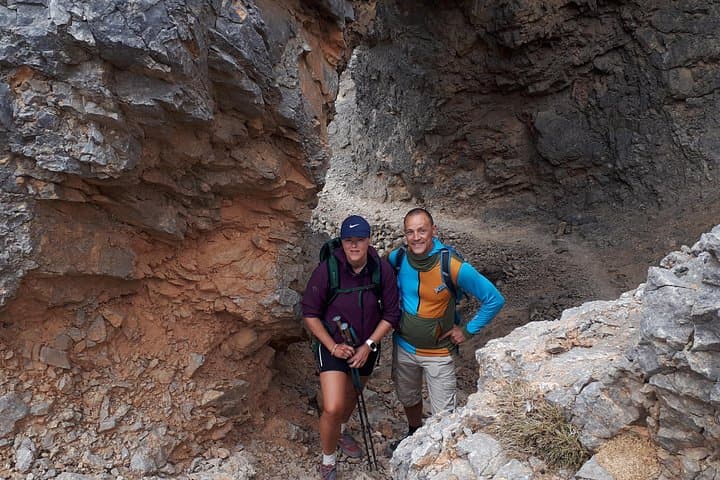
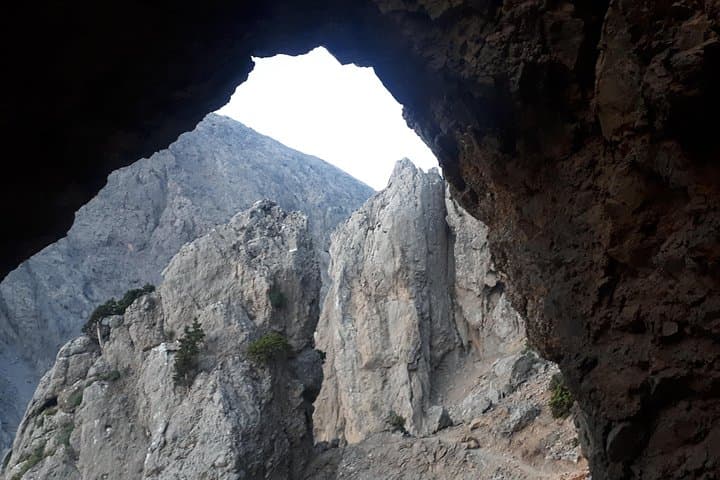
The trail opens beneath a wide Cretan sky: a slow ribbon of road climbs out of olive terraces and small villages, then drops you on the Omalos plateau at roughly 1,240 m. From there the path points up—rock towers, a natural arch called Xepitira, and the first stand of wind-sculpted cypress and prunus where the air already tastes colder.
Verified experiences and guided adventures in the surrounding area.
Operated by Pari Vigli · Omalos, Crete
The trail opens beneath a wide Cretan sky: a slow ribbon of road climbs out of olive terraces and small villages, then drops you on the Omalos plateau at roughly 1,240 m. From there the path points up—rock towers, a natural arch called Xepitira, and the first stand of wind-sculpted cypress and prunus where the air already tastes colder.
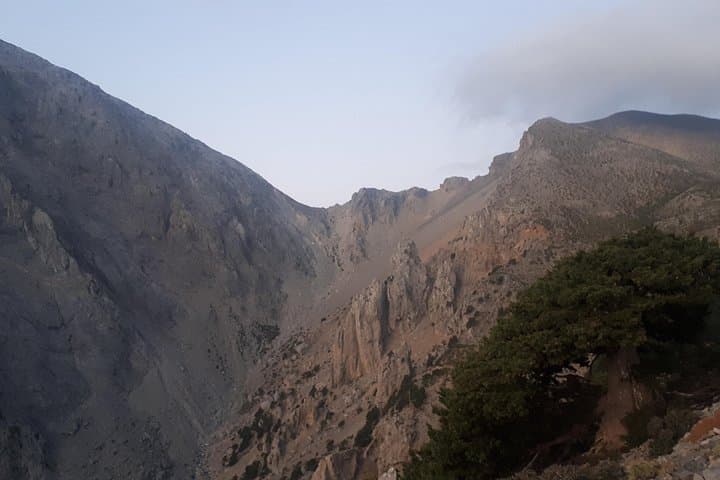
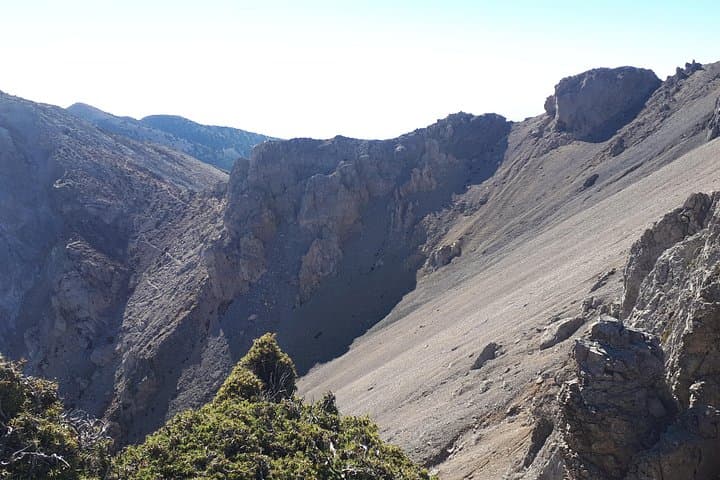
Gigilos sits on the central spine of the Lefka Ori (White Mountains), a limestone range carved by glaciers and karst weathering into steep gorges and jagged towers. Local shepherding and wartime history shape the human story here; families from Omalos and surrounding villages have guided and grazed these slopes for generations. Geologically the route moves from woodland into an exposed alpine band of pale rock and scree, where snow lingers into late spring and the summit rewards you with a broad view to Tripiti Gorge and the Libyan Sea.
Expect a sustained ascent from 1,240 m to about 2,080 m—roughly 840 m of elevation gain—and a mostly obvious but steep and rocky route that becomes alpine in character near the top. There’s a reliable spring about an hour into the climb; above Linoseli shoulder (≈1,700 m) the landscape opens and the wind becomes a tangible guide.
Practical notes: start early to avoid afternoon winds, carry 2–3 L water, wear stiff-soled boots and layers for rapidly changing weather, and use trekking poles for loose sections. The guided outing includes private transport and hiking poles; be prepared for a challenging day with rewarding views and authentic mountain character.
challenging.
6–8 hours.
Good aerobic fitness with experience on sustained steep trails and loose terrain; comfortable with prolonged climbs.
The guided outing is a full day; expect roughly 6–8 hours round trip with about 840 m of elevation gain (from ~1,240 m to ~2,080 m).
The path is mostly well-defined but steep and rocky; there are exposed alpine sections and loose scree but no technical climbing required for the standard route.
There’s a natural spring about an hour from the Omalos start that is often used to refill bottles, but you should still carry ample water and treat or filter if unsure.
Experienced hikers with navigation skills can attempt the route independently, but local guides know safe lines, local weather patterns, and historic routes—useful in this rugged, changeable environment.
Omalos plateau has long been a pastoral center; shepherding and seasonal transhumance shaped the landscape and local knowledge of the White Mountains.
The Lefka Ori are ecologically sensitive—stick to established paths to limit erosion, carry out all waste, and respect grazing areas to support local land stewardship.
Pari Vigli operates guided outdoor trips and adventures with an emphasis on safety, stewardship, and memorable experiences.
The trail opens beneath a wide Cretan sky: a slow ribbon of road climbs out of olive terraces and small villages, then drops you on the Omalos plateau at roughly 1,240 m. From there the path points up—rock towers, a natural arch called Xepitira, and the first stand of wind-sculpted cypress and prunus where the air already tastes colder.
The trail opens beneath a wide Cretan sky: a slow ribbon of road climbs out of olive terraces and small villages, then drops you on the Omalos plateau at roughly 1,240 m. From there the path points up—rock towers, a natural arch called Xepitira, and the first stand of wind-sculpted cypress and prunus where the air already tastes colder.
Gigilos sits on the central spine of the Lefka Ori (White Mountains), a limestone range carved by glaciers and karst weathering into steep gorges and jagged towers. Local shepherding and wartime history shape the human story here; families from Omalos and surrounding villages have guided and grazed these slopes for generations. Geologically the route moves from woodland into an exposed alpine band of pale rock and scree, where snow lingers into late spring and the summit rewards you with a broad view to Tripiti Gorge and the Libyan Sea.
Expect a sustained ascent from 1,240 m to about 2,080 m—roughly 840 m of elevation gain—and a mostly obvious but steep and rocky route that becomes alpine in character near the top. There’s a reliable spring about an hour into the climb; above Linoseli shoulder (≈1,700 m) the landscape opens and the wind becomes a tangible guide.
Practical notes: start early to avoid afternoon winds, carry 2–3 L water, wear stiff-soled boots and layers for rapidly changing weather, and use trekking poles for loose sections. The guided outing includes private transport and hiking poles; be prepared for a challenging day with rewarding views and authentic mountain character.