THE ADVENTURE COLLECTIVE® · Independent discovery and booking for outdoor travel

Short on time but eager to see the Giants Causeway? This compact shore excursion from Belfast uses smaller buses for a faster, more personal route to the UNESCO site, with stops at Dunluce Castle, coastal viewpoints and a seaside lunch.
Short on time but eager to see the Giants Causeway? This compact shore excursion from Belfast uses smaller buses for a faster, more personal route to the UNESCO site, with stops at Dunluce Castle, coastal viewpoints and a seaside lunch.
Disembarkation feels urgent; the ship’s gangway still hums with the distant engines as a compact coach waits beside the welcome tent. The smaller buses on this shore excursion fold through north Antrim’s coastline with a speed and intimacy larger tours can’t match: your group of 19–27 passengers stretches out across the basalt-carved edge of the island and steps onto one of Ireland’s most elemental landscapes.
Verified experiences and guided adventures in the surrounding area.
Operated by Odyssey Coach Tours · Bushmills, County Antrim
Disembarkation feels urgent; the ship’s gangway still hums with the distant engines as a compact coach waits beside the welcome tent. The smaller buses on this shore excursion fold through north Antrim’s coastline with a speed and intimacy larger tours can’t match: your group of 19–27 passengers stretches out across the basalt-carved edge of the island and steps onto one of Ireland’s most elemental landscapes.
The Giants Causeway is a record written in volcanic stone — roughly 60 million years old — where hexagonal basalt columns rise like an inverted staircase from sea to cliff. Folklore presses in alongside geology: locals still tell the tale of Finn McCool, the giant who laid the stones. En route the tour stops for views of Dunluce Castle’s cliff-top ruin, a vantage over Carrick-a-Rede and Rathlin from Portaneevy, and a coastal lunch stop in a small town where pubs still pour warm stews.
Expect 7–8 hours total, with about 90 minutes to explore the Causeway itself and shorter comfort stops at Cushendall and key viewpoints. The route passes through the Nine Glens — a corridor of streams and folded hills where guides add local stories to the landscape.
Practicalities shape the day: this service is timed for cruise passengers, so prompt disembarkation and clear ship details at booking are essential. Wear sturdy, grippy footwear for walking on wet, irregular basalt; bring layers and a waterproof for Atlantic weather that can change without warning. The visitor centre charges for exhibits, but access to the Causeway is free; follow marked paths, respect protected zones, and allow time to return to the port for reboarding.
moderate.
7–8 hours.
Moderate fitness: you should be comfortable walking on uneven, sometimes steep terrain for up to 90 minutes at a stretch.
No — access to the Causeway is free. The visitor centre and its exhibits charge a separate fee if you want indoor displays or the audio guide.
Arrive as soon as your ship docks and provide your docking and reboarding times at booking — the tour will depart no later than 30 minutes after the first passenger boards.
This tour involves uneven terrain and stairs; collapsible wheelchairs with removable wheels can be accommodated if a companion assists boarding and disembarking, but the shoreline itself requires some walking ability.
The tour can be cancelled for weather; bring waterproofs and expect walking routes to be curtailed or rerouted for safety in high winds or heavy rain.
The Causeway formed from lava cooling and contracting into hexagonal columns around 60 million years ago; local legend attributes the formation to the giant Finn McCool and remains part of regional identity.
The site is a UNESCO World Heritage area with managed trails and signage—stay on marked paths, don’t remove stones, and follow guidance to protect nesting seabirds and fragile vegetation.
Odyssey Coach Tours operates guided outdoor trips and adventures with an emphasis on safety, stewardship, and memorable experiences.


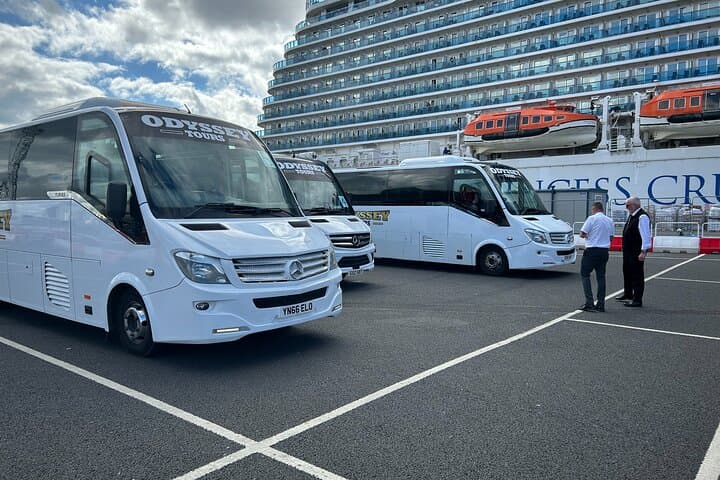
Disembarkation feels urgent; the ship’s gangway still hums with the distant engines as a compact coach waits beside the welcome tent. The smaller buses on this shore excursion fold through north Antrim’s coastline with a speed and intimacy larger tours can’t match: your group of 19–27 passengers stretches out across the basalt-carved edge of the island and steps onto one of Ireland’s most elemental landscapes.
Disembarkation feels urgent; the ship’s gangway still hums with the distant engines as a compact coach waits beside the welcome tent. The smaller buses on this shore excursion fold through north Antrim’s coastline with a speed and intimacy larger tours can’t match: your group of 19–27 passengers stretches out across the basalt-carved edge of the island and steps onto one of Ireland’s most elemental landscapes.
The Giants Causeway is a record written in volcanic stone — roughly 60 million years old — where hexagonal basalt columns rise like an inverted staircase from sea to cliff. Folklore presses in alongside geology: locals still tell the tale of Finn McCool, the giant who laid the stones. En route the tour stops for views of Dunluce Castle’s cliff-top ruin, a vantage over Carrick-a-Rede and Rathlin from Portaneevy, and a coastal lunch stop in a small town where pubs still pour warm stews.
Expect 7–8 hours total, with about 90 minutes to explore the Causeway itself and shorter comfort stops at Cushendall and key viewpoints. The route passes through the Nine Glens — a corridor of streams and folded hills where guides add local stories to the landscape.
Practicalities shape the day: this service is timed for cruise passengers, so prompt disembarkation and clear ship details at booking are essential. Wear sturdy, grippy footwear for walking on wet, irregular basalt; bring layers and a waterproof for Atlantic weather that can change without warning. The visitor centre charges for exhibits, but access to the Causeway is free; follow marked paths, respect protected zones, and allow time to return to the port for reboarding.