THE ADVENTURE COLLECTIVE® · Independent discovery and booking for outdoor travel

Drive Northern Ireland’s Causeway Coast from Belfast in a single day: see the Dark Hedges, Dunluce Castle, Carrick-a-Rede viewpoint and the hexagonal basalt of the Giant’s Causeway. This practical guide covers what to expect, why the geology matters, and how to prepare.
Drive Northern Ireland’s Causeway Coast from Belfast in a single day: see the Dark Hedges, Dunluce Castle, Carrick-a-Rede viewpoint and the hexagonal basalt of the Giant’s Causeway. This practical guide covers what to expect, why the geology matters, and how to prepare.
A morning mist clings to the Causeway Coast as the tour group leaves Belfast, the bus cutting through farmland toward cliffs that seem to bloom from basalt. The first stop, the Dark Hedges, frames a short walk beneath twisted beech trunks — an evocative corridor that practically dares you to lift your camera and step into a scene familiar to TV viewers.
Verified experiences and guided adventures in the surrounding area.
Operated by Paddywagon Tours · Bushmills, County Antrim
A morning mist clings to the Causeway Coast as the tour group leaves Belfast, the bus cutting through farmland toward cliffs that seem to bloom from basalt. The first stop, the Dark Hedges, frames a short walk beneath twisted beech trunks — an evocative corridor that practically dares you to lift your camera and step into a scene familiar to TV viewers.
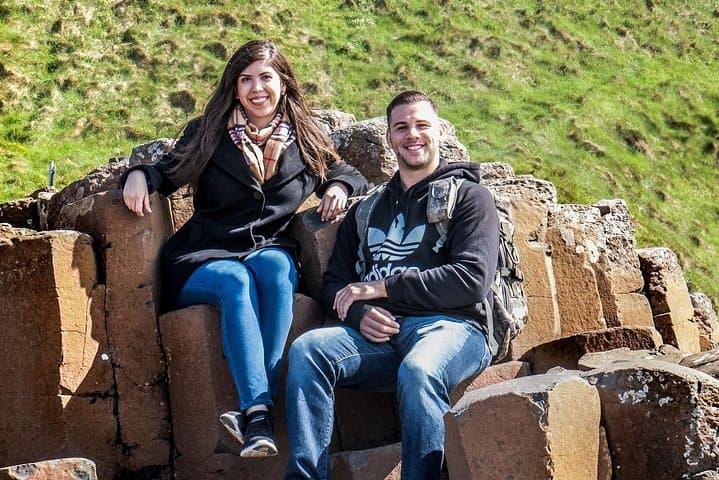
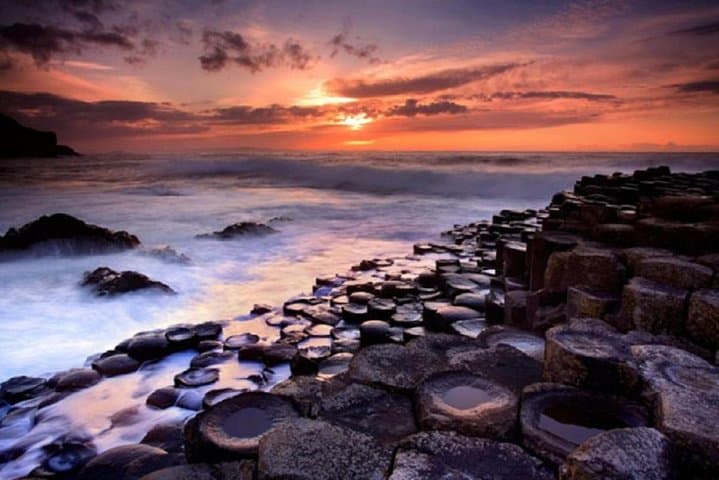
Geology and legend converge at the Giant’s Causeway: an expanse of interlocking hexagonal basalt columns formed by volcanic lava cooling 50–60 million years ago. Locals still tell the tale of Fionn mac Cumhaill and his challenge to a Scottish rival, a story that colors visits with myth as much as science. The nearby Dunluce Castle perches dramatically on the cliff edge, its 16th- and 17th-century ruins hinting at coastal trade, shipwrecks, and the region’s stormy past.
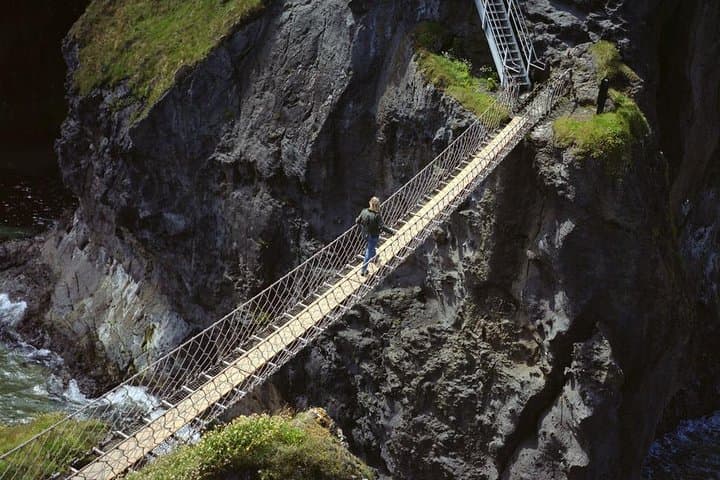
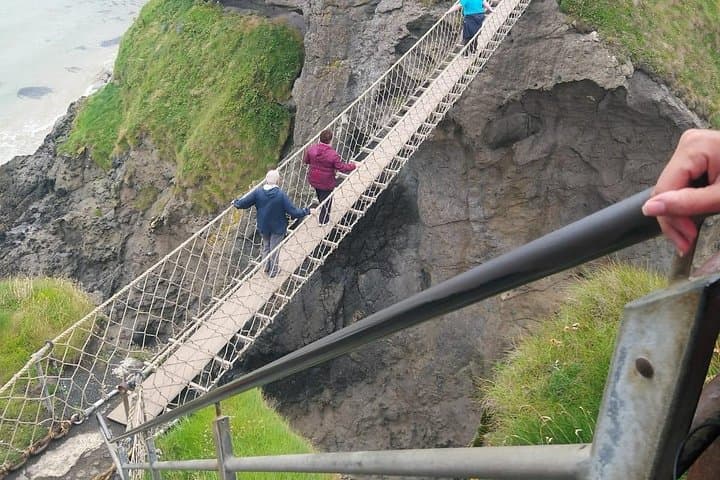
The itinerary is paced for sightlines and photo stops — a rope-bridge viewpoint at Carrick-a-Rede (photo stop on this tour), panoramic pullouts along the Causeway Coast, and roughly 90 minutes at the Causeway itself to walk the main path and scramble onto the basalt formations.
Practical guidance: wear sturdy walking shoes for uneven rock and coastal paths, bring a waterproof layer and wind protection, and budget time for the Visitor Centre if you want exhibits or guided audio. Peak light is morning or late afternoon for side-lit columns; tides and wind change the mood fast. Respect wayfinding signs and cliff edges — the coastline is spectacular but unforgiving.
easy.
7 hours.
Light fitness required — mostly short walks and standing at viewpoints; accessible options for limited mobility at some stops
The beach and basalt formations are free to access; access to the visitor centre and its exhibitions may require an entry fee paid locally.
Expect short walks at each stop — the main Causeway visit includes uneven ground and some steps; total walking is light to moderate.
There are restrooms and a café at the Visitor Centre (if you choose to enter); other stops have limited facilities, so plan accordingly.
The tour accepts families; short sections are stroller-accessible, but the Causeway’s rocks and cliff viewpoints are not suitable for strollers or unsupervised children.
The Causeway Coast has human occupation back millennia; the visible basalt columns formed during Paleogene volcanism and Dunluce Castle marks strategic coastal control from medieval through early modern periods.
Trails and viewing platforms manage visitor flow to protect fragile cliff grasses and nesting birds; stick to paths and avoid trampling vegetation to reduce erosion.
Paddywagon Tours operates guided outdoor trips and adventures with an emphasis on safety, stewardship, and memorable experiences.
A morning mist clings to the Causeway Coast as the tour group leaves Belfast, the bus cutting through farmland toward cliffs that seem to bloom from basalt. The first stop, the Dark Hedges, frames a short walk beneath twisted beech trunks — an evocative corridor that practically dares you to lift your camera and step into a scene familiar to TV viewers.
A morning mist clings to the Causeway Coast as the tour group leaves Belfast, the bus cutting through farmland toward cliffs that seem to bloom from basalt. The first stop, the Dark Hedges, frames a short walk beneath twisted beech trunks — an evocative corridor that practically dares you to lift your camera and step into a scene familiar to TV viewers.
Geology and legend converge at the Giant’s Causeway: an expanse of interlocking hexagonal basalt columns formed by volcanic lava cooling 50–60 million years ago. Locals still tell the tale of Fionn mac Cumhaill and his challenge to a Scottish rival, a story that colors visits with myth as much as science. The nearby Dunluce Castle perches dramatically on the cliff edge, its 16th- and 17th-century ruins hinting at coastal trade, shipwrecks, and the region’s stormy past.
The itinerary is paced for sightlines and photo stops — a rope-bridge viewpoint at Carrick-a-Rede (photo stop on this tour), panoramic pullouts along the Causeway Coast, and roughly 90 minutes at the Causeway itself to walk the main path and scramble onto the basalt formations.
Practical guidance: wear sturdy walking shoes for uneven rock and coastal paths, bring a waterproof layer and wind protection, and budget time for the Visitor Centre if you want exhibits or guided audio. Peak light is morning or late afternoon for side-lit columns; tides and wind change the mood fast. Respect wayfinding signs and cliff edges — the coastline is spectacular but unforgiving.