THE ADVENTURE COLLECTIVE® · Independent discovery and booking for outdoor travel

See giant pandas at close range and walk the 2,200-year-old Dujiangyan irrigation works in one compact day from Chengdu. This tour combines wildlife conservation, hands-on history and riverside walks.
See giant pandas at close range and walk the 2,200-year-old Dujiangyan irrigation works in one compact day from Chengdu. This tour combines wildlife conservation, hands-on history and riverside walks.
A thin morning mist lifts off bamboo groves as the tour bus eases into the Chengdu Research Base of Giant Panda Breeding. The air smells of damp earth and fresh leaves; pandas move slowly, deliberate, their chewing a constant, oddly domestic percussion. Later the road climbs toward Dujiangyan, where ancient stonework redirects the Min River with the same quiet confidence the pandas show in their feeding.
Verified experiences and guided adventures in the surrounding area.
A thin morning mist lifts off bamboo groves as the tour bus eases into the Chengdu Research Base of Giant Panda Breeding. The air smells of damp earth and fresh leaves; pandas move slowly, deliberate, their chewing a constant, oddly domestic percussion. Later the road climbs toward Dujiangyan, where ancient stonework redirects the Min River with the same quiet confidence the pandas show in their feeding.
The day pairs wildlife conservation with 2,200 years of hydraulic engineering. Dujiangyan was built by Li Bing in the Qin era to tame seasonal floods and distribute irrigation — its Fish Mouth Levee and Bottle-Neck channels are living engineering, carved from bedrock and still in use. The panda base is a modern conservation campus, focused on captive breeding, veterinary care and public education; both sites reflect Sichuan’s long relationship with water, rice cultivation and forested mountains.
Expect a full day: early-morning panda viewing when animals are most active, interpretive exhibits and keeper talks, then a tactile experience at Dujiangyan with short walks, steps and river viewpoints. The terrain is mostly flat at the base, becoming stone steps and paved paths at Dujiangyan; moderate fitness makes the day comfortable. Practical notes: carry water, daylight for photography, and wear grippy shoes for wet steps near the river. Timing matters — pandas are best seen at first light; historical viewpoints at Dujiangyan are quieter in late afternoon. The route balances natural intimacy and engineered history — a compact, educational day that puts Sichuan’s living landscape on full display.
moderate.
8–9 hours.
Moderate fitness for a full-day outing with short uphill sections and many steps at Dujiangyan.
No — interactions at the Chengdu Research Base are strictly controlled; touching or holding pandas is not permitted for safety and conservation reasons.
Driving from central Chengdu to the panda base is typically 30–60 minutes; Dujiangyan is about 1–1.5 hours northwest of Chengdu depending on traffic.
Yes — most paths are paved, but there are stone steps and some uneven sections; bring a stroller only if you’re comfortable lifting over steps.
Yes — the tour commonly includes guided visits or local guides at both the panda base and Dujiangyan to explain conservation work and the irrigation’s history.
Dujiangyan was engineered by Li Bing in the 3rd century BCE to control floods and irrigate the Sichuan basin; Chengdu’s agricultural prosperity grew around that stable water supply.
The Chengdu Research Base focuses on captive breeding, research and education; visitors are encouraged to follow rules that minimize stress on animals and reduce litter near river habitats.
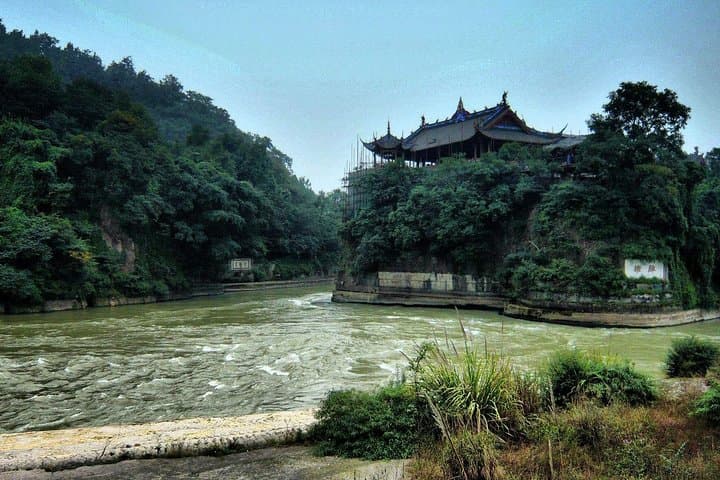
A thin morning mist lifts off bamboo groves as the tour bus eases into the Chengdu Research Base of Giant Panda Breeding. The air smells of damp earth and fresh leaves; pandas move slowly, deliberate, their chewing a constant, oddly domestic percussion. Later the road climbs toward Dujiangyan, where ancient stonework redirects the Min River with the same quiet confidence the pandas show in their feeding.
A thin morning mist lifts off bamboo groves as the tour bus eases into the Chengdu Research Base of Giant Panda Breeding. The air smells of damp earth and fresh leaves; pandas move slowly, deliberate, their chewing a constant, oddly domestic percussion. Later the road climbs toward Dujiangyan, where ancient stonework redirects the Min River with the same quiet confidence the pandas show in their feeding.
The day pairs wildlife conservation with 2,200 years of hydraulic engineering. Dujiangyan was built by Li Bing in the Qin era to tame seasonal floods and distribute irrigation — its Fish Mouth Levee and Bottle-Neck channels are living engineering, carved from bedrock and still in use. The panda base is a modern conservation campus, focused on captive breeding, veterinary care and public education; both sites reflect Sichuan’s long relationship with water, rice cultivation and forested mountains.
Expect a full day: early-morning panda viewing when animals are most active, interpretive exhibits and keeper talks, then a tactile experience at Dujiangyan with short walks, steps and river viewpoints. The terrain is mostly flat at the base, becoming stone steps and paved paths at Dujiangyan; moderate fitness makes the day comfortable. Practical notes: carry water, daylight for photography, and wear grippy shoes for wet steps near the river. Timing matters — pandas are best seen at first light; historical viewpoints at Dujiangyan are quieter in late afternoon. The route balances natural intimacy and engineered history — a compact, educational day that puts Sichuan’s living landscape on full display.