THE ADVENTURE COLLECTIVE® · Independent discovery and booking for outdoor travel

An atmospheric one-hour walking tour that follows Waikiki’s shoreline and parks to explore legends from the Kapaemahu Stones to Kapiolani Park. Expect storytelling stops at historic hotels, local folklore about Night Marchers, and a local guide’s perspective.
An atmospheric one-hour walking tour that follows Waikiki’s shoreline and parks to explore legends from the Kapaemahu Stones to Kapiolani Park. Expect storytelling stops at historic hotels, local folklore about Night Marchers, and a local guide’s perspective.
A humid Waikiki evening folds around Kalakaua Avenue as your guide lifts a lantern and points toward a group of battered stones by the shoreline. The city’s neon softens; the palm trees become crowd-pleasing actors in a darker play. This one-hour walking tour threads the edges of Waikiki — from the Kapaemahu Stones to the hotel fronts and into Kapiolani Park — where stories of Night Marchers and restless spirits persist in local memory.
Verified experiences and guided adventures in the surrounding area.
Operated by Dark Side Adventure Tours · Honolulu, Hawaii
A humid Waikiki evening folds around Kalakaua Avenue as your guide lifts a lantern and points toward a group of battered stones by the shoreline. The city’s neon softens; the palm trees become crowd-pleasing actors in a darker play. This one-hour walking tour threads the edges of Waikiki — from the Kapaemahu Stones to the hotel fronts and into Kapiolani Park — where stories of Night Marchers and restless spirits persist in local memory.
The walk pairs contemporary Honolulu with older layers of Hawaiian tradition. The Kapaemahu Stones are linked to ancestral healers said to have come from Tahiti; the Night Marchers are part of a broader oral history warning about sacred routes and chiefs. Much of Waikiki’s built environment — the Royal Hawaiian and Moana Surfrider hotels — sits atop older land-use patterns and legends, and the tour uses those buildings as narrative markers that reveal how geology, colonial development, and Hawaiian cosmology intersect.
Expect paved sidewalks, beach-front promenades, and short stops for storytelling rather than strenuous hiking. The guide’s perspective — a local, long-time resident and storyteller — adds context and archival detail, and the tour is marked as accessible for most mobility levels.
Practical guidance: arrive 15 minutes early to find the Kapaemahu Stones next to the Waikiki Beach Police Station; wear comfortable shoes for uneven sidewalks; bring a bottle of water and a light layer for coastal breezes; and treat cultural sites with respect by observing local protocols and avoiding climbing or touching protected stones.
easy.
1 hour.
Suitable for most fitness levels — requires about 30–45 minutes of standing and walking on paved surfaces.
The tour runs about 60 minutes and starts at the Kapaemahu Stones (next to the Waikiki Beach Police Station) — meet 15 minutes early.
Yes — the route is wheelchair and stroller accessible and suitable for children, though the material can be eerie for very young kids.
The guide mixes oral history, cultural context, and local legend; expect both folklore and explanations about sites like the Kapaemahu Stones and Kapiolani Park.
The operator’s policy allows cancellation with a full refund if canceled at least 24 hours prior; brief coastal showers typically do not cancel an evening walk.
Waikiki’s shoreline and Kapiolani Park overlay centuries of Hawaiian habitation and ritual; oral traditions like the Night Marchers remain active parts of local culture.
Respect for sacred stones and park areas is critical—stay on paths, avoid climbing or touching protected features, and support local guides who practice culturally informed tourism.
Dark Side Adventure Tours operates guided outdoor trips and adventures with an emphasis on safety, stewardship, and memorable experiences.
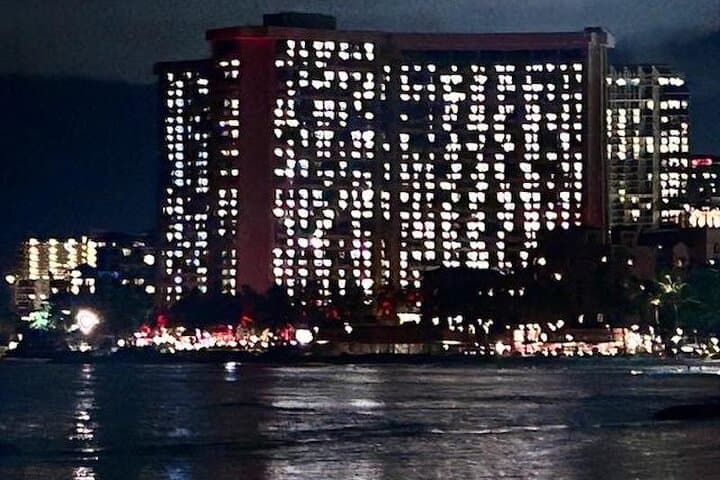


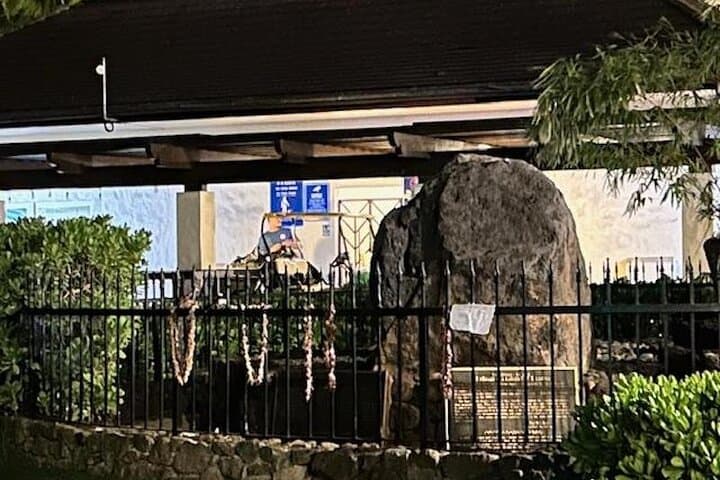
A humid Waikiki evening folds around Kalakaua Avenue as your guide lifts a lantern and points toward a group of battered stones by the shoreline. The city’s neon softens; the palm trees become crowd-pleasing actors in a darker play. This one-hour walking tour threads the edges of Waikiki — from the Kapaemahu Stones to the hotel fronts and into Kapiolani Park — where stories of Night Marchers and restless spirits persist in local memory.
A humid Waikiki evening folds around Kalakaua Avenue as your guide lifts a lantern and points toward a group of battered stones by the shoreline. The city’s neon softens; the palm trees become crowd-pleasing actors in a darker play. This one-hour walking tour threads the edges of Waikiki — from the Kapaemahu Stones to the hotel fronts and into Kapiolani Park — where stories of Night Marchers and restless spirits persist in local memory.
The walk pairs contemporary Honolulu with older layers of Hawaiian tradition. The Kapaemahu Stones are linked to ancestral healers said to have come from Tahiti; the Night Marchers are part of a broader oral history warning about sacred routes and chiefs. Much of Waikiki’s built environment — the Royal Hawaiian and Moana Surfrider hotels — sits atop older land-use patterns and legends, and the tour uses those buildings as narrative markers that reveal how geology, colonial development, and Hawaiian cosmology intersect.
Expect paved sidewalks, beach-front promenades, and short stops for storytelling rather than strenuous hiking. The guide’s perspective — a local, long-time resident and storyteller — adds context and archival detail, and the tour is marked as accessible for most mobility levels.
Practical guidance: arrive 15 minutes early to find the Kapaemahu Stones next to the Waikiki Beach Police Station; wear comfortable shoes for uneven sidewalks; bring a bottle of water and a light layer for coastal breezes; and treat cultural sites with respect by observing local protocols and avoiding climbing or touching protected stones.