THE ADVENTURE COLLECTIVE® · Independent discovery and booking for outdoor travel

Drive through Gettysburg’s fields with an offline audio guide that pairs battlefield history with local ghost stories. Download once, drive at your own pace, and stop where the narration directs you.
Drive through Gettysburg’s fields with an offline audio guide that pairs battlefield history with local ghost stories. Download once, drive at your own pace, and stop where the narration directs you.
You pull off Steinwehr Avenue into late-afternoon light and the fields open, wide and quiet except for the churn of your tires and the recorded voice that begins to tell you what happened here.
Verified experiences and guided adventures in the surrounding area.
Operated by Action Day Trips · Gettysburg, Pennsylvania
You pull off Steinwehr Avenue into late-afternoon light and the fields open, wide and quiet except for the churn of your tires and the recorded voice that begins to tell you what happened here.
This self-guided driving audio tour walks you through the same ground where three days of battle in July 1863 left graves, hospitals, and stories that residents still tell. The narrative ties local lore—Mark Nesbitt’s decades of collected eyewitness accounts—to battlefield history: troop movements across Seminary Ridge, the stone walls of Little Round Top, and hospital wards like Schmucker Hall that saw grim work after the fighting.
Geology here is simple but important: rolling limestone farmland and exposed boulders shaped how units fought and where monuments now stand. Culturally, Gettysburg is a place of memory; town residents and the National Park Service balance commemoration with everyday life. Expect stops at named sites, short contextual segments, and pauses that let you step out, photograph, or stretch.
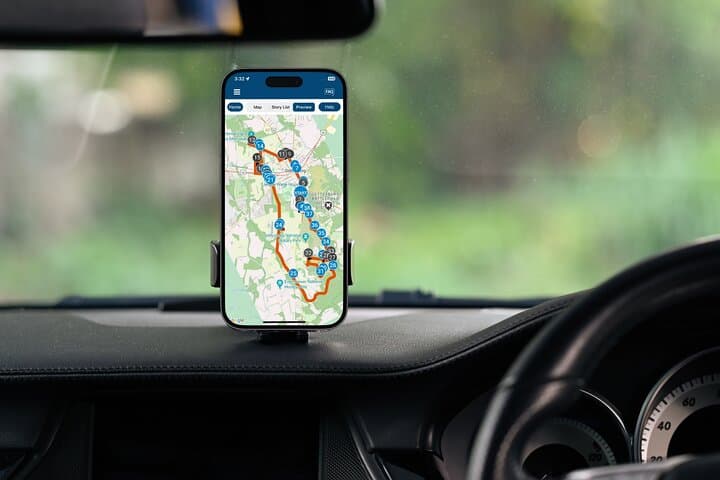
Practically: download the Action Tour Guide app and the tour before you arrive—offline playback is reliable. The full route covers roughly 11 miles and 30+ story stops; allow 60–120 minutes depending on pauses. Follow posted speed limits and park hours (sunrise–sunset plus 30 minutes). Respect memorials and pedestrian zones, and be prepared for brief walking at several pullouts. Bring a fully charged phone, phone-to-car audio cable or Bluetooth, snacks, and a sense of quiet; the experience is strongest when you let the voices and the landscape lead.
easy.
1–2 hours.
Minimal fitness required; you must be able to step in and out of a vehicle and walk short uneven paths.
No—the tour is self-guided and available any day once downloaded; you control start time and pacing.
No—some battlefield roads and areas close at sunset, and the provider advises completing the tour by sunset.
No separate admission is required to drive the designated battlefield roads, but specific museums or private sites may charge entry.
The tour is sold per vehicle/password; share the downloaded tour across devices up to the number of travelers covered by the booking instructions.
Gettysburg was the turning point of the American Civil War in July 1863; the town and fields retain battlefield earthworks, monuments, and period sites reflecting that event.
The National Park Service manages the battlefield to preserve both landscape and memorials—stick to roads and trails, pack out trash, and avoid disturbing interpretive sites to minimize impact.
Action Day Trips operates guided outdoor trips and adventures with an emphasis on safety, stewardship, and memorable experiences.


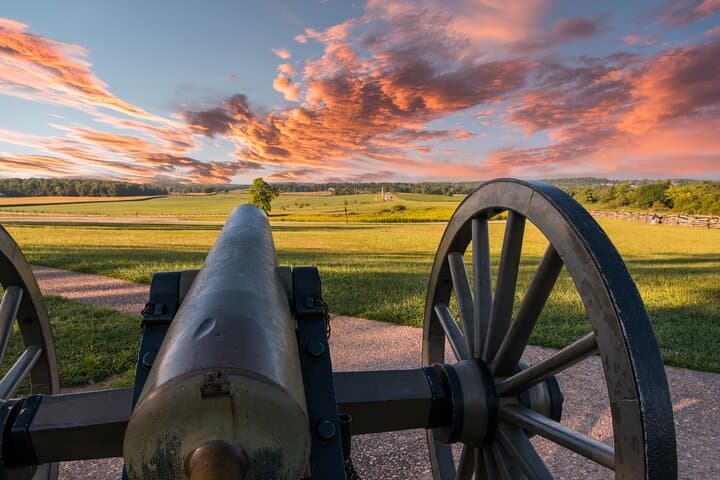
You pull off Steinwehr Avenue into late-afternoon light and the fields open, wide and quiet except for the churn of your tires and the recorded voice that begins to tell you what happened here.
You pull off Steinwehr Avenue into late-afternoon light and the fields open, wide and quiet except for the churn of your tires and the recorded voice that begins to tell you what happened here.
This self-guided driving audio tour walks you through the same ground where three days of battle in July 1863 left graves, hospitals, and stories that residents still tell. The narrative ties local lore—Mark Nesbitt’s decades of collected eyewitness accounts—to battlefield history: troop movements across Seminary Ridge, the stone walls of Little Round Top, and hospital wards like Schmucker Hall that saw grim work after the fighting.
Geology here is simple but important: rolling limestone farmland and exposed boulders shaped how units fought and where monuments now stand. Culturally, Gettysburg is a place of memory; town residents and the National Park Service balance commemoration with everyday life. Expect stops at named sites, short contextual segments, and pauses that let you step out, photograph, or stretch.
Practically: download the Action Tour Guide app and the tour before you arrive—offline playback is reliable. The full route covers roughly 11 miles and 30+ story stops; allow 60–120 minutes depending on pauses. Follow posted speed limits and park hours (sunrise–sunset plus 30 minutes). Respect memorials and pedestrian zones, and be prepared for brief walking at several pullouts. Bring a fully charged phone, phone-to-car audio cable or Bluetooth, snacks, and a sense of quiet; the experience is strongest when you let the voices and the landscape lead.