THE ADVENTURE COLLECTIVE® · Independent discovery and booking for outdoor travel

Explore Enschede’s textile past through a 90-minute self-guided walking quest on the Questo app. Solve 15 location-based puzzles that lead you past villas, former factories, the town hall and Rijksmuseum Twenthe while learning the city’s industrial story.
Explore Enschede’s textile past through a 90-minute self-guided walking quest on the Questo app. Solve 15 location-based puzzles that lead you past villas, former factories, the town hall and Rijksmuseum Twenthe while learning the city’s industrial story.
A cold wind threads between brick façades as you tap open the Questo map and step into Enschede’s industrial heart. Factory chimneys no longer belch smoke, but their brick bones and wide windows still hold the shape of the city’s textile rise—and the app’s first clue directs you down an alley where the past feels close enough to touch.
Verified experiences and guided adventures in the surrounding area.
Operated by Questo · Enschede, Overijssel
A cold wind threads between brick façades as you tap open the Questo map and step into Enschede’s industrial heart. Factory chimneys no longer belch smoke, but their brick bones and wide windows still hold the shape of the city’s textile rise—and the app’s first clue directs you down an alley where the past feels close enough to touch.
This 90-minute self-guided quest walks about 2.5–3.5 km across mostly flat, paved streets and occasional cobbled squares. You’ll visit sites tied to the textile era: the ornate Fabrikantenvilla Van Heek, the pragmatic walls of the former Fabrieksschool, the civic presence of the town hall, and the cultural weight of Rijksmuseum Twenthe, with puzzles that link architecture to labor history and local lore.
Enschede’s story is industrial: rapid 19th–20th century growth around weaving and dyeing, wartime fires, and post-industrial adaptation when mills became studios and cultural spaces. Geologically the plain is low and flat; the experience is urban, not rugged, so the city’s human-made textures—brick, iron, glass—become the foreground. Locals value adaptive reuse and community arts, and the route threads those contemporary layers into historical mystery.
Practical guidance: bring a fully charged smartphone and portable battery, wear comfortable shoes for mixed pavement and cobbles, and allow 1.5–2 hours including stops for photos or coffee. The Questa GPS keeps you oriented; puzzles are family‑friendly and pauseable, so you set the pace. Mornings are quieter; evenings light up cafés near De Grote Kerk. With basic preparation, this is an accessible, atmospheric way to read Enschede’s past through play.
easy.
1–1.5 hours.
Suitable for people with normal mobility; minimal fitness required for a short city walk
No—this is self-guided with instant mobile access; you activate the quest when ready within the booking window.
Yes—paths are mostly paved and the activity notes allow prams; service animals are permitted but check local rules for pets.
It’s an easy urban walk of roughly 2.5–3.5 km with minimal elevation; suitable for most fitness levels.
Questo includes a built-in GPS map and hints; you can pause and resume the quest, or use the app’s hint system to progress.
Enschede grew rapidly in the 19th century as a textile manufacturing center; wealthy mill owners funded civic buildings and museums that still shape the cityscape.
Many former mills have been repurposed rather than demolished, a local focus on adaptive reuse that preserves industrial heritage and reduces development waste.
Questo operates guided outdoor trips and adventures with an emphasis on safety, stewardship, and memorable experiences.


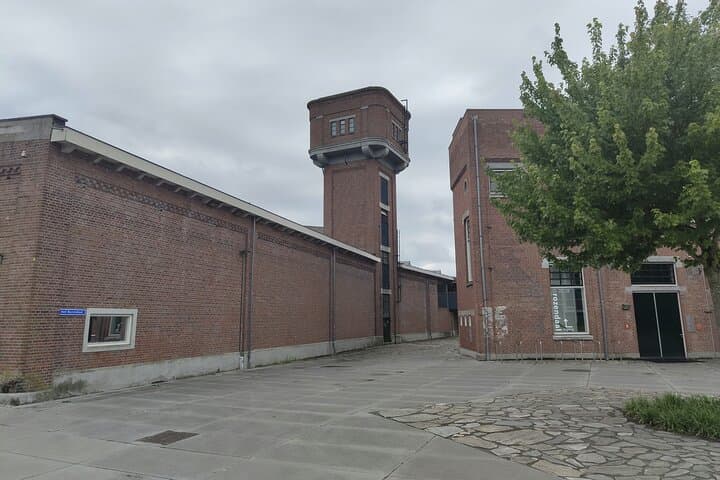
A cold wind threads between brick façades as you tap open the Questo map and step into Enschede’s industrial heart. Factory chimneys no longer belch smoke, but their brick bones and wide windows still hold the shape of the city’s textile rise—and the app’s first clue directs you down an alley where the past feels close enough to touch.
A cold wind threads between brick façades as you tap open the Questo map and step into Enschede’s industrial heart. Factory chimneys no longer belch smoke, but their brick bones and wide windows still hold the shape of the city’s textile rise—and the app’s first clue directs you down an alley where the past feels close enough to touch.
This 90-minute self-guided quest walks about 2.5–3.5 km across mostly flat, paved streets and occasional cobbled squares. You’ll visit sites tied to the textile era: the ornate Fabrikantenvilla Van Heek, the pragmatic walls of the former Fabrieksschool, the civic presence of the town hall, and the cultural weight of Rijksmuseum Twenthe, with puzzles that link architecture to labor history and local lore.
Enschede’s story is industrial: rapid 19th–20th century growth around weaving and dyeing, wartime fires, and post-industrial adaptation when mills became studios and cultural spaces. Geologically the plain is low and flat; the experience is urban, not rugged, so the city’s human-made textures—brick, iron, glass—become the foreground. Locals value adaptive reuse and community arts, and the route threads those contemporary layers into historical mystery.
Practical guidance: bring a fully charged smartphone and portable battery, wear comfortable shoes for mixed pavement and cobbles, and allow 1.5–2 hours including stops for photos or coffee. The Questa GPS keeps you oriented; puzzles are family‑friendly and pauseable, so you set the pace. Mornings are quieter; evenings light up cafés near De Grote Kerk. With basic preparation, this is an accessible, atmospheric way to read Enschede’s past through play.