THE ADVENTURE COLLECTIVE® · Independent discovery and booking for outdoor travel

A compact, four-day trek that rewards early risers with a world-class Himalayan sunrise from Poon Hill. Expect rhododendron forests, stone stairways, teahouse stays, and sweeping views of Annapurna, Dhaulagiri and Machhapuchhre.
A compact, four-day trek that rewards early risers with a world-class Himalayan sunrise from Poon Hill. Expect rhododendron forests, stone stairways, teahouse stays, and sweeping views of Annapurna, Dhaulagiri and Machhapuchhre.
Dawn arrives cold and immediate at Poon Hill—headlamps wink off, and a serried line of hikers climbs the last stone steps. The sky brightens from indigo to washed gold, and Annapurna’s ridge sharpens into a wall of white that seems close enough to touch. From this small viewpoint the Himalaya asserts scale: ridgelines, glacial bowls, and the pointed silhouette of Machhapuchhre dominate the horizon.
Verified experiences and guided adventures in the surrounding area.
Operated by Moonline Tours · Ghorepani, Gandaki Province
Dawn arrives cold and immediate at Poon Hill—headlamps wink off, and a serried line of hikers climbs the last stone steps. The sky brightens from indigo to washed gold, and Annapurna’s ridge sharpens into a wall of white that seems close enough to touch. From this small viewpoint the Himalaya asserts scale: ridgelines, glacial bowls, and the pointed silhouette of Machhapuchhre dominate the horizon.
The Ghorepani–Poon Hill route follows centuries-old mule tracks that connected highland villages to Pokhara’s markets. Geologically, the Annapurna massif is young and tectonically active—steep rock faces and deep river-cut valleys form dramatic elevation changes over short distances. Culturally, the trail threads Gurung and Magar villages where terraced fields, prayer flags, and stone cottages give a clear view into mountain life.
Expect forested ascents through rhododendron and oak, high grassy ridges, and stone stairways—many sections are steep but short. Teahouses in Ghorepani, Tadapani and Ghandruk provide twin-share lodging and simple meals; permits include TIMS and Annapurna Conservation Area entry. Morning weather is the most reliable window for panoramic views; afternoons bring cloud build-up in monsoon months.
Plan for layered clothing, sturdy boots, and a light daypack for the Poon Hill sunrise climb. Acclimatize gently—altitude gains are moderate but persistent—and carry snacks and hydration for long walking days. With basic fitness and good footwear, new trekkers will find the payoffs immediate: high mountain light, local hospitality, and a compact yet authentic Himalayan experience.
moderate.
3–4 days.
Suitable for hikers with moderate fitness who can walk 4–8 hours a day on uneven terrain and stair-like trails.
It is considered moderate: trails include steep stone steps and sustained uphill sections, but no technical climbing; basic fitness and steady pacing are sufficient.
Autumn (Sept–Nov) and spring (Mar–May) offer the best visibility and stable weather; spring also showcases rhododendron blooms.
You need a TIMS card and Annapurna Conservation Area Permit; guided or agency-led treks are common and helpful for logistics and local knowledge.
Yes—teahouse accommodation with twin rooms and communal meals is standard in Ghorepani, Tadapani, Ghandruk and other stops.
The trail follows old trade and mule routes linking mountain villages to Pokhara and markets, with Gurung and Magar communities long established along the ridge.
Parts of the route lie within the Annapurna Conservation Area; visitors are encouraged to stick to trails, pack out waste, and support local teahouses to sustain trail economies.
Moonline Tours operates guided outdoor trips and adventures with an emphasis on safety, stewardship, and memorable experiences.
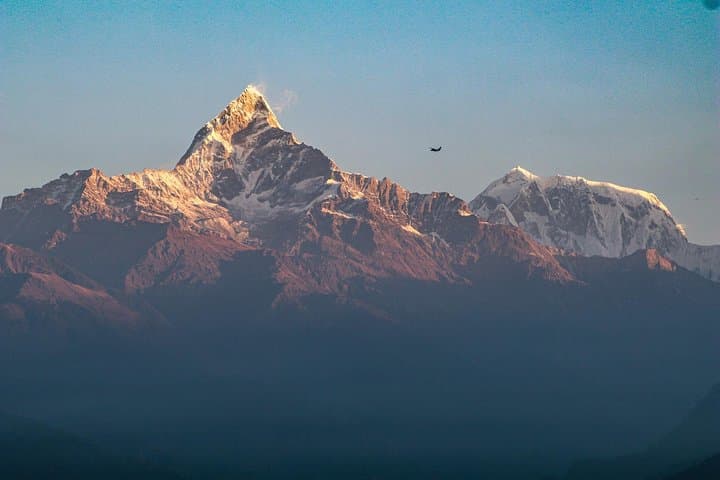
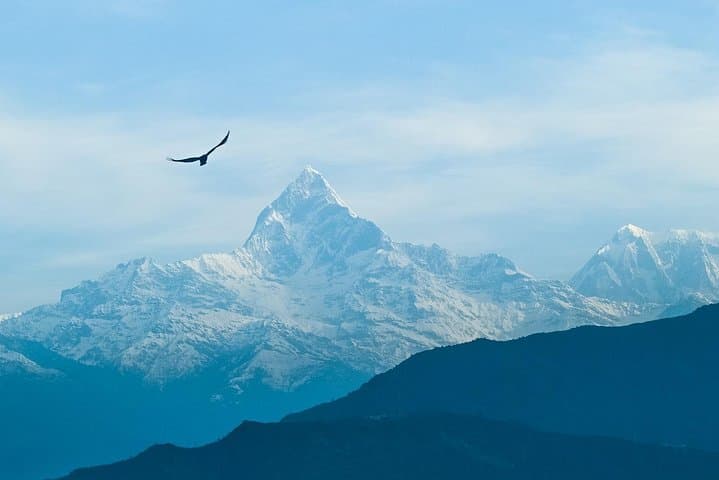
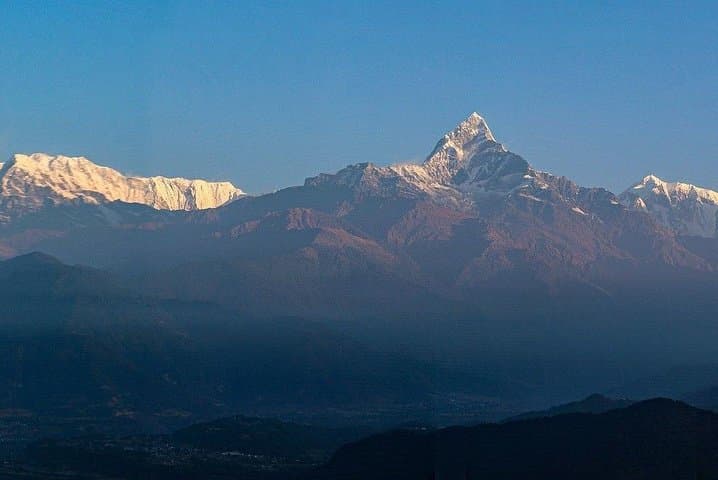
Dawn arrives cold and immediate at Poon Hill—headlamps wink off, and a serried line of hikers climbs the last stone steps. The sky brightens from indigo to washed gold, and Annapurna’s ridge sharpens into a wall of white that seems close enough to touch. From this small viewpoint the Himalaya asserts scale: ridgelines, glacial bowls, and the pointed silhouette of Machhapuchhre dominate the horizon.
Dawn arrives cold and immediate at Poon Hill—headlamps wink off, and a serried line of hikers climbs the last stone steps. The sky brightens from indigo to washed gold, and Annapurna’s ridge sharpens into a wall of white that seems close enough to touch. From this small viewpoint the Himalaya asserts scale: ridgelines, glacial bowls, and the pointed silhouette of Machhapuchhre dominate the horizon.
The Ghorepani–Poon Hill route follows centuries-old mule tracks that connected highland villages to Pokhara’s markets. Geologically, the Annapurna massif is young and tectonically active—steep rock faces and deep river-cut valleys form dramatic elevation changes over short distances. Culturally, the trail threads Gurung and Magar villages where terraced fields, prayer flags, and stone cottages give a clear view into mountain life.
Expect forested ascents through rhododendron and oak, high grassy ridges, and stone stairways—many sections are steep but short. Teahouses in Ghorepani, Tadapani and Ghandruk provide twin-share lodging and simple meals; permits include TIMS and Annapurna Conservation Area entry. Morning weather is the most reliable window for panoramic views; afternoons bring cloud build-up in monsoon months.
Plan for layered clothing, sturdy boots, and a light daypack for the Poon Hill sunrise climb. Acclimatize gently—altitude gains are moderate but persistent—and carry snacks and hydration for long walking days. With basic fitness and good footwear, new trekkers will find the payoffs immediate: high mountain light, local hospitality, and a compact yet authentic Himalayan experience.