THE ADVENTURE COLLECTIVE® · Independent discovery and booking for outdoor travel

A compact Annapurna trek that combines sunrise views from Poon Hill with Gurung village culture and rhododendron forests. Ideal for hikers with moderate fitness who want big Himalayan panoramas in a short, well-supported package.
A compact Annapurna trek that combines sunrise views from Poon Hill with Gurung village culture and rhododendron forests. Ideal for hikers with moderate fitness who want big Himalayan panoramas in a short, well-supported package.
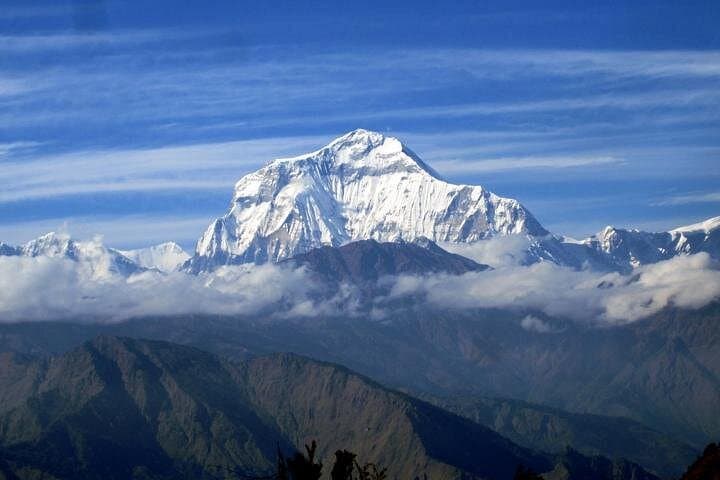
Dawn arrives on Poon Hill like an invitation: a cool, thin air that pulls color into the ridgelines and a band of light that first sharpens Machapuchare and Annapurna South. You stand on the viewpoint as the peaks push up from shadow—Dhaulagiri, Nilgiri and the distinctive fishtail profile—while prayer flags tremble and local porters move along stone steps.
Verified experiences and guided adventures in the surrounding area.
Operated by Breakfree Adventures Pvt. Ltd. · Ghorepani, Gandaki Province
Dawn arrives on Poon Hill like an invitation: a cool, thin air that pulls color into the ridgelines and a band of light that first sharpens Machapuchare and Annapurna South. You stand on the viewpoint as the peaks push up from shadow—Dhaulagiri, Nilgiri and the distinctive fishtail profile—while prayer flags tremble and local porters move along stone steps.
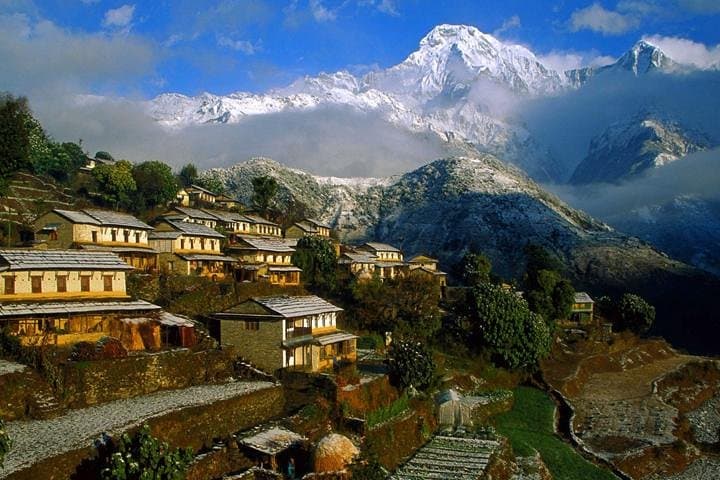
This short trek threads classic Annapurna terrain and Gurung culture. Geologically, you hike across river-cut valleys and terraced slopes carved from uplifted Himalayan strata; rhododendron and oak woods cloak the mid-elevations. Ghorepani and Ghandruk are active Gurung villages where traditional stone houses and carved wood tell of centuries of trans-Himalayan trade and seasonal pastoralism.
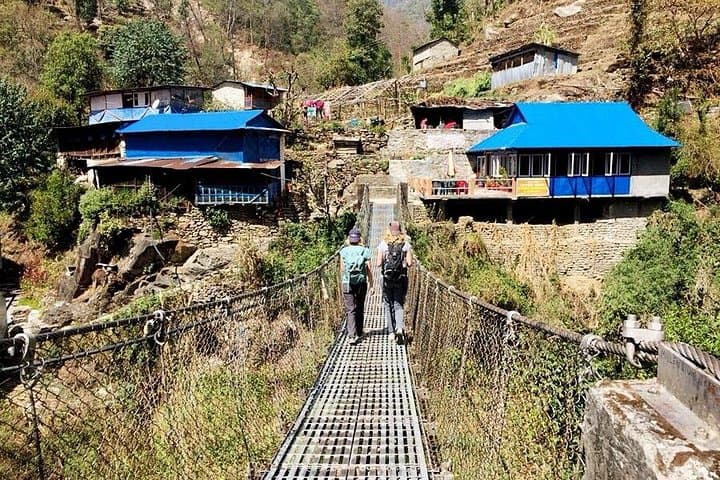
Expect a practical itinerary: Nayapul/Tikhedhunga (1,540 m) to Ghorepani (2,870 m) with a dawn visit to Poon Hill (3,210 m), then descent via Tadapani and Ghandruk back to Pokhara. Daily legs average 4–6 hours on stone steps, packed trails and occasional muddy sections in monsoon.
Prepare for altitude gain, variable weather and simple lodge stays. Hydrate, layer synthetic insulation under a waterproof shell, and bring trekking poles for steep stairways. Guides handle permits (TIMS) and local logistics; porters are common and ease the load.
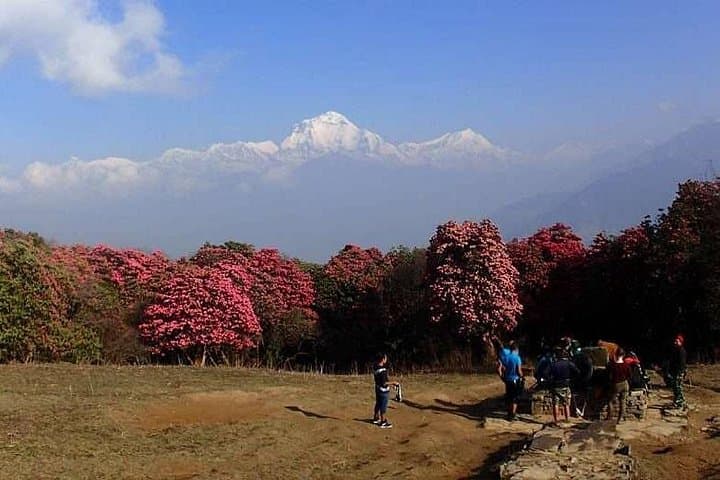
This trek is accessible to hikers with moderate fitness and rewards effort with sunrise panoramas, rhododendron blooms in spring, and a compact, culturally rich Himalayan experience that’s achievable in under two weeks.
moderate.
8–10 days.
Should be comfortable hiking 4–7 hours per day on uneven stone steps and be able to sleep in basic lodges.
Yes—trekkers typically need TIMS and entry for Annapurna Conservation Area; most operators handle permits for you.
Autumn (Oct–Nov) and spring (Mar–May) offer the clearest mountain views and pleasant daytime temperatures; monsoon (Jun–Aug) is wet, winter can be cold with snow at higher spots.
Daily sections are moderate: 4–6 hours on uneven stone steps with some steep climbs; basic fitness and stamina are recommended.
Yes—simple teahouse lodges supply beds and full board (breakfast, lunch, dinner) included in many packages; expect shared rooms and basic facilities.
The trail follows ancient routes used by Gurung communities and traders between valleys; villages like Ghandruk preserve Gurung music, dress and architecture.
Trekking passes through the Annapurna Conservation Area—respect trail etiquette, minimize plastic waste and use lodge water sparingly to reduce local strain.
Breakfree Adventures Pvt. Ltd. operates guided outdoor trips and adventures with an emphasis on safety, stewardship, and memorable experiences.
Dawn arrives on Poon Hill like an invitation: a cool, thin air that pulls color into the ridgelines and a band of light that first sharpens Machapuchare and Annapurna South. You stand on the viewpoint as the peaks push up from shadow—Dhaulagiri, Nilgiri and the distinctive fishtail profile—while prayer flags tremble and local porters move along stone steps.
Dawn arrives on Poon Hill like an invitation: a cool, thin air that pulls color into the ridgelines and a band of light that first sharpens Machapuchare and Annapurna South. You stand on the viewpoint as the peaks push up from shadow—Dhaulagiri, Nilgiri and the distinctive fishtail profile—while prayer flags tremble and local porters move along stone steps.
This short trek threads classic Annapurna terrain and Gurung culture. Geologically, you hike across river-cut valleys and terraced slopes carved from uplifted Himalayan strata; rhododendron and oak woods cloak the mid-elevations. Ghorepani and Ghandruk are active Gurung villages where traditional stone houses and carved wood tell of centuries of trans-Himalayan trade and seasonal pastoralism.
Expect a practical itinerary: Nayapul/Tikhedhunga (1,540 m) to Ghorepani (2,870 m) with a dawn visit to Poon Hill (3,210 m), then descent via Tadapani and Ghandruk back to Pokhara. Daily legs average 4–6 hours on stone steps, packed trails and occasional muddy sections in monsoon.
Prepare for altitude gain, variable weather and simple lodge stays. Hydrate, layer synthetic insulation under a waterproof shell, and bring trekking poles for steep stairways. Guides handle permits (TIMS) and local logistics; porters are common and ease the load.
This trek is accessible to hikers with moderate fitness and rewards effort with sunrise panoramas, rhododendron blooms in spring, and a compact, culturally rich Himalayan experience that’s achievable in under two weeks.