THE ADVENTURE COLLECTIVE® · Independent discovery and booking for outdoor travel

A compact, family-friendly trek from Pokhara, the Ghorepani–Poon Hill route delivers Himalayan sunrise panoramas, rhododendron forests, and Gurung village life across five accessible days. Perfect for travelers short on time who still want an authentic mountain experience.
A compact, family-friendly trek from Pokhara, the Ghorepani–Poon Hill route delivers Himalayan sunrise panoramas, rhododendron forests, and Gurung village life across five accessible days. Perfect for travelers short on time who still want an authentic mountain experience.
Dawn arrives cold and thin above the ridge as you climb the last stone steps to Poon Hill. The horizon brightens in strips of orange and gold, and one by one the high ridges of Annapurna, Dhaulagiri and Machhapuchhre throw off shadow and reveal their serrated faces. For five days this route moves between planted terraces and rhododendron forest, through Magar and Gurung villages where prayer flags and stacked slate roofs mark human life at altitude.
Verified experiences and guided adventures in the surrounding area.
Operated by Nepal Social Treks and Expedition · Pokhara, Gandaki Province
Dawn arrives cold and thin above the ridge as you climb the last stone steps to Poon Hill. The horizon brightens in strips of orange and gold, and one by one the high ridges of Annapurna, Dhaulagiri and Machhapuchhre throw off shadow and reveal their serrated faces. For five days this route moves between planted terraces and rhododendron forest, through Magar and Gurung villages where prayer flags and stacked slate roofs mark human life at altitude.
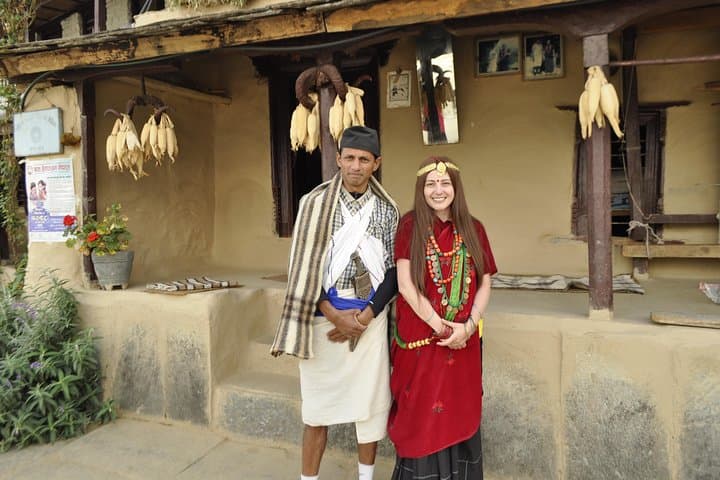
Geologically, the trail traces remnant foothills uplifted by the collision of the Indian and Eurasian plates; the steep stone staircases are local answers to erosion and slope. Culturally the trek threads through Gurung and Magar homesteads—communities with long traditions of hospitality and seasonal festivals, and a living practice of honey-harvesting from cliff hives. Teahouses provide simple rooms and shared meals, making the route accessible for families and first-time trekkers.
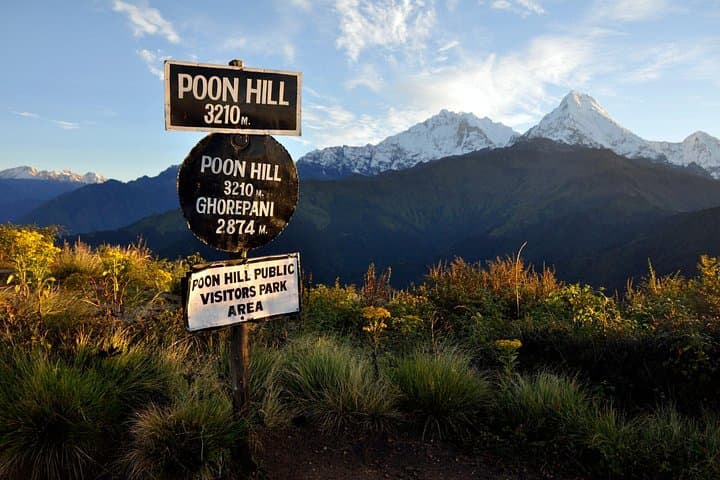
Expect steady ascents (up to ~3,210 m on Poon Hill), long stone steps, and a mix of packed dirt, switchbacks, and forest shade. Typical days run three to six hours of hiking; mornings are best for viewpoints and afternoons for village exploration. Carry a charged headlamp, layered clothing for big temperature swings, and cash for teahouses. Give yourself time to move slowly on the high steps, drink frequently, and let your legs adapt to altitude. With modest fitness and the right gear, this five-day loop delivers sunrise panoramas, living mountain culture, and a straightforward introduction to trekking in the Annapurna Conservation Area.
moderate.
5 days.
Good general fitness, able to hike 3–6 hours per day on uneven stone steps and gradual ascents; stair-climbing strength helps.
Yes—trekkers must carry an Annapurna Conservation Area Permit (ACAP) and a TIMS card; guides or operators typically arrange them before the trek.
The highest point is around 3,193–3,210 m at Poon Hill—most trekkers acclimatize fine with gradual ascent, but monitor symptoms and descend if you feel unwell.
Teahouses offer basic private or shared rooms, communal dining, and hot meals; bring a light sleeping liner and cash for extras.
Yes—this route is commonly done by families; choose a slower pace, plan for rest, and consider porters to carry younger children or heavy packs.
The Annapurna foothills are home to Gurung and Magar communities with centuries-old agricultural terraces and oral traditions tied to mountain life and seasonal honey collection.
The Annapurna Conservation Area protects biodiversity and village livelihoods—follow trail etiquette, avoid single-use plastics, and use local teahouses to support community-based tourism.
Nepal Social Treks and Expedition operates guided outdoor trips and adventures with an emphasis on safety, stewardship, and memorable experiences.
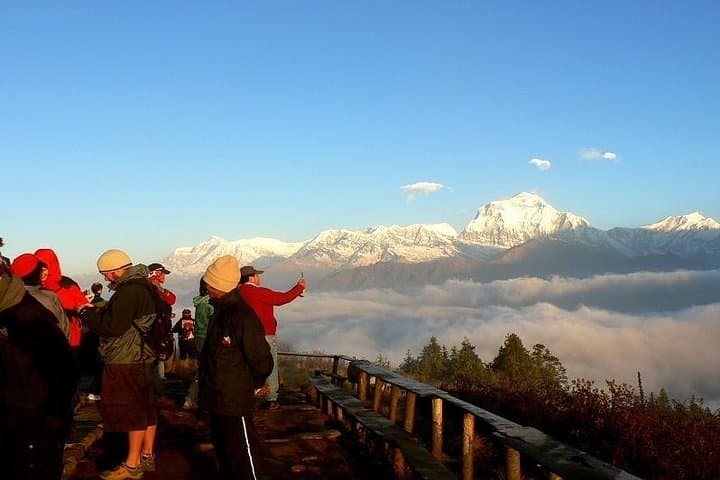
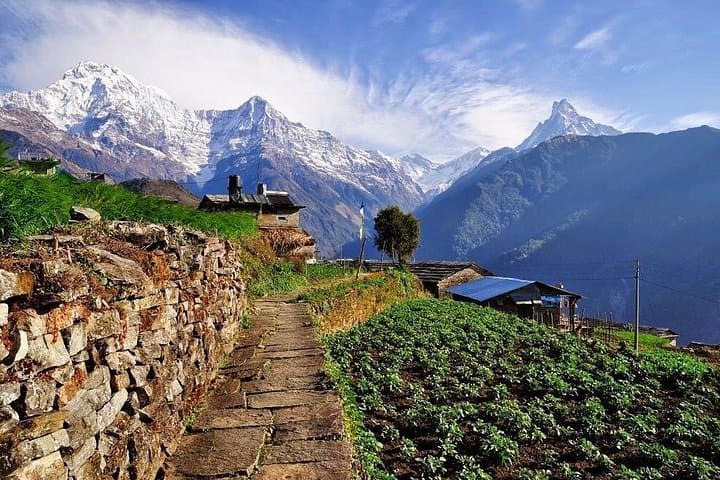
Dawn arrives cold and thin above the ridge as you climb the last stone steps to Poon Hill. The horizon brightens in strips of orange and gold, and one by one the high ridges of Annapurna, Dhaulagiri and Machhapuchhre throw off shadow and reveal their serrated faces. For five days this route moves between planted terraces and rhododendron forest, through Magar and Gurung villages where prayer flags and stacked slate roofs mark human life at altitude.
Dawn arrives cold and thin above the ridge as you climb the last stone steps to Poon Hill. The horizon brightens in strips of orange and gold, and one by one the high ridges of Annapurna, Dhaulagiri and Machhapuchhre throw off shadow and reveal their serrated faces. For five days this route moves between planted terraces and rhododendron forest, through Magar and Gurung villages where prayer flags and stacked slate roofs mark human life at altitude.
Geologically, the trail traces remnant foothills uplifted by the collision of the Indian and Eurasian plates; the steep stone staircases are local answers to erosion and slope. Culturally the trek threads through Gurung and Magar homesteads—communities with long traditions of hospitality and seasonal festivals, and a living practice of honey-harvesting from cliff hives. Teahouses provide simple rooms and shared meals, making the route accessible for families and first-time trekkers.
Expect steady ascents (up to ~3,210 m on Poon Hill), long stone steps, and a mix of packed dirt, switchbacks, and forest shade. Typical days run three to six hours of hiking; mornings are best for viewpoints and afternoons for village exploration. Carry a charged headlamp, layered clothing for big temperature swings, and cash for teahouses. Give yourself time to move slowly on the high steps, drink frequently, and let your legs adapt to altitude. With modest fitness and the right gear, this five-day loop delivers sunrise panoramas, living mountain culture, and a straightforward introduction to trekking in the Annapurna Conservation Area.