THE ADVENTURE COLLECTIVE® · Independent discovery and booking for outdoor travel

Short, accessible days and high Himalayan panoramas make the 5-day Ghorepani–Poon Hill trek an ideal introduction to Annapurna country. Expect sunrise views over Annapurna and Dhaulagiri, village teahouses, and manageable daily climbs.
Short, accessible days and high Himalayan panoramas make the 5-day Ghorepani–Poon Hill trek an ideal introduction to Annapurna country. Expect sunrise views over Annapurna and Dhaulagiri, village teahouses, and manageable daily climbs.
Dawn arrives as a crowd of headlamps threads a narrow ridge toward Poon Hill, the chill cutting clean across your face while the eastern sky brightens over jagged white teeth of Annapurna and Dhaulagiri. The walk from Nayapul follows rivers, climbs through bamboo and rhododendron, and eases into stone-paved steps that wind past terraced fields and small teahouses; overnight stops in Ulleri, Tadhapani and the traditional village of Ghandruk give the route a human rhythm.
Verified experiences and guided adventures in the surrounding area.
Operated by NEPAL LION TOURS AND TREKS PVT LTD · Pokhara, Gandaki Province
Dawn arrives as a crowd of headlamps threads a narrow ridge toward Poon Hill, the chill cutting clean across your face while the eastern sky brightens over jagged white teeth of Annapurna and Dhaulagiri. The walk from Nayapul follows rivers, climbs through bamboo and rhododendron, and eases into stone-paved steps that wind past terraced fields and small teahouses; overnight stops in Ulleri, Tadhapani and the traditional village of Ghandruk give the route a human rhythm.
The trail sits inside the Annapurna Conservation Area, a mosaic of tectonic uplift and erosion that lifts the Lesser Himalaya into dramatic snow-and-rock ridgelines. Culturally, the route threads Gurung and Magar villages where home museums, prayer flags, and slate roofs mark long-standing mountain lifeways linked to trans-Himalayan trade and seasonal grazing.
Practical guidance: the daily walks are short to moderate (3–6 hours), but early starts for Poon Hill’s sunrise demands warm layers and a headlamp. Trails alternate packed dirt and stone steps — waterproof boots and a trekking pole cut fatigue. Cash is essential for tea and snacks in teahouses; ATMs are only in Pokhara. Acclimatization on this lower-elevation trek is straightforward but stay hydrated and sleep well the first night in Pokhara.
Logistics: transfers between Kathmandu and Pokhara are commonly by tourist bus or optional flight; permits for Annapurna Conservation Area and TIMS are standard. Expect shared teahouse rooms, hot meals, and a guide who manages route paperwork, permits and local transport arrangements.
moderate.
5 days.
Suitable for hikers in regular aerobic shape who can handle 3–6 hour walking days with some steep stone steps.
Yes — an Annapurna Conservation Area Permit (ACAP) and a TIMS card are required and are typically handled by your guide or operator.
Autumn (Sept–Nov) and spring (Mar–May) offer the clearest skies and stable weather; winters are colder and monsoon months are wet and slippery.
Guides aren’t mandatory but are strongly recommended for logistics, local navigation, and permit management; this package includes a licensed trekking guide and support.
Teahouse accommodation is simple—shared rooms, hot showers where available, and cooked Nepali meals; the tour includes meals and one hotel night in Pokhara.
Ghorepani and its trails were long-used trade and seasonal routes for Gurung and Magar communities; the Annapurna Conservation Area was one of Nepal’s first conservation-tourism models.
ACAP manages permits and fees to fund local conservation; use refillable water, pack out trash where possible, and respect teahouse waste rules.
NEPAL LION TOURS AND TREKS PVT LTD operates guided outdoor trips and adventures with an emphasis on safety, stewardship, and memorable experiences.
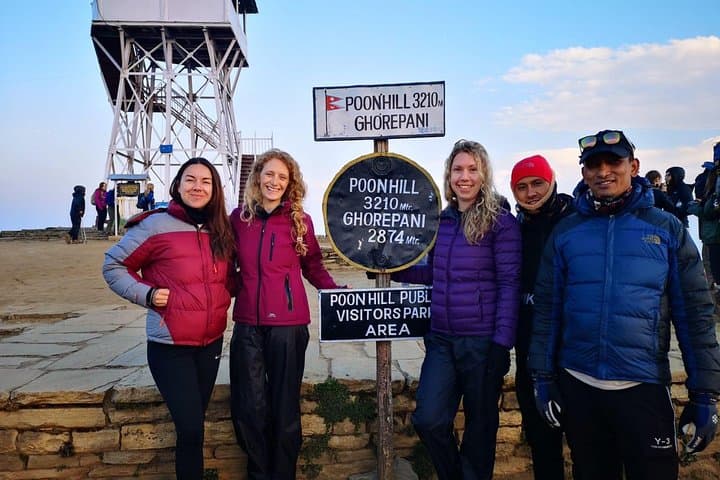
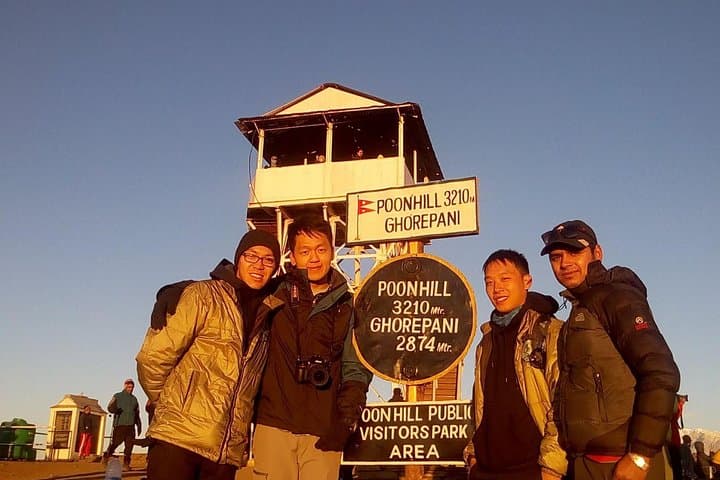
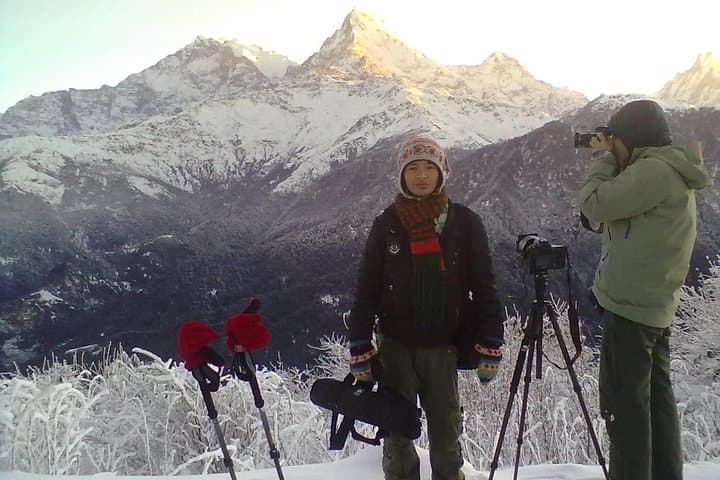
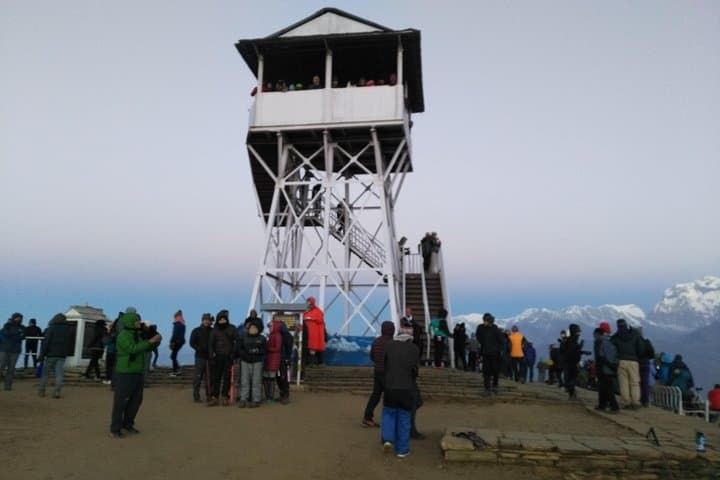
Dawn arrives as a crowd of headlamps threads a narrow ridge toward Poon Hill, the chill cutting clean across your face while the eastern sky brightens over jagged white teeth of Annapurna and Dhaulagiri. The walk from Nayapul follows rivers, climbs through bamboo and rhododendron, and eases into stone-paved steps that wind past terraced fields and small teahouses; overnight stops in Ulleri, Tadhapani and the traditional village of Ghandruk give the route a human rhythm.
Dawn arrives as a crowd of headlamps threads a narrow ridge toward Poon Hill, the chill cutting clean across your face while the eastern sky brightens over jagged white teeth of Annapurna and Dhaulagiri. The walk from Nayapul follows rivers, climbs through bamboo and rhododendron, and eases into stone-paved steps that wind past terraced fields and small teahouses; overnight stops in Ulleri, Tadhapani and the traditional village of Ghandruk give the route a human rhythm.
The trail sits inside the Annapurna Conservation Area, a mosaic of tectonic uplift and erosion that lifts the Lesser Himalaya into dramatic snow-and-rock ridgelines. Culturally, the route threads Gurung and Magar villages where home museums, prayer flags, and slate roofs mark long-standing mountain lifeways linked to trans-Himalayan trade and seasonal grazing.
Practical guidance: the daily walks are short to moderate (3–6 hours), but early starts for Poon Hill’s sunrise demands warm layers and a headlamp. Trails alternate packed dirt and stone steps — waterproof boots and a trekking pole cut fatigue. Cash is essential for tea and snacks in teahouses; ATMs are only in Pokhara. Acclimatization on this lower-elevation trek is straightforward but stay hydrated and sleep well the first night in Pokhara.
Logistics: transfers between Kathmandu and Pokhara are commonly by tourist bus or optional flight; permits for Annapurna Conservation Area and TIMS are standard. Expect shared teahouse rooms, hot meals, and a guide who manages route paperwork, permits and local transport arrangements.