THE ADVENTURE COLLECTIVE® · Independent discovery and booking for outdoor travel

Walk Gettysburg after dark with a local guide to explore haunted inns, preserved homes and the sites converted into wartime hospitals. This private 2-hour tour mixes documented Civil War history with local ghost lore for a focused, atmospheric experience.
Walk Gettysburg after dark with a local guide to explore haunted inns, preserved homes and the sites converted into wartime hospitals. This private 2-hour tour mixes documented Civil War history with local ghost lore for a focused, atmospheric experience.
A low autumn light slides down Steinwehr Avenue as a local guide waits beneath the sign of Dobbin House Tavern, cigar-smoke lore already in the air. The town’s brick streets creak with history; the guide draws you through narrow lanes where hospital wards once filled church halls and hotel parlors held makeshift operating tables. The walk moves deliberately — close enough to touch a window frame that doubled as a splint, far enough to sense the scale of what unfolded here in July 1863.
Verified experiences and guided adventures in the surrounding area.
Operated by Opatrip.com USA · Gettysburg, Pennsylvania
A low autumn light slides down Steinwehr Avenue as a local guide waits beneath the sign of Dobbin House Tavern, cigar-smoke lore already in the air. The town’s brick streets creak with history; the guide draws you through narrow lanes where hospital wards once filled church halls and hotel parlors held makeshift operating tables. The walk moves deliberately — close enough to touch a window frame that doubled as a splint, far enough to sense the scale of what unfolded here in July 1863.
Gettysburg’s terrain is folded limestone and red shale, a rural ridge-and-valley landscape that funneled cavalry and infantry into decisive lines. The tour threads battlefield memory with civic architecture: Jennie Wade’s preserved house, the Farnsworth and Brickhouse Inns, and the old municipal building that began life as a county prison. Stories focus on lived experience — surgeons, civilian families, enslaved people — and how those events layered into local lore and reported apparitions.
Culturally, the town balances preservation and commerce; many of these buildings are working inns, museums or private homes. Guides here blend documented history with eyewitness accounts to explain why a room or tree becomes a focal point for extra-ordinary reports.
Practical notes: this is a two-hour, easy-paced, largely on-street walking tour suitable for most fitness levels. Wear sturdy shoes, bring a water bottle and a light jacket for evening chills. Expect cobblestones, uneven curbs, and close-up views of historic facades — the best encounters are heard, not rushed.
easy.
2 hours.
Suitable for most fitness levels; requires standing and walking on paved and uneven surfaces for up to two hours.
Yes; the pace is gentle and content is adjusted for family groups, though some Civil War descriptions can be intense for very young children.
No; this private walking tour stops at exterior views and public areas. Any paid museum entry is typically extra.
Yes; as a private tour the guide can adapt highlights with advance notice to focus on specific houses or historical themes.
The tour generally operates in light rain; full refunds require 24-hour cancellation per the operator’s policy if you choose to cancel.
Gettysburg’s downtown was a crossroads before the battle; many buildings served multiple wartime roles—homes, hospitals, and billet sites—shaping both physical and oral histories.
Preservation groups maintain several structures and signage; visitors are asked to stay on public walkways and avoid touching fragile historic surfaces to protect materials for future study.
Opatrip.com USA operates guided outdoor trips and adventures with an emphasis on safety, stewardship, and memorable experiences.

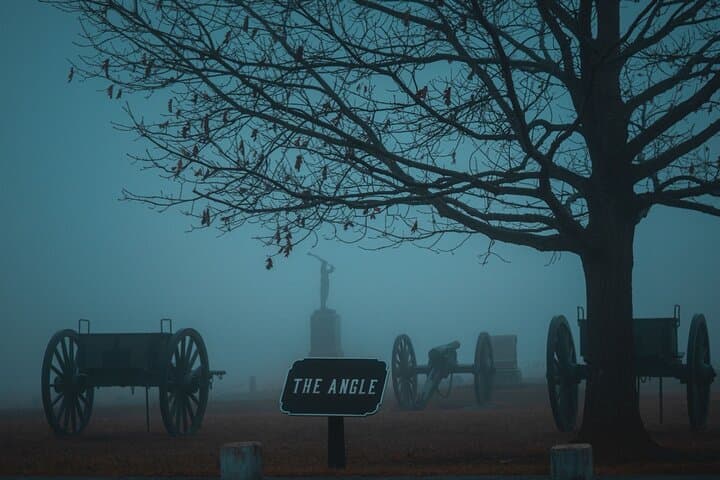

A low autumn light slides down Steinwehr Avenue as a local guide waits beneath the sign of Dobbin House Tavern, cigar-smoke lore already in the air. The town’s brick streets creak with history; the guide draws you through narrow lanes where hospital wards once filled church halls and hotel parlors held makeshift operating tables. The walk moves deliberately — close enough to touch a window frame that doubled as a splint, far enough to sense the scale of what unfolded here in July 1863.
A low autumn light slides down Steinwehr Avenue as a local guide waits beneath the sign of Dobbin House Tavern, cigar-smoke lore already in the air. The town’s brick streets creak with history; the guide draws you through narrow lanes where hospital wards once filled church halls and hotel parlors held makeshift operating tables. The walk moves deliberately — close enough to touch a window frame that doubled as a splint, far enough to sense the scale of what unfolded here in July 1863.
Gettysburg’s terrain is folded limestone and red shale, a rural ridge-and-valley landscape that funneled cavalry and infantry into decisive lines. The tour threads battlefield memory with civic architecture: Jennie Wade’s preserved house, the Farnsworth and Brickhouse Inns, and the old municipal building that began life as a county prison. Stories focus on lived experience — surgeons, civilian families, enslaved people — and how those events layered into local lore and reported apparitions.
Culturally, the town balances preservation and commerce; many of these buildings are working inns, museums or private homes. Guides here blend documented history with eyewitness accounts to explain why a room or tree becomes a focal point for extra-ordinary reports.
Practical notes: this is a two-hour, easy-paced, largely on-street walking tour suitable for most fitness levels. Wear sturdy shoes, bring a water bottle and a light jacket for evening chills. Expect cobblestones, uneven curbs, and close-up views of historic facades — the best encounters are heard, not rushed.