THE ADVENTURE COLLECTIVE® · Independent discovery and booking for outdoor travel

Join the Wodaabe at the Gerewol: a nine-day cultural circuit through Niamey, Abalak and Agadez that pairs frontline festival access with desert drives and tented nights. Expect painted faces, camel races, markets and nights under open Sahel skies.
Join the Wodaabe at the Gerewol: a nine-day cultural circuit through Niamey, Abalak and Agadez that pairs frontline festival access with desert drives and tented nights. Expect painted faces, camel races, markets and nights under open Sahel skies.
You arrive to a flat, dry horizon that shimmers with heat; men paint their faces in ochre and blue, camels stamp impatiently, and a chorus of high, rhythmic song fills the open plain. The Gerewol is immediate — visual, noisy, and social — a courtship ritual where Wodaabe men compete in elaborate dress and dance to attract partners while festival markets and camel races animate the encampment.
Verified experiences and guided adventures in the surrounding area.
Operated by Across Africa Tours LLC · Abalak, Tahoua Region
You arrive to a flat, dry horizon that shimmers with heat; men paint their faces in ochre and blue, camels stamp impatiently, and a chorus of high, rhythmic song fills the open plain. The Gerewol is immediate — visual, noisy, and social — a courtship ritual where Wodaabe men compete in elaborate dress and dance to attract partners while festival markets and camel races animate the encampment.
This nine-day itinerary threads Niamey, Tahoua/Konni, Abalak and Agadez, placing you in the heart of the Sahel. The Wodaabe are a subgroup of the Fula (Fulani) with a long nomadic history; their Gerewol ritual channels ancestral codes of beauty, mimicry and endurance. Geology here is simple but stark: lateritic plains, wind-polished sands and the ancient rock outcrops around Agadez that mark the transition to the Sahara.
Expect long drives between dusty towns, nights in tented camps, and punctuated days immersed in market life, music and procession. Cultural protocol matters: photography is allowed but ask before shooting portraits, and local guides mediate access to private ceremonies.
Practical guidance: travel light but sun-smart — wide-brim hat, high-SPF protection and reusable water bottles are essentials. Nights can be surprisingly cool; pack an insulated layer. Cash and valid travel documents are mandatory in remote towns; ATMs are scarce. Respect local customs, follow your guide’s advice around crowds and animals, and plan for staggered arrivals and departures — the festival’s rhythm is communal, not clock-bound. With basic preparation, the Gerewol is an unforgettable close-up of Sahelian culture and nomadic artistry.
easy.
9 days.
Suitable for travelers in average physical condition; expect long vehicle transfers, short walks across uneven desert surfaces and standing during ceremonies.
The festival typically occurs around September, coinciding with seasonal gatherings of nomadic groups after seasonal movements; exact dates vary each year.
The itinerary is rated easy physically, but long drives and desert conditions can be challenging for very young children; discuss age and needs with the operator.
Local languages include Fula (Fulfulde), Hausa and Tamasheq; tours include experienced local guides who translate and manage cultural access.
Travelers should have routine vaccinations, consider hepatitis A and typhoid, and consult health authorities about yellow fever or malaria prophylaxis as required for Niger.
The Gerewol is a traditional Wodaabe Fula courtship festival with deep roots in Sahelian nomadic culture, where ritualized dance and beauty competitions select partners and reinforce social bonds.
The Sahel is an ecologically sensitive region facing desertification and water stress; travelers should minimize waste, conserve water and support local guides and community-run camps.
Across Africa Tours LLC operates guided outdoor trips and adventures with an emphasis on safety, stewardship, and memorable experiences.
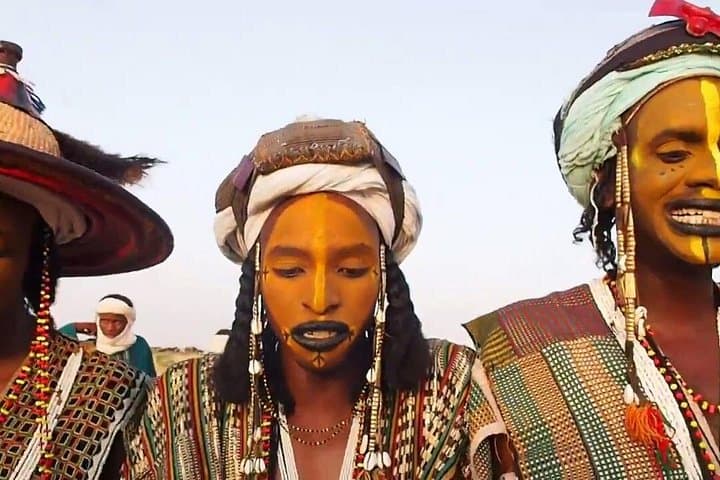
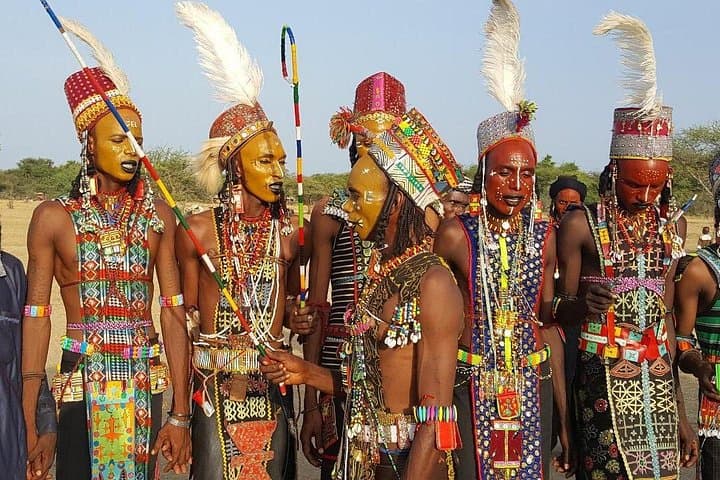
You arrive to a flat, dry horizon that shimmers with heat; men paint their faces in ochre and blue, camels stamp impatiently, and a chorus of high, rhythmic song fills the open plain. The Gerewol is immediate — visual, noisy, and social — a courtship ritual where Wodaabe men compete in elaborate dress and dance to attract partners while festival markets and camel races animate the encampment.
You arrive to a flat, dry horizon that shimmers with heat; men paint their faces in ochre and blue, camels stamp impatiently, and a chorus of high, rhythmic song fills the open plain. The Gerewol is immediate — visual, noisy, and social — a courtship ritual where Wodaabe men compete in elaborate dress and dance to attract partners while festival markets and camel races animate the encampment.
This nine-day itinerary threads Niamey, Tahoua/Konni, Abalak and Agadez, placing you in the heart of the Sahel. The Wodaabe are a subgroup of the Fula (Fulani) with a long nomadic history; their Gerewol ritual channels ancestral codes of beauty, mimicry and endurance. Geology here is simple but stark: lateritic plains, wind-polished sands and the ancient rock outcrops around Agadez that mark the transition to the Sahara.
Expect long drives between dusty towns, nights in tented camps, and punctuated days immersed in market life, music and procession. Cultural protocol matters: photography is allowed but ask before shooting portraits, and local guides mediate access to private ceremonies.
Practical guidance: travel light but sun-smart — wide-brim hat, high-SPF protection and reusable water bottles are essentials. Nights can be surprisingly cool; pack an insulated layer. Cash and valid travel documents are mandatory in remote towns; ATMs are scarce. Respect local customs, follow your guide’s advice around crowds and animals, and plan for staggered arrivals and departures — the festival’s rhythm is communal, not clock-bound. With basic preparation, the Gerewol is an unforgettable close-up of Sahelian culture and nomadic artistry.