THE ADVENTURE COLLECTIVE® · Independent discovery and booking for outdoor travel

Walk Georgetown with a former intelligence officer and see ordinary streets turned into chapters of wartime intrigue. This 90‑minute walking tour blends personal anecdotes, hands‑on demonstrations, and local history to explain how locals and operatives shaped espionage in DC.
Walk Georgetown with a former intelligence officer and see ordinary streets turned into chapters of wartime intrigue. This 90‑minute walking tour blends personal anecdotes, hands‑on demonstrations, and local history to explain how locals and operatives shaped espionage in DC.
The tour begins under the bell tower at Oak Hill Cemetery, where granite stones and clipped yews form a quiet threshold into Georgetown’s shadowed past. A former intelligence officer leads the group, voice low and exacting, pointing out banal façades that once housed coded exchanges and covert meetings — the ordinary streets seeming to hold deliberate secrets.
Verified experiences and guided adventures in the surrounding area.
Operated by Spyher · Washington, DC
The tour begins under the bell tower at Oak Hill Cemetery, where granite stones and clipped yews form a quiet threshold into Georgetown’s shadowed past. A former intelligence officer leads the group, voice low and exacting, pointing out banal façades that once housed coded exchanges and covert meetings — the ordinary streets seeming to hold deliberate secrets.
Georgetown’s role in wartime intelligence is less about dramatic chases and more about pattern and place: bricked rowhouses used as safe addresses, riverside intervals that facilitated unseen movement, and social clubs where conversation doubled as commerce in information. The guide situates these stories against the neighborhood’s 18th- and 19th-century urban growth and the Cold War’s procedural paranoia — why impersonal communication reduced risk, how dead drops worked, and how signal sites read like a citywide shorthand.
Expect paved sidewalks, occasional cobblestones, and a few short, steep blocks; the route moves from Oak Hill to the corner outside Martin’s Tavern, covering roughly 1–2 miles and about 90 minutes of walking and on-the-spot demonstrations. The experience is interactive: reading a signal site and handling a mock dead drop under supervision.
Practical notes: arrive 5–10 minutes early, wear comfortable shoes, and bring water; there are no scheduled restroom breaks. The tour is best in mild weather — spring and fall offer comfortable walking, while summer can be hot and winter crisp. For groups and teams, the mix of personal anecdotes and tactical explanation makes this both an entertaining and instructive urban history walk.
moderate.
1.5 hours.
Reasonable walking fitness — able to stand and walk for 90 minutes over paved and uneven urban surfaces
The route covers roughly 1–2 miles total over urban sidewalks and finishes about 0.7 mile from the start; the tour lasts 90 minutes.
Older children who can walk 90 minutes and follow safety instructions may participate, but the content focuses on adult historical and tactical themes.
There are no scheduled restroom breaks; please use facilities near the meeting point or nearby businesses before the tour starts.
Do not engage with them; follow the briefing instructions and only respond to the guide identified by the described signal and magazine.
Georgetown was a commercial port long before it became an elite Washington neighborhood; its narrow streets and river access made it useful for discreet movement and observation during WWII and the Cold War.
The tour emphasizes respect for private property and historic sites; staying on sidewalks and heeding local signage helps protect stonework and mature trees in this historic district.
Spyher operates guided outdoor trips and adventures with an emphasis on safety, stewardship, and memorable experiences.


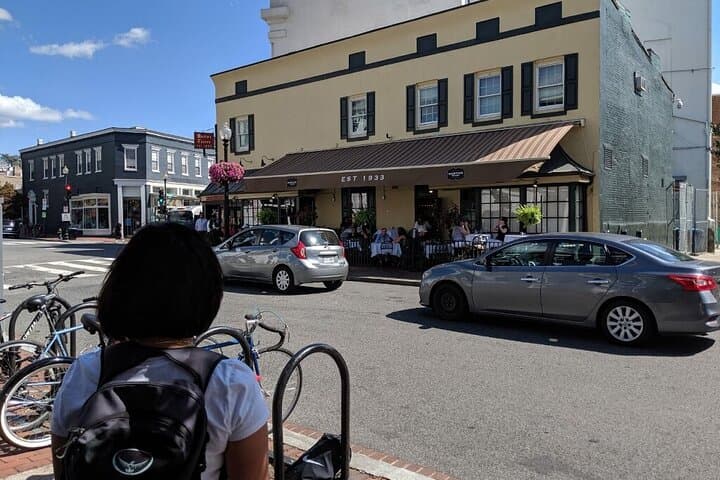

The tour begins under the bell tower at Oak Hill Cemetery, where granite stones and clipped yews form a quiet threshold into Georgetown’s shadowed past. A former intelligence officer leads the group, voice low and exacting, pointing out banal façades that once housed coded exchanges and covert meetings — the ordinary streets seeming to hold deliberate secrets.
The tour begins under the bell tower at Oak Hill Cemetery, where granite stones and clipped yews form a quiet threshold into Georgetown’s shadowed past. A former intelligence officer leads the group, voice low and exacting, pointing out banal façades that once housed coded exchanges and covert meetings — the ordinary streets seeming to hold deliberate secrets.
Georgetown’s role in wartime intelligence is less about dramatic chases and more about pattern and place: bricked rowhouses used as safe addresses, riverside intervals that facilitated unseen movement, and social clubs where conversation doubled as commerce in information. The guide situates these stories against the neighborhood’s 18th- and 19th-century urban growth and the Cold War’s procedural paranoia — why impersonal communication reduced risk, how dead drops worked, and how signal sites read like a citywide shorthand.
Expect paved sidewalks, occasional cobblestones, and a few short, steep blocks; the route moves from Oak Hill to the corner outside Martin’s Tavern, covering roughly 1–2 miles and about 90 minutes of walking and on-the-spot demonstrations. The experience is interactive: reading a signal site and handling a mock dead drop under supervision.
Practical notes: arrive 5–10 minutes early, wear comfortable shoes, and bring water; there are no scheduled restroom breaks. The tour is best in mild weather — spring and fall offer comfortable walking, while summer can be hot and winter crisp. For groups and teams, the mix of personal anecdotes and tactical explanation makes this both an entertaining and instructive urban history walk.