THE ADVENTURE COLLECTIVE® · Independent discovery and booking for outdoor travel

Cycle through Georgetown’s streets on a two-hour guided tour that mixes colonial history, working markets and coastal ecology. Ideal for casual riders, the route highlights museums, monuments and the living edge where city meets mangrove.
Cycle through Georgetown’s streets on a two-hour guided tour that mixes colonial history, working markets and coastal ecology. Ideal for casual riders, the route highlights museums, monuments and the living edge where city meets mangrove.
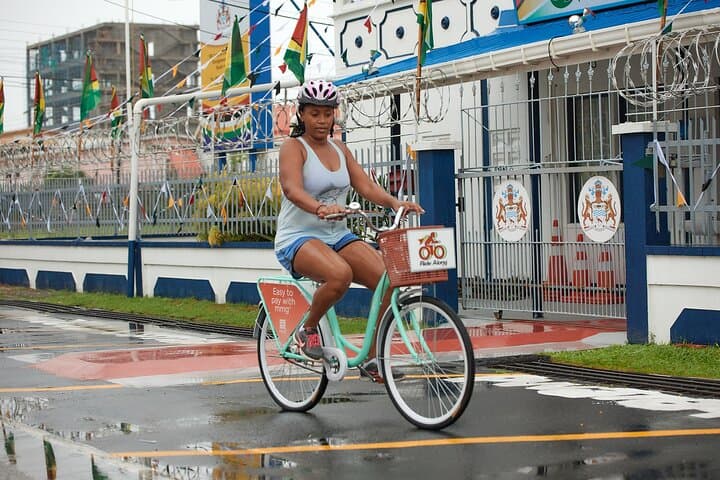
Morning sun breaks over the Demerara River as spokes hum along Georgetown streets. A small group rolls past wooden shop-houses and the iron lattice of Stabroek Market; the guide points to the 1763 Monument while vendors call out ripe fruit and the city’s pulse moves around the riders.
Verified experiences and guided adventures in the surrounding area.
Operated by Ride Along GY · Georgetown, Demerara-Mahaica
Morning sun breaks over the Demerara River as spokes hum along Georgetown streets. A small group rolls past wooden shop-houses and the iron lattice of Stabroek Market; the guide points to the 1763 Monument while vendors call out ripe fruit and the city’s pulse moves around the riders.
Georgetown sits on low, alluvial land deposited by Guyana’s three major rivers; the terrain is flat and forgiving, ideal for a relaxed two-hour cycle. Colonial-era wood and brick architecture, Anglican cathedrals and Indo-Guyanese temples tell a story of Dutch and British rule, plantation economies, and waves of migration—history you’ll hear in short, pointed stops at museums and monuments.
The city’s edge meets mangrove channels and urban trees that host wildlife—scarlet ibis glide toward nearby swamp reserves at dawn and howler monkeys sometimes echo from green pockets—reminders that nature presses close to town.
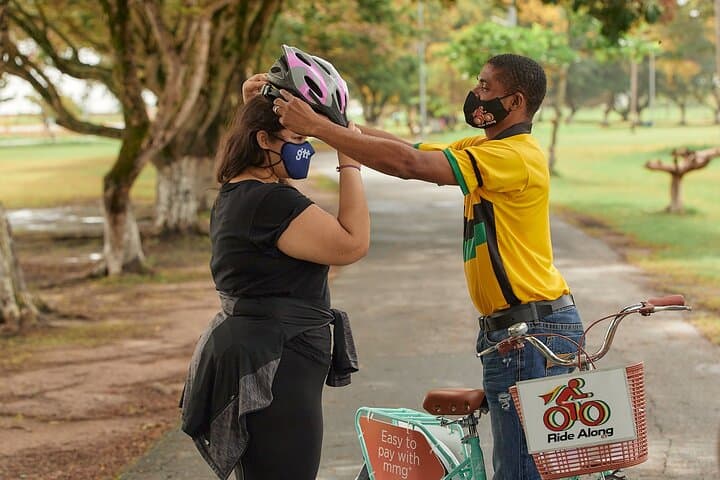
Practically, expect mostly paved roads with a few cobbles and short walking sections near market stalls. Guides provide helmets and basic safety gear; riders should bring sun protection, closed-toe shoes, bottled water, and a small lockable bag. Morning departures keep heat and traffic low; afternoons are hotter with heavier vehicle flow and a greater chance of sudden showers during the wet months.
This private, two-hour loop is compact and active: it’s a street-level way to learn Guyana’s layers—geology, commerce, faith, and culture—while staying mobile. Pack light, carry insect repellent, and confirm pickup and cancellation details with your operator before departure.
easy.
2 hours.
Suitable for people comfortable pedaling short urban distances; minimal stamina required.
Yes—terrain is flat and guides set a comfortable pace; basic bicycle handling is sufficient.
Some stops like the Guyana National Museum may have entry included or optional; confirm at booking for specific inclusions.
Guides commonly speak English; inquire in advance if you need another language or a private guide with specific language skills.
Full refund if cancelled at least 24 hours before departure; operators may cancel for bad weather or low bookings.
Georgetown’s streets reflect Dutch and British colonial planning and a multicultural population shaped by African, Indian, Indigenous and European histories; the 1763 Monument commemorates an early labor uprising.
Coastal mangroves and nearby wetlands are sensitive habitats; avoid littering, support local operators who practice low-impact tourism and respect wildlife viewing distances.
Ride Along GY operates guided outdoor trips and adventures with an emphasis on safety, stewardship, and memorable experiences.

Morning sun breaks over the Demerara River as spokes hum along Georgetown streets. A small group rolls past wooden shop-houses and the iron lattice of Stabroek Market; the guide points to the 1763 Monument while vendors call out ripe fruit and the city’s pulse moves around the riders.
Morning sun breaks over the Demerara River as spokes hum along Georgetown streets. A small group rolls past wooden shop-houses and the iron lattice of Stabroek Market; the guide points to the 1763 Monument while vendors call out ripe fruit and the city’s pulse moves around the riders.
Georgetown sits on low, alluvial land deposited by Guyana’s three major rivers; the terrain is flat and forgiving, ideal for a relaxed two-hour cycle. Colonial-era wood and brick architecture, Anglican cathedrals and Indo-Guyanese temples tell a story of Dutch and British rule, plantation economies, and waves of migration—history you’ll hear in short, pointed stops at museums and monuments.
The city’s edge meets mangrove channels and urban trees that host wildlife—scarlet ibis glide toward nearby swamp reserves at dawn and howler monkeys sometimes echo from green pockets—reminders that nature presses close to town.
Practically, expect mostly paved roads with a few cobbles and short walking sections near market stalls. Guides provide helmets and basic safety gear; riders should bring sun protection, closed-toe shoes, bottled water, and a small lockable bag. Morning departures keep heat and traffic low; afternoons are hotter with heavier vehicle flow and a greater chance of sudden showers during the wet months.
This private, two-hour loop is compact and active: it’s a street-level way to learn Guyana’s layers—geology, commerce, faith, and culture—while staying mobile. Pack light, carry insect repellent, and confirm pickup and cancellation details with your operator before departure.