THE ADVENTURE COLLECTIVE® · Independent discovery and booking for outdoor travel

A calm 6-mile float on the Yellowstone River that’s ideal for families, seniors, and first-time rafters. Glide past basalt bluffs and willow-lined banks while guides point out bald eagles, elk, and local geology.
A calm 6-mile float on the Yellowstone River that’s ideal for families, seniors, and first-time rafters. Glide past basalt bluffs and willow-lined banks while guides point out bald eagles, elk, and local geology.
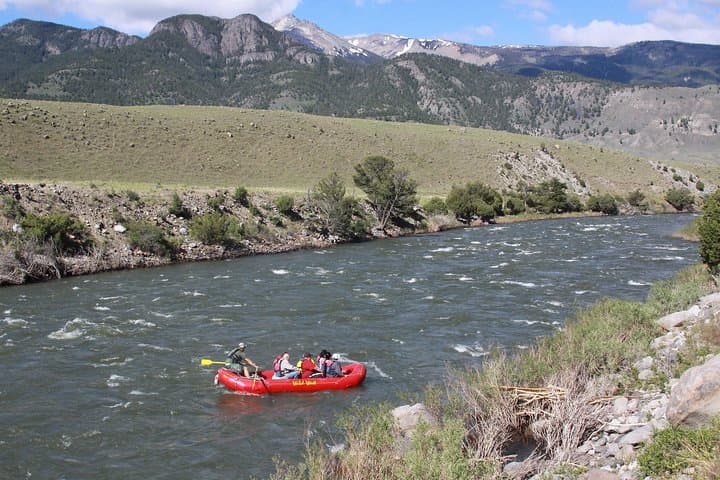
You push off a low gravel bar and the boat answers with a slow, steady glide. The Yellowstone River here is broad and forgiving; currents nudge the oar while cottonwoods and basalt bluffs pass like pages. Bald eagles wheel above and elk graze on the high banks, giving the trip a soft, cinematic quality without the demands of whitewater.
Verified experiences and guided adventures in the surrounding area.
Operated by Wild West Rafting · Gardiner, Montana
You push off a low gravel bar and the boat answers with a slow, steady glide. The Yellowstone River here is broad and forgiving; currents nudge the oar while cottonwoods and basalt bluffs pass like pages. Bald eagles wheel above and elk graze on the high banks, giving the trip a soft, cinematic quality without the demands of whitewater.
This stretch of river follows valleys carved by Ice Age flows and older volcanic events tied to Yellowstone’s deep geology. Gardiner grew up around the north entrance to Yellowstone National Park; the float is a modern, low-key way to read that landscape—river meanders, riparian willow corridors, and exposed rhyolite and basalt outcrops that hint at the region’s volcanic past.
Culturally, the area is a gateway for park visitors and a working Montana community. Guides add local color: stories of early trappers, the arrival of the railroad, and notes on seasonal wildlife movements.
Practically, expect a 6-mile, roughly two-hour downstream float. Boats are stable, staff provide life jackets, and the pace favors families, seniors, and first-time paddlers. Bring layers—the river corridor can be noticeably cooler than nearby roads—plus sunscreen, water, and binoculars for birding. Check-in thirty minutes ahead and note that infants ride on laps and the outfitters generally provide basic water footwear.
This trip is best scheduled for calm-morning light and mid-summer when flows are lower and wildlife is active on the banks. It’s an accessible, scenic alternative to high-adrenaline rafting: relaxed, observational, and rooted in the Yellowstone River’s rugged, evolving landscape.
easy.
2 hours.
Suitable for most fitness levels; requires ability to sit for two hours and step into a low-profile raft or drift boat.
Yes—this trip is family-oriented; infants may ride on laps and strollers are accessible at pick-up areas, but call ahead for infant-sized life jacket availability.
Wildlife sightings are common—bald eagles, elk, and waterfowl frequent the banks—but sightings cannot be guaranteed.
Outfitters typically provide life jackets and basic water shoes; check with the operator if you need specific sizes or prefer your own gear.
Full refunds are usually available if you cancel at least 24 hours before departure; same-day cancellations are generally nonrefundable.
Gardiner developed as the north gateway to Yellowstone; the river corridor served as a travel and trade route for Indigenous peoples and later trappers and settlers.
Stay in designated boats and avoid shoreline disturbance—riverbanks are sensitive riparian habitats; pack out trash and follow Leave No Trace practices to protect the corridor.
Wild West Rafting operates guided outdoor trips and adventures with an emphasis on safety, stewardship, and memorable experiences.
You push off a low gravel bar and the boat answers with a slow, steady glide. The Yellowstone River here is broad and forgiving; currents nudge the oar while cottonwoods and basalt bluffs pass like pages. Bald eagles wheel above and elk graze on the high banks, giving the trip a soft, cinematic quality without the demands of whitewater.
You push off a low gravel bar and the boat answers with a slow, steady glide. The Yellowstone River here is broad and forgiving; currents nudge the oar while cottonwoods and basalt bluffs pass like pages. Bald eagles wheel above and elk graze on the high banks, giving the trip a soft, cinematic quality without the demands of whitewater.
This stretch of river follows valleys carved by Ice Age flows and older volcanic events tied to Yellowstone’s deep geology. Gardiner grew up around the north entrance to Yellowstone National Park; the float is a modern, low-key way to read that landscape—river meanders, riparian willow corridors, and exposed rhyolite and basalt outcrops that hint at the region’s volcanic past.
Culturally, the area is a gateway for park visitors and a working Montana community. Guides add local color: stories of early trappers, the arrival of the railroad, and notes on seasonal wildlife movements.
Practically, expect a 6-mile, roughly two-hour downstream float. Boats are stable, staff provide life jackets, and the pace favors families, seniors, and first-time paddlers. Bring layers—the river corridor can be noticeably cooler than nearby roads—plus sunscreen, water, and binoculars for birding. Check-in thirty minutes ahead and note that infants ride on laps and the outfitters generally provide basic water footwear.
This trip is best scheduled for calm-morning light and mid-summer when flows are lower and wildlife is active on the banks. It’s an accessible, scenic alternative to high-adrenaline rafting: relaxed, observational, and rooted in the Yellowstone River’s rugged, evolving landscape.