THE ADVENTURE COLLECTIVE® · Independent discovery and booking for outdoor travel

Move across Lofoten’s winter plains on a guided, easy snowshoe walk through flat, panoramic terrain near Vagan. Ideal for beginners, the three-hour tour emphasizes scenery, local history, and safe winter travel skills.
Move across Lofoten’s winter plains on a guided, easy snowshoe walk through flat, panoramic terrain near Vagan. Ideal for beginners, the three-hour tour emphasizes scenery, local history, and safe winter travel skills.
A sharp, cold light cuts across low winter hills as the guide clips snowshoes over waterproof boots and leads a small group onto a broad, snow-swept plain outside Vagan. The sea is a silver edge on the horizon; waves of wind push drifts into ribs that the group steps over with slow, deliberate rhythm. This easy tour moves across flat terrain—no steep climbs, no descents—so the pace is steady and the focus falls on the landscape: glaciated ridgelines, exposed granite shoulders, and the dark skein of fjords below.
Verified experiences and guided adventures in the surrounding area.
A sharp, cold light cuts across low winter hills as the guide clips snowshoes over waterproof boots and leads a small group onto a broad, snow-swept plain outside Vagan. The sea is a silver edge on the horizon; waves of wind push drifts into ribs that the group steps over with slow, deliberate rhythm. This easy tour moves across flat terrain—no steep climbs, no descents—so the pace is steady and the focus falls on the landscape: glaciated ridgelines, exposed granite shoulders, and the dark skein of fjords below.
Lofoten's geology is old and hard—Precambrian gneiss sculpted by ice—and human history here is tied to cod fisheries and coastal settlements that endured long winters. Guides often point out old fishing cabins and the outlines of seasonal stockades, small traces of a culture shaped by ocean and storm.
Expect wide-open views punctuated by birdlife and, if luck allows, sea eagles riding the updrafts. In winter the light is low and directional, revealing textures on rock and snow that are usually hidden in summer green.
Practical notes: tours run about three hours on packed or trampled snow; dress in insulated, moisture-wicking layers, wear waterproof boots with good tread, and bring sunglasses—the reflection off snow is intense. Hydration matters even in cold; carry a warm drink in an insulated bottle. Guides supply snowshoes and poles, but check bindings for fit. Plan transfers from Svolvær or Kabelvåg and aim for midday departures when visibility and temperature are most stable.
easy.
2–3 hours.
Suitable for people with basic fitness who can walk slowly on packed snow for three hours; minimal stamina required.
No—this easy tour is designed for beginners; guides show technique and adjust pace to the group.
Dress in layers: moisture-wicking base, insulating mid-layer, and waterproof outer shell; bring hat and gloves and wear stiff, waterproof boots.
Yes—guides supply snowshoes and poles; check binding compatibility with your boots before departure.
Most travelers stay in Svolvær or Kabelvåg and use local taxis or rental cars; confirm exact pickup/meeting details with the operator in advance.
The Lofoten islands have supported seasonal and year-round fishing communities for centuries; cod fisheries shaped local settlement patterns and architecture.
Stay on established tracks and avoid disturbing bird colonies or fragile lichens; local operators promote 'leave no trace' practices to protect winter habitats.
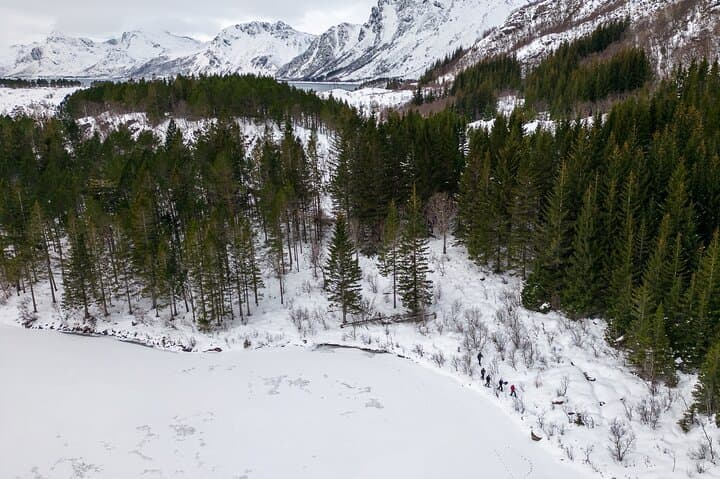
A sharp, cold light cuts across low winter hills as the guide clips snowshoes over waterproof boots and leads a small group onto a broad, snow-swept plain outside Vagan. The sea is a silver edge on the horizon; waves of wind push drifts into ribs that the group steps over with slow, deliberate rhythm. This easy tour moves across flat terrain—no steep climbs, no descents—so the pace is steady and the focus falls on the landscape: glaciated ridgelines, exposed granite shoulders, and the dark skein of fjords below.
A sharp, cold light cuts across low winter hills as the guide clips snowshoes over waterproof boots and leads a small group onto a broad, snow-swept plain outside Vagan. The sea is a silver edge on the horizon; waves of wind push drifts into ribs that the group steps over with slow, deliberate rhythm. This easy tour moves across flat terrain—no steep climbs, no descents—so the pace is steady and the focus falls on the landscape: glaciated ridgelines, exposed granite shoulders, and the dark skein of fjords below.
Lofoten's geology is old and hard—Precambrian gneiss sculpted by ice—and human history here is tied to cod fisheries and coastal settlements that endured long winters. Guides often point out old fishing cabins and the outlines of seasonal stockades, small traces of a culture shaped by ocean and storm.
Expect wide-open views punctuated by birdlife and, if luck allows, sea eagles riding the updrafts. In winter the light is low and directional, revealing textures on rock and snow that are usually hidden in summer green.
Practical notes: tours run about three hours on packed or trampled snow; dress in insulated, moisture-wicking layers, wear waterproof boots with good tread, and bring sunglasses—the reflection off snow is intense. Hydration matters even in cold; carry a warm drink in an insulated bottle. Guides supply snowshoes and poles, but check bindings for fit. Plan transfers from Svolvær or Kabelvåg and aim for midday departures when visibility and temperature are most stable.