THE ADVENTURE COLLECTIVE® · Independent discovery and booking for outdoor travel

A high-energy buggy run across Genipabu’s towering coastal dunes that mixes fast driving, lagoon stops and a beachfront lunch. Perfect for travelers who want an active half- to full-day outing outside Natal.
A high-energy buggy run across Genipabu’s towering coastal dunes that mixes fast driving, lagoon stops and a beachfront lunch. Perfect for travelers who want an active half- to full-day outing outside Natal.
The engine growls and sand sprays in an arc as the buggy crests a wind-sculpted dune—Genipabu’s coastline unfolding in bands of ochre sand and turquoise sea. You feel the rhythm of the ride more than the map: sudden climbs, sideways drifts and panoramic pauses where the Atlantic presses to the horizon.
Verified experiences and guided adventures in the surrounding area.
Operated by Transporte Executivo Nota Dez · Genipabu, Rio Grande do Norte
The engine growls and sand sprays in an arc as the buggy crests a wind-sculpted dune—Genipabu’s coastline unfolding in bands of ochre sand and turquoise sea. You feel the rhythm of the ride more than the map: sudden climbs, sideways drifts and panoramic pauses where the Atlantic presses to the horizon.
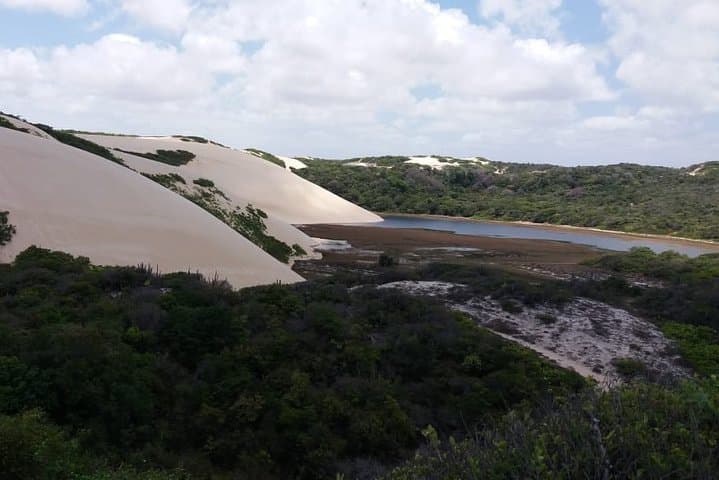
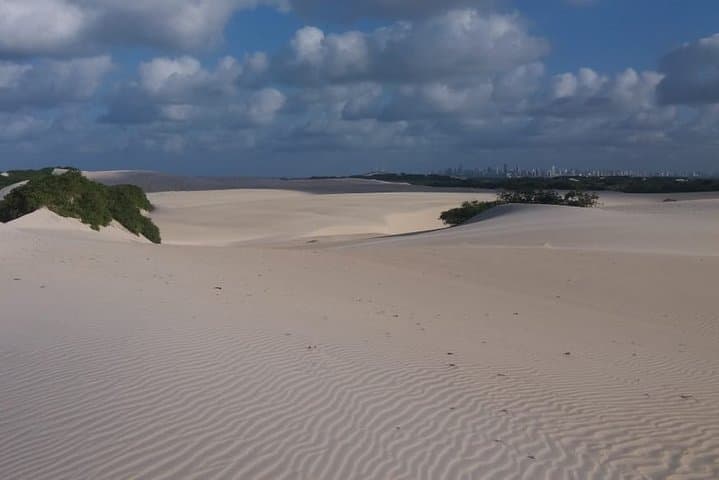
These dunes are young in geological terms, built by coastal winds that push sand inland from the shallow continental shelf. The landscape has long been used by local communities for fishing and salt harvesting; today small restaurants at Porto Mirim serve the catch while fishermen mend nets under corrugated roofs. The tour threads past Jacumã and Pitanguy lagoons—calm waters framed by dune rims—and often stops for adrenaline features like the zipline and the kamikase jump above Jacumã.
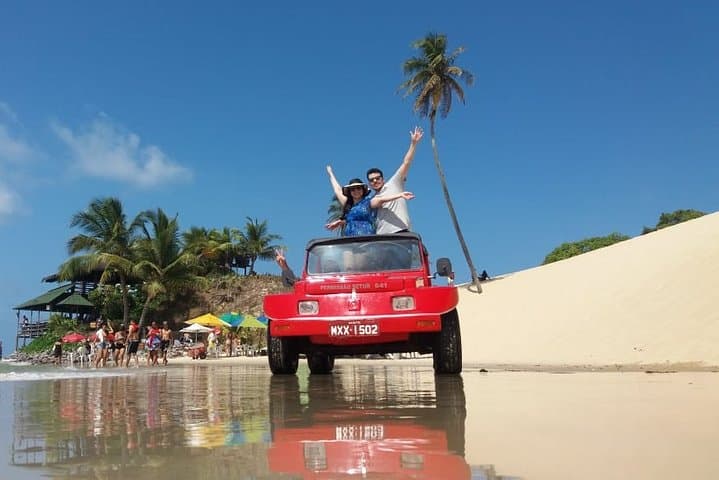
Expect a mix of high-speed driving and short on-foot moments to take photos and feel the surface change between compact beach sand and loose dune crest. Operators usually include a guide who knows local currents, tide windows and safe lines for the buggy, and lunch is commonly served at a simple beachside bar.
Practical guidance: wear closed-toe shoes and sunglasses, secure loose items, and bring reef-safe sunscreen and plenty of water. Morning runs offer cooler temperatures and firmer sand; late afternoon delivers golden light but softer, trickier dunes. If you have back problems, pregnancy, or cardiovascular concerns, sit this one out—bumpy rides are the point. Travel light, respect marked vegetation, and leave the dunes as you found them.
moderate.
1–8 hours.
Low to moderate fitness required; you must be able to board/exit a buggy and tolerate bumps for extended periods.
Tours vary—operators offer options from about 1 hour up to half- or full-day excursions; a common shared itinerary runs 2–3 hours including lagoon stops and a brief lunch.
Many tours include or provide access to the Jacumã zipline and kamikase as optional activities during the stop; check the booking description for exact inclusions.
Children are usually allowed but operators set minimum ages and require proper seating—confirm age rules and safety restraints when booking.
Light, breathable clothing, closed-toe shoes, sunglasses and sun protection; avoid loose hats or unsecured jewelry that can be lost in the wind.
Genipabu’s dunes are formed by wind-driven marine sand accumulation and the area has been used historically by local fishing communities and salt collectors.
Dune vegetation is fragile—stick to marked paths and avoid trampling plants; support reputable operators who respect erosion controls and local communities.
Transporte Executivo Nota Dez operates guided outdoor trips and adventures with an emphasis on safety, stewardship, and memorable experiences.
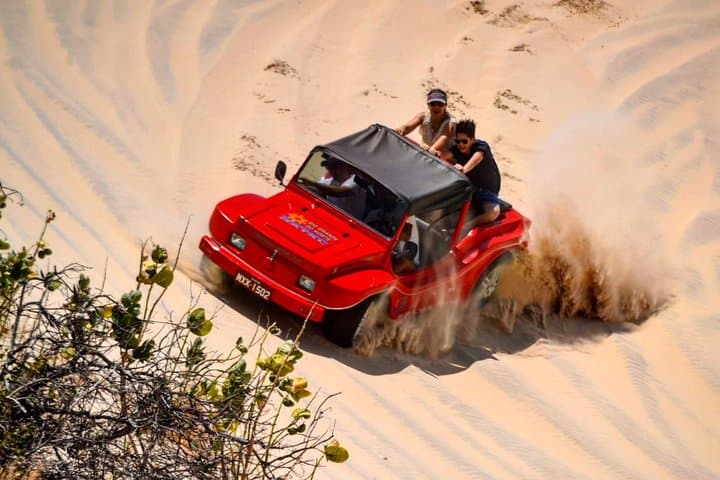
The engine growls and sand sprays in an arc as the buggy crests a wind-sculpted dune—Genipabu’s coastline unfolding in bands of ochre sand and turquoise sea. You feel the rhythm of the ride more than the map: sudden climbs, sideways drifts and panoramic pauses where the Atlantic presses to the horizon.
The engine growls and sand sprays in an arc as the buggy crests a wind-sculpted dune—Genipabu’s coastline unfolding in bands of ochre sand and turquoise sea. You feel the rhythm of the ride more than the map: sudden climbs, sideways drifts and panoramic pauses where the Atlantic presses to the horizon.
These dunes are young in geological terms, built by coastal winds that push sand inland from the shallow continental shelf. The landscape has long been used by local communities for fishing and salt harvesting; today small restaurants at Porto Mirim serve the catch while fishermen mend nets under corrugated roofs. The tour threads past Jacumã and Pitanguy lagoons—calm waters framed by dune rims—and often stops for adrenaline features like the zipline and the kamikase jump above Jacumã.
Expect a mix of high-speed driving and short on-foot moments to take photos and feel the surface change between compact beach sand and loose dune crest. Operators usually include a guide who knows local currents, tide windows and safe lines for the buggy, and lunch is commonly served at a simple beachside bar.
Practical guidance: wear closed-toe shoes and sunglasses, secure loose items, and bring reef-safe sunscreen and plenty of water. Morning runs offer cooler temperatures and firmer sand; late afternoon delivers golden light but softer, trickier dunes. If you have back problems, pregnancy, or cardiovascular concerns, sit this one out—bumpy rides are the point. Travel light, respect marked vegetation, and leave the dunes as you found them.