THE ADVENTURE COLLECTIVE® · Independent discovery and booking for outdoor travel

Spend a full day moving between Geneva’s lakeside icons and the flowery medieval village of Yvoire. This practical city-to-village tour combines guided highlights with independent time to explore cobbled streets and lakeside views.
Spend a full day moving between Geneva’s lakeside icons and the flowery medieval village of Yvoire. This practical city-to-village tour combines guided highlights with independent time to explore cobbled streets and lakeside views.
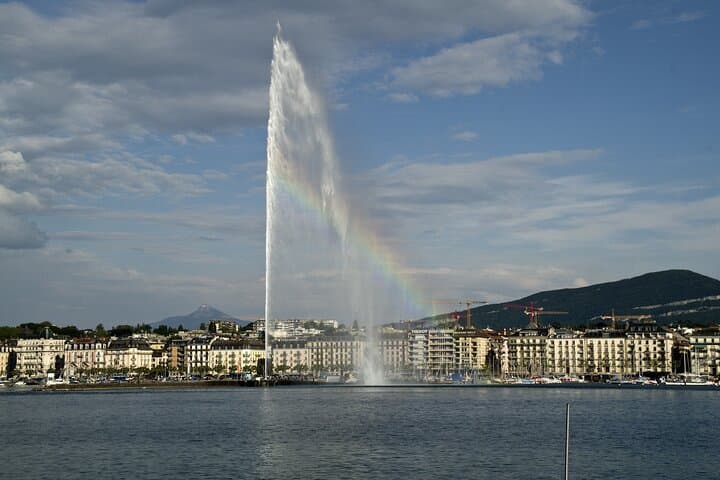
Morning light cuts across Lac Léman as the bus eases away from Geneva’s lakeside quays and the Jet d’Eau hisses like a sentry daring you to step closer. Streets of the Old Town climb toward Saint Peter’s Cathedral, where cobbles narrow and the city’s watchmaking legacy hangs quiet in shop windows. The tour moves at a practical pace: guided bus highlights, a photo stop at the Broken Chair and Nations Square, a mini‑train loop (weather permitting) through the hilltop quarter, then a scenic ferry run across the lake to Yvoire in France.
Verified experiences and guided adventures in the surrounding area.
Operated by Keytours (Switzerland) · Geneva, Geneva
Morning light cuts across Lac Léman as the bus eases away from Geneva’s lakeside quays and the Jet d’Eau hisses like a sentry daring you to step closer. Streets of the Old Town climb toward Saint Peter’s Cathedral, where cobbles narrow and the city’s watchmaking legacy hangs quiet in shop windows. The tour moves at a practical pace: guided bus highlights, a photo stop at the Broken Chair and Nations Square, a mini‑train loop (weather permitting) through the hilltop quarter, then a scenic ferry run across the lake to Yvoire in France.
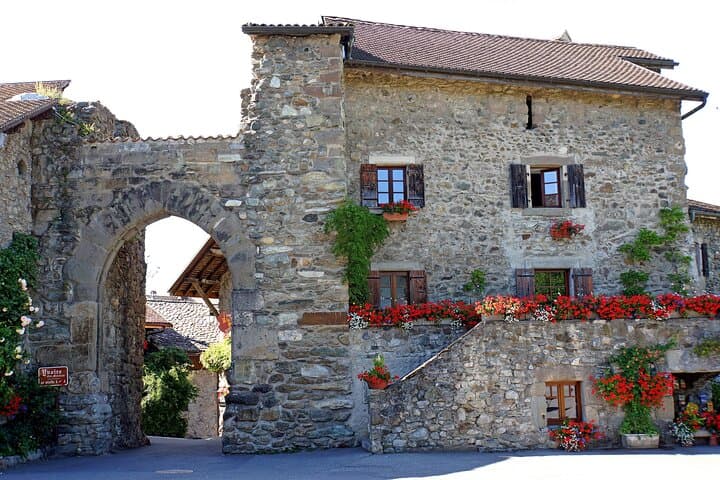
Geneva’s history is diplomatic and industrial — cradle of the Red Cross and Switzerland’s watchmakers — and the urban fabric reflects that mix: international institutions, neoclassical museums, and well‑kept parks like Ariana. Geology is visible in the lake basin and the distant arc of the Alps; culture here favors restrained precision over flourish. Cross the border to Yvoire and you’ll find fortified medieval streets and gardens where 19th‑century stonework meets deliberate horticulture.
Practical guidance: expect a full day (about 8–9 hours) with several short walks and photo stops. Bring comfortable shoes for cobbles, a waterproof layer for lake breezes, and currency for optional garden entry or cafés in Yvoire. The mini‑train and ferry schedules depend on weather and seasonal service; plan for independent time in Yvoire. For photographers, the best light on the Jet d’Eau is mid‑morning or late afternoon; if diplomacy or museums are your interest, allow extra time in Geneva’s international district afterwards.
easy.
8–9 hours.
Suitable for most fitness levels; involves multiple short walks (10–30 minutes) and standing during photo stops.
Yes — the itinerary includes the bus overview in Geneva and a cruise transfer between Yvoire and Geneva as listed in the inclusions.
The tour offers exterior visits and photo stops; cathedral interior access or castle entry in Yvoire is not included and may be restricted or closed.
No — the mini‑train operates subject to weather and availability; when it’s unavailable, the Old Town sections are walked instead.
The tour is typically operated in English and French unless otherwise specified; check your booking details for language options.
Geneva grew as a diplomatic and watchmaking center; the city hosts early Red Cross institutions and a concentration of international agencies from the 19th century onward.
Both Geneva and Yvoire manage visitor impact through designated paths and garden fees that support maintenance; stick to marked routes and avoid feeding wildlife to minimize disturbance.
Keytours (Switzerland) operates guided outdoor trips and adventures with an emphasis on safety, stewardship, and memorable experiences.


Morning light cuts across Lac Léman as the bus eases away from Geneva’s lakeside quays and the Jet d’Eau hisses like a sentry daring you to step closer. Streets of the Old Town climb toward Saint Peter’s Cathedral, where cobbles narrow and the city’s watchmaking legacy hangs quiet in shop windows. The tour moves at a practical pace: guided bus highlights, a photo stop at the Broken Chair and Nations Square, a mini‑train loop (weather permitting) through the hilltop quarter, then a scenic ferry run across the lake to Yvoire in France.
Morning light cuts across Lac Léman as the bus eases away from Geneva’s lakeside quays and the Jet d’Eau hisses like a sentry daring you to step closer. Streets of the Old Town climb toward Saint Peter’s Cathedral, where cobbles narrow and the city’s watchmaking legacy hangs quiet in shop windows. The tour moves at a practical pace: guided bus highlights, a photo stop at the Broken Chair and Nations Square, a mini‑train loop (weather permitting) through the hilltop quarter, then a scenic ferry run across the lake to Yvoire in France.
Geneva’s history is diplomatic and industrial — cradle of the Red Cross and Switzerland’s watchmakers — and the urban fabric reflects that mix: international institutions, neoclassical museums, and well‑kept parks like Ariana. Geology is visible in the lake basin and the distant arc of the Alps; culture here favors restrained precision over flourish. Cross the border to Yvoire and you’ll find fortified medieval streets and gardens where 19th‑century stonework meets deliberate horticulture.
Practical guidance: expect a full day (about 8–9 hours) with several short walks and photo stops. Bring comfortable shoes for cobbles, a waterproof layer for lake breezes, and currency for optional garden entry or cafés in Yvoire. The mini‑train and ferry schedules depend on weather and seasonal service; plan for independent time in Yvoire. For photographers, the best light on the Jet d’Eau is mid‑morning or late afternoon; if diplomacy or museums are your interest, allow extra time in Geneva’s international district afterwards.