THE ADVENTURE COLLECTIVE® · Independent discovery and booking for outdoor travel

A 2–3 hour guided ascent of Gellért Hill combining panoramic Danube views, a cliff-side secret path and a visit to Budapest’s Cave Church. Expect stairs, short rocky sections and rich local history on a compact urban nature walk.
A 2–3 hour guided ascent of Gellért Hill combining panoramic Danube views, a cliff-side secret path and a visit to Budapest’s Cave Church. Expect stairs, short rocky sections and rich local history on a compact urban nature walk.
Morning light slices across the Danube as you climb from the riverbank toward Gellérthegy — Gellért Hill — its slopes green against the city skyline. The trail rises roughly 120 meters through mixed parkland and carved stairways; the river seems to pull the city forward while the hill holds quiet watch.
Verified experiences and guided adventures in the surrounding area.
Operated by Evezz Velem · Budapest, Budapest
Morning light slices across the Danube as you climb from the riverbank toward Gellérthegy — Gellért Hill — its slopes green against the city skyline. The trail rises roughly 120 meters through mixed parkland and carved stairways; the river seems to pull the city forward while the hill holds quiet watch.
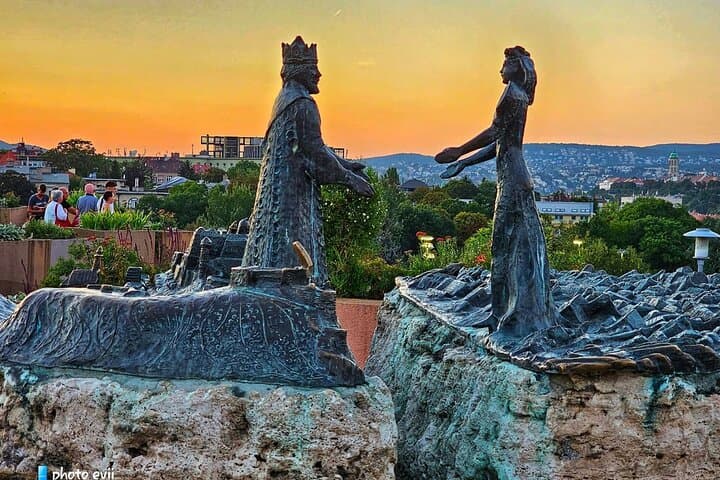
The hill takes its name from Saint Gellért, cast from a cliff in the 11th century. Geologically it’s an outcrop of Miocene-era sandstone and volcanic tuff that has been shaped by urban development, wartime fortifications and the Citadel at the summit. Cultural layers crowd the route: small statues and stone inscriptions, the mid-20th-century Cave Church hewn into the rock, and hidden nooks where local history peeks through graffiti, plaques and the occasional chapel.
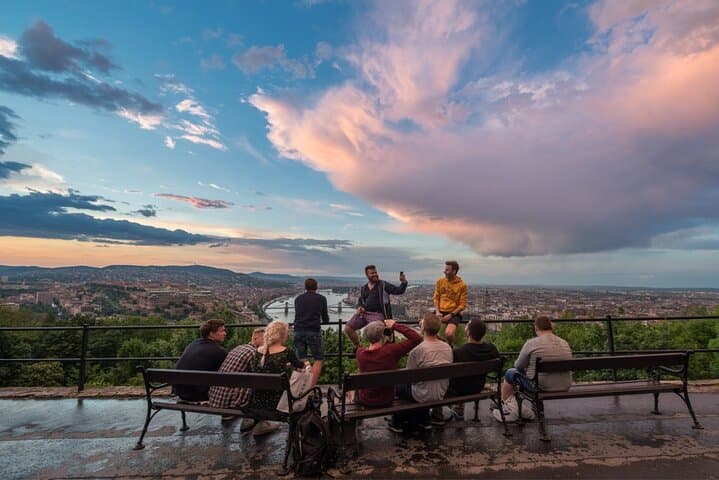
A local guide leads you along lookout points that frame Castle Hill, the Elizabeth Bridge and sweeping river views, then down a narrow, cliff-side path that feels like walking over the Danube — exposed in places but secured with railings. The Cave Church visit (audioguide included) is a unique stop; note it can’t be visited on Sundays.
Practical details: expect stairs and short rocky sections, bring steady footwear and 1–2 liters of water, and plan for 2–3 hours at an easy pace. Photography is best in morning or late afternoon light. Respect fenced areas and stay on marked trails — erosion is visible where visitors stray. The walk is city-accessible by public transport and provides a compact mix of nature, history and panoramic sightseeing ideal for outdoor-minded travelers who want a short, rewarding hill hike in Budapest.
easy.
2–3 hours.
Suitable for people with light to moderate fitness — able to climb stairs and handle short rocky sections.
The walk climbs about 120 meters with several stair sections; it’s steady but brief and typically completed at an easy pace over 2–3 hours.
No — the Cave Church cannot be visited on Sundays, though the rest of the route and viewpoints are accessible then.
The path is secured with railings in exposed sections, but it’s narrow and not recommended for very young children without close supervision.
Gellért Hill is reachable by tram and buses that stop near the riverfront; check local timetables and allow time for the uphill approach to the starting point.
Gellért Hill bears layers of history from the medieval martyr Saint Gellért to the 19th-century Citadel and the Cave Church, which was walled off during the communist era and later reopened.
Stay on marked paths to reduce erosion on the hill’s fragile slopes; avoid feeding wildlife and pack out any trash to protect the urban ecosystem.
Evezz Velem operates guided outdoor trips and adventures with an emphasis on safety, stewardship, and memorable experiences.
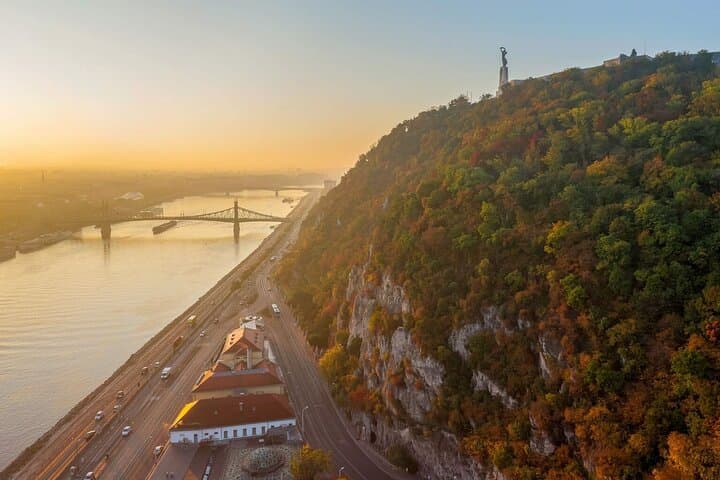

Morning light slices across the Danube as you climb from the riverbank toward Gellérthegy — Gellért Hill — its slopes green against the city skyline. The trail rises roughly 120 meters through mixed parkland and carved stairways; the river seems to pull the city forward while the hill holds quiet watch.
Morning light slices across the Danube as you climb from the riverbank toward Gellérthegy — Gellért Hill — its slopes green against the city skyline. The trail rises roughly 120 meters through mixed parkland and carved stairways; the river seems to pull the city forward while the hill holds quiet watch.
The hill takes its name from Saint Gellért, cast from a cliff in the 11th century. Geologically it’s an outcrop of Miocene-era sandstone and volcanic tuff that has been shaped by urban development, wartime fortifications and the Citadel at the summit. Cultural layers crowd the route: small statues and stone inscriptions, the mid-20th-century Cave Church hewn into the rock, and hidden nooks where local history peeks through graffiti, plaques and the occasional chapel.
A local guide leads you along lookout points that frame Castle Hill, the Elizabeth Bridge and sweeping river views, then down a narrow, cliff-side path that feels like walking over the Danube — exposed in places but secured with railings. The Cave Church visit (audioguide included) is a unique stop; note it can’t be visited on Sundays.
Practical details: expect stairs and short rocky sections, bring steady footwear and 1–2 liters of water, and plan for 2–3 hours at an easy pace. Photography is best in morning or late afternoon light. Respect fenced areas and stay on marked trails — erosion is visible where visitors stray. The walk is city-accessible by public transport and provides a compact mix of nature, history and panoramic sightseeing ideal for outdoor-minded travelers who want a short, rewarding hill hike in Budapest.